Category
page 1Aromatherapy
aromatherapy
Aromatherapy is a practice based on the use of aromatic materials, including essential oils and other aroma compounds, with claims for improving psychological well-being. It is used as a complementary therapy or as a form of alternative medicine, and typically is used via inhalation and not by ingestion.

infusion
Infusion is the process of extracting chemical compounds or flavors from plant material in a solvent such as water, oil, or alcohol, by allowing the material to remain suspended in the solvent over time (a process often called steeping). An infusion is also the name for the resultant liquid. The process of infusion is distinct from both decoction—a method of extraction involving boiling the plant material—and percolation, in which water is passed through the material (as in a coffeemaker).
grape seed oil
oil from the seeds of Vitis vinifera

neroli
thumb|right|Bitter orange foliage, blossoms and fruit
Neroli oil is an essential oil produced from the blossom of the bitter orange tree (Citrus aurantium subsp. amara or Bigaradia). Its scent is sweet, honeyed and somewhat metallic with green and spicy facets. Orange blossom water is also extracted from the same blossom and both extracts are extensively used in perfumery. Orange blossom can be described as smelling sweeter, warmer and more floral than neroli. The difference between how neroli and orange blossom smell and why they are referred to with different names, is a result of the proces
pine oil
essential oil
absolute
aromatic plant extract used in perfume
bath salts
water-soluble, usually inorganic, solid products designed to be added to water during bathing
bath bomb
novelty effervescent bathing product
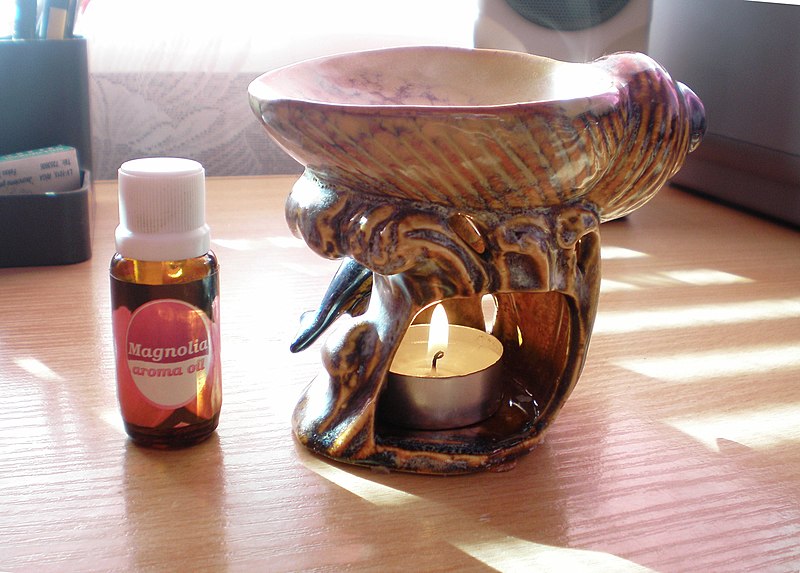
aroma lamp
appliance to mix essential oil into air
aromachology
Aromachology is the study of the influence of odors on human behavior and to examine the relationship between feelings and emotions. Those who practice aromachology are aromachologists. Aromachologists analyze emotions such as relaxation, exhilaration, sensuality, happiness and well-being brought about by odors stimulating the olfactory pathways in the brain and, in particular, the limbic system. Different wearers are thought to have unique physiological and psychological responses to scents, especially those not manufactured synthetically but based on real scents.
carrier oil
oily excipient (vehicle)