Category
page 1Art history

art history
academic study of objects of art in their historical development

dendrochronology
thumb|The growth rings of a tree at Bristol Zoo, [[England. Each ring represents one year; the outside rings, near the bark, are the youngest]]
thumb|A "tree cookie" cross-section of a Pseudotsuga menziesii var. menziesii|Coast Douglas-fir tree displayed in the [[Royal Ontario Museum. The tree was over 500 years old when it was cut down in British Columbia in the 1890s. The markings indicating historical events were added in the 1920s.]]
Dendrochronology (or tree-ring dating) is the scientific method of dating tree rings (also called growth rings) to the exact year they were formed in a tree.

iconography
thumb|Hans Holbein the Younger|Holbein's The Ambassadors (1533) is a complex work whose iconography remains the subject of debate.
RKD - Nederlands Instituut voor Kunstgeschiedenis
national Dutch documentation center of art history

hexagram
[[File:Regular_hexagon_as_intersection_of_two_triangles.png|thumb|A regular hexagram, [[List_of_regular_polytopes_and_compounds#Two_dimensional_compounds|{6}[2{3}]{6}]], can be seen as a compound composed of an upwards (blue here) and downwards (pink) facing equilateral triangle, with their intersection as a regular hexagon (in green).]]
art criticism
literary form

codicology
thumb|upright=1.5|Reims gospel codex (book)
iconology
Iconology is a method of interpretation in cultural history and the history of the visual arts used by Aby Warburg, Erwin Panofsky and their followers that uncovers the cultural, social, and historical background of themes and subjects in the visual arts. Though Panofsky differentiated between iconology and iconography, the distinction is not very widely followed, "and they have never been given definitions accepted by all iconographers and iconologists". Few 21st-century authors continue to use the term "iconology" consistently, and instead use iconography to cover both areas of scholarship.
École du Louvre
institution of higher education and French Grande École in Paris
conservation and restoration of cultural heritage
process of restoring and/or conserving tangible cultural heritage, including artworks, architecture, archaeology, museum collections, partly or in full, to original state and/or condition, without changing constructive and/or characteristic elements
Courtauld Institute of Art
university in London
archaeological science
archaeological sub-discipline based on natural science methodes
catalogue raisonné
comprehensive, annotated listing of all the known artworks by an artist
.png)
connoisseur
thumb|right|225px|"Testing the Wine", English School, 19th century.

conservator
thumb|Paintings restoration
restoration of the Sistine Chapel frescoes
20th-century art conservation project
formalism
study of art by analyzing and comparing form and style
Warburg Institute
research institution associated with the University of London

provenance
thumb|upright=1.35|Diana and Actaeon (Titian)|Diana and Actaeon by [[Titian has a full provenance covering its passage through several owners and four countries since it was painted for Philip II of Spain in the 1550s.]]
anthropology of art
subfield of social anthropology for the development of art
Marburg Picture Index
collaborative database for image and data holdings on art and architecture of around 80 cultural and scientific institutions
Gurlitt hoard
art collection including some Nazi loot discovered in the Munich apartments of Cornelius Gurlitt in 2012
Rembrandt Research Project
Project to research Rembrandt works using forensic methods and building a database
animal studies
field in which animals are studied in a variety of cross-disciplinary ways
Bibliotheca Hertziana – Max Planck Institute for Art History
research Institute
altermodern
Altermodern, a blend word defined by Nicolas Bourriaud, is an attempt at contextualizing art made in today's global context as a reaction against standardisation and commercialism. It is also the title of the Tate Britain's fourth Triennial exhibition curated by Bourriaud.
Banner of Peace
symbol of an international treaty protecting cultural goods
classificatory disputes about art
disputes about what should and should not be classified as art
Media Art Histories
interdisciplinary field of media
Kunsthistorisches Institut in Florenz
cultural institution
Detachment of wall paintings
Process for removal of wall paintings
Wildenstein Index Number
Index numbers of the catalog raisonné of art by the Wildenstein institute, today Wildenstein Plattner Institute
conservation technician
professional responsible for the preservation of artistic and cultural artifacts
prime version
first produced work of art in a number of versions
Hockney–Falco thesis
theory that advances in realism in Western art since the Renaissance is mainly due to optical instruments
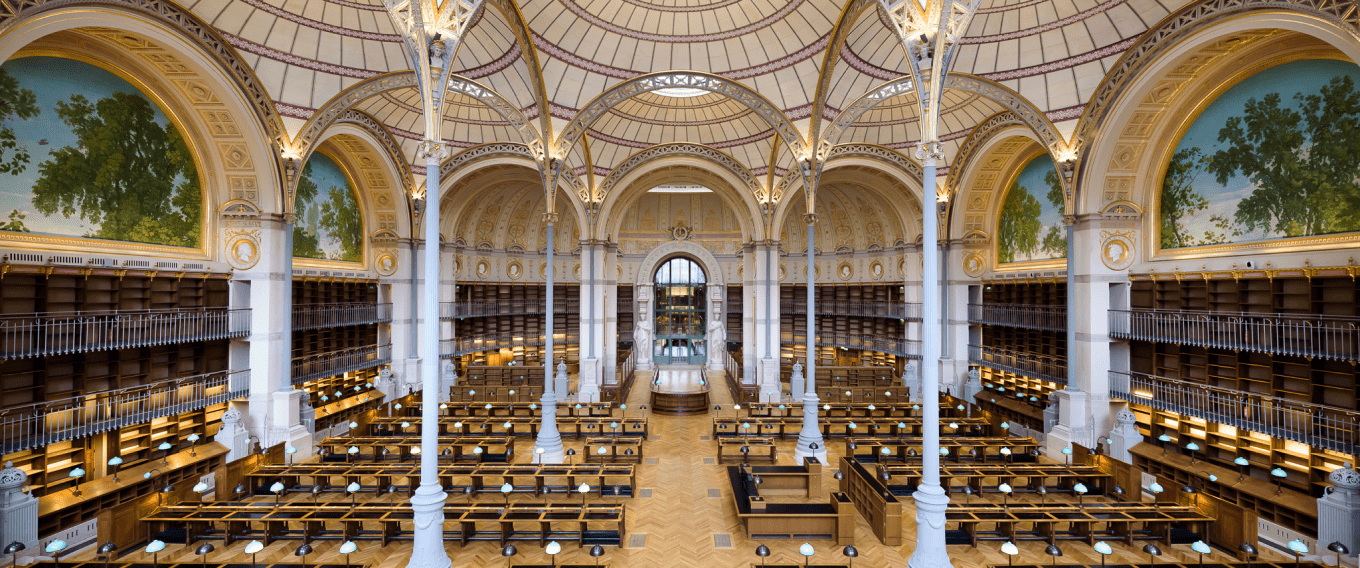
Institut National d'Histoire de l'Art
French research institute, located in Paris, covering the history of art and architecture
Vienna School of Art History
Smarthistory
Smarthistory is a free resource for the study of art history created by art historians Beth Harris and Steven Zucker. Smarthistory is an independent nonprofit organization and the official partner of the Khan Academy for art history. It is funded by the National Endowment for the Humanities.
art and culture law
body of law that regulates and is applied to artists, fine art and cultural property
ARTstor
Artstor is a nonprofit organization that builds and distributes the Digital Library, an online resource of more than 2.5 million images in the arts, architecture, humanities, and sciences, and Shared Shelf, a Web-based cataloging and image management software service that allows institutions to catalog, edit, store, and share local collections.