Category
page 1Arthoniomycetes
Arthoniomycetes
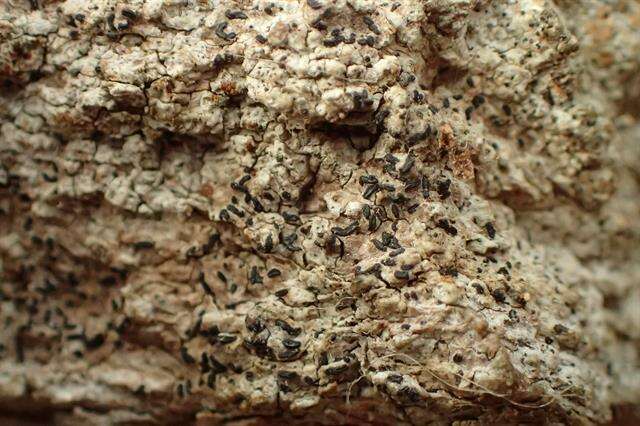
Arthoniomycetes are a class of ascomycete fungi. It includes two orders: Arthoniales and Lichenostigmatales. Most of the taxa in these orders are tropical and subtropical lichens.
.jpg)
Arthoniales
The Arthoniales is the second largest order of mainly crustose lichens, but fruticose lichens are present as well. The order contains around 1500 species, while the largest order with lichenized fungi, the Lecanorales, contains more than 14000 species.

Bactrospora
Bactrospora is a genus of lichen-forming fungi of uncertain familial placement in the order Arthoniales. These lichens grow as thin crusts on tree bark in shaded, humid environments and are distinguished by their unusually long, needle-like spores that often break apart into smaller pieces. Species in the genus are found worldwide, particularly in tropical and temperate forests where they help form part of the diverse bark-dwelling lichen community.

Lichenostigma
Lichenostigma is a genus of fungi in the family Phaeococcomycetaceae. It includes several species which are lichenicolous (i.e. parasitic on lichens). The genus was circumscribed in 1983 by the Austrian mycologist Josef Hafellner, with Lichenostigma maureri assigned as the type species.
Arthonia epiphyscia
species of fungus

Angiactis
Angiactis is a genus of crustose lichens of uncertain familial placement in the order Arthoniales. It has four species.
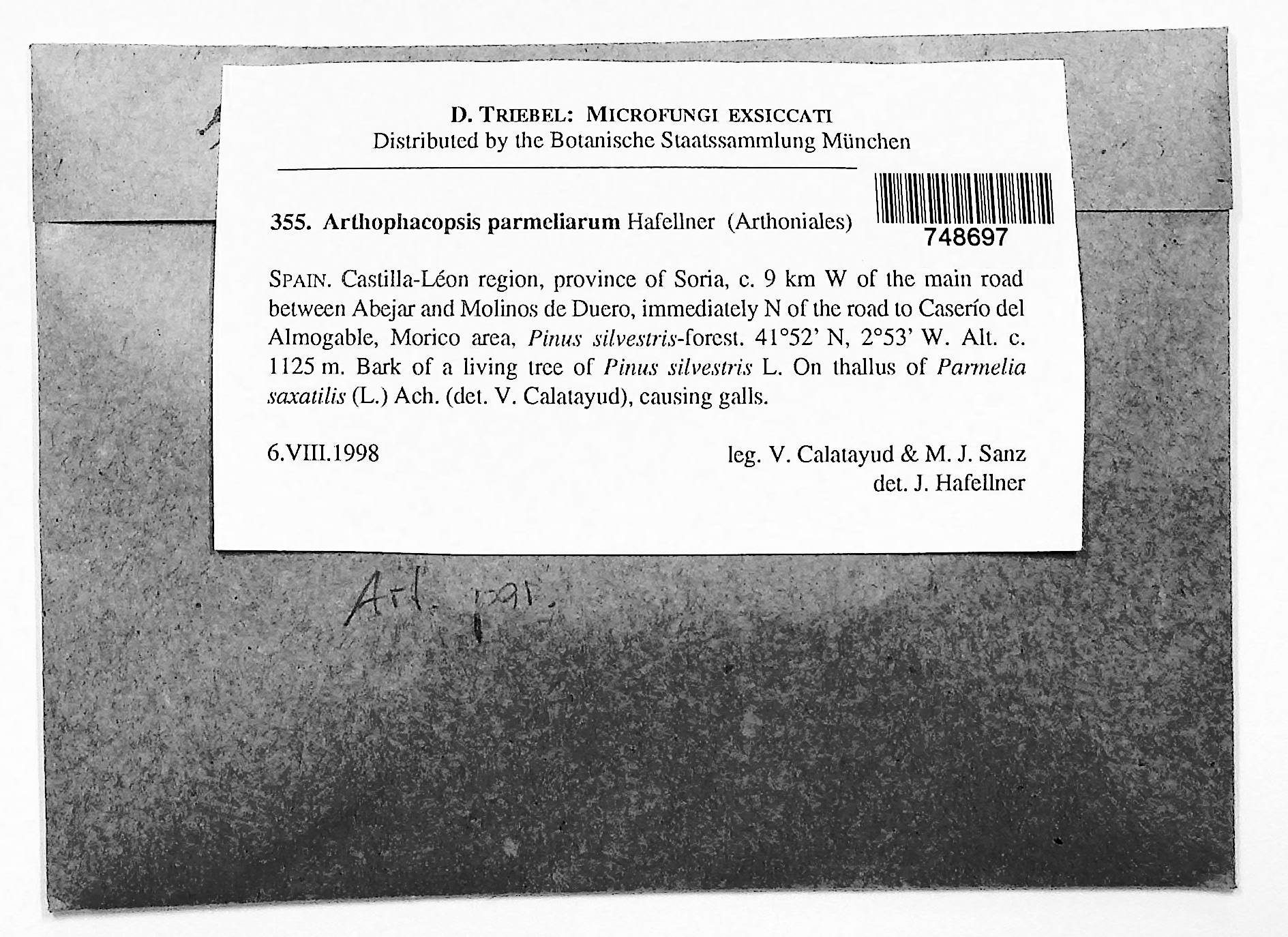
Arthophacopsis parmeliarum
Arthophacopsis is a fungal genus in the order Arthoniales. The genus has not been placed into a family. This is a monotypic genus, containing the single species Arthophacopsis parmeliarum.

Bactrospora brodoi
species of fungus
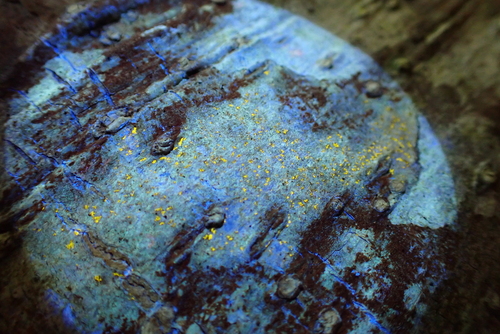
Synarthonia
Synarthonia is a genus of lichen-forming fungi in the order Arthoniales. The genus has not been placed into a family. These crustose lichens typically form thin, crust-like growths on tree bark in tropical and temperate regions worldwide, though many species have restricted geographical ranges and are known only from single locations. The genus is distinguished by its reproductive structures, which appear as small grouped patches on the lichen surface, and by its spores that change from colourless to brownish as they mature and have distinctive enlarged tip cells. While most species form tradi