Category
page 1Arthropod infraorders

Caridea
The Caridea, commonly known as caridean shrimp or true shrimp (from Ancient Greek καρίς, καρίδος (karís, karídos, "shrimp"), are an infraorder of shrimp within the order Decapoda. This infraorder contains all species of true shrimp. They are found widely around the world in both fresh and salt water. Many other animals with similar names – such as the mud shrimp of Axiidea and the boxer shrimp of Stenopodidea – are not true shrimp, but many have evolved features similar to true shrimp.
Astacidea
Astacidea is an infraorder of decapod crustaceans including lobsters (but not "lobsters" such as the spiny lobster etc.), crayfish, and their close relatives.

Anomura
Anomura (sometimes Anomala) is a group of decapod crustaceans, including hermit crabs and others. Several groups such as the king crabs and porcelain crabs within the Anomura have independently undergone carcinisation, acquiring the armoured crab body plan with a concealed tail. It is the sister group to the "true crabs" or Brachyura.

Achelata
The Achelata is an infraorder of the decapod crustaceans, holding the spiny lobsters, slipper lobsters and their fossil relatives.
Stenopodidea
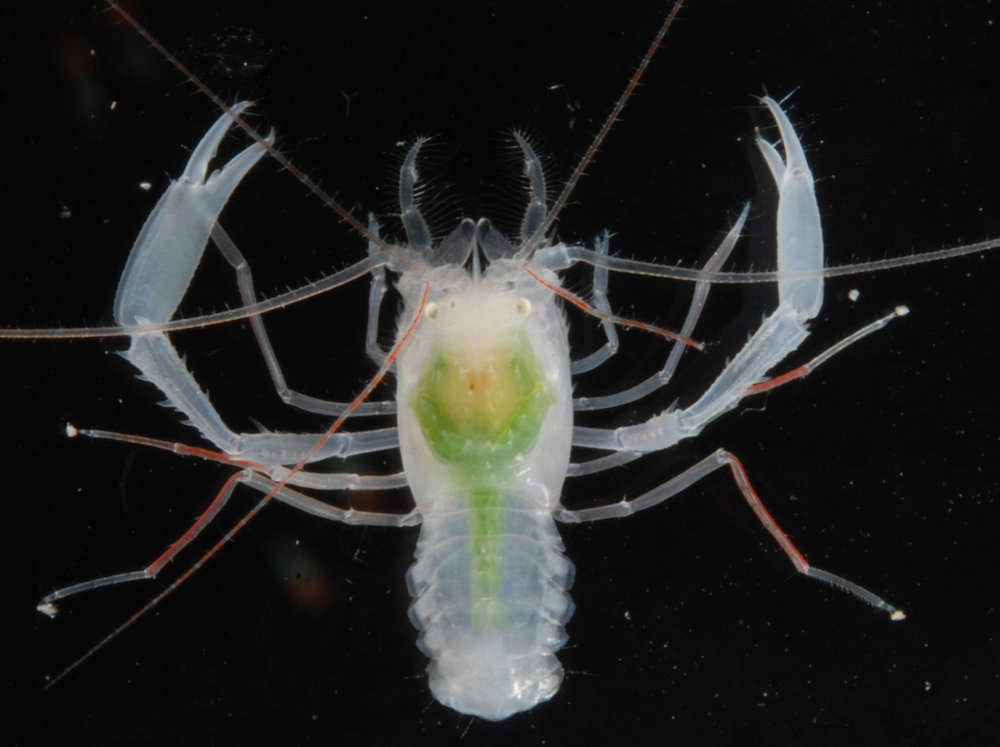
The Stenopodidea or boxer shrimps are a small group of decapod crustaceans. Often confused with Caridea shrimp or Dendrobranchiata prawns, they are neither, belonging to their own group.
Corophiidea
REDIRECT Senticaudata#Corophiida
Polychelida
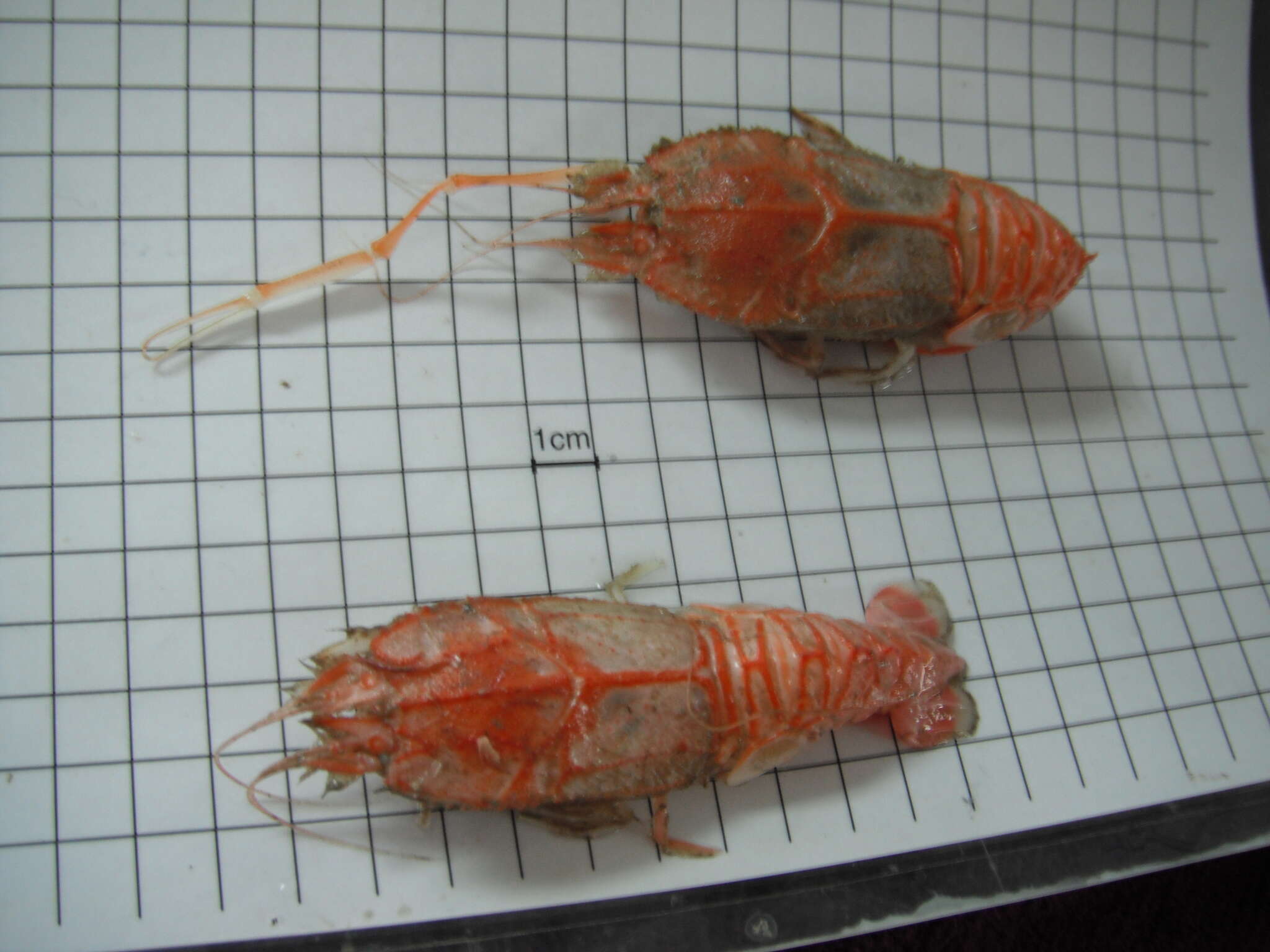
Polychelida is an infraorder of decapod crustaceans. Fossil representatives are known dating from as far back as the Upper Triassic. A total of 38 extant species, all in the family Polychelidae, and 55 fossil species have been described.
Gebiidea
Gebiidea is an infraorder of decapod crustaceans, consisting of mud lobsters and mud shrimp.

Axiidea
Axiidea is an infraorder of decapod crustaceans. They are colloquially known as mud shrimp, ghost shrimp, or burrowing shrimp; however, these decapods are only distantly related to true shrimp. Axiidea and Gebiidea are divergent infraorders of the former infraorder Thalassinidea. These infraorders have converged ecologically and morphologically as burrowing forms. Based on molecular evidence as of 2009, it is now widely believed that these two infraorders represent two distinct lineages separate from one another. Since this is a recent change, much of the literature and research surrounding th
Glypheidea
Glypheidea is an infraorder of lobster-like decapod crustaceans, comprising a number of fossil forms and the two extant (living) genera Neoglyphea and Laurentaeglyphea: The infraorder was thought to be extinct until a living species, Neoglyphea inopinata, was discovered in 1975. They are now considered "living fossils", with over 256 fossil species discovered, and just two extant species.
Procarididea
Procarididea is an infraorder of decapods, comprising only thirteen species. Six of these are in the genera Procaris and Vetericaris, which together make up the family Procarididae. The remaining seven species are only known from fossils, one belonging to the genus Udorella (the sole member of the family Udorellidae) and the other six belonging to the genus Udora, which cannot yet be assigned to any family.

Epicaridea
Epicaridea is a former suborder of isopods, now treated as an infraorder in suborder Cymothoida. They are ectoparasites that inhabit other crustaceans, namely ostracods, copepods, barnacles and malacostracans. Epicarideans are found globally. Epicaridea are generally less well researched than other isopods.