Category
page 1Asian people whose existence is disputed

Laozi
Laozi (, ; ), formerly Latinized as Laocius, was a legendary Chinese philosopher considered to be the author of the Tao Te Ching (Pinyin: Dào Dé Jīng), one of the foundational texts of Taoism. Modern scholarship generally regards his biographical details as later inventions and his opus a collaboration of various writers, with the name Laozi, literally meaning 'Old Master', likely intended to portray an archaic anonymity that could converse with Confucianism. Traditional accounts addend him as , born in the 6th-centuryBC state of Chu during China's Spring and Autumn period (). Serving as the r
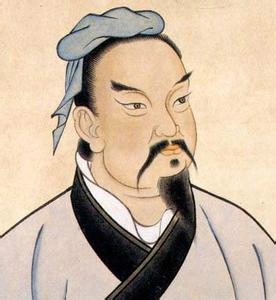
Sun Tzu
6th century BCE Chinese general and military strategist

Chanakya
Chanakya (ISO: '''', चाणक्य, ), according to legendary narratives preserved in various traditions dating from the 4th to 11th century CE, was a Brahmin who assisted the first Mauryan emperor Chandragupta in his rise to power and the establishment of the Maurya Empire. According to these narratives, Chanakya served as the chief adviser and prime minister to both emperors Chandragupta Maurya and his son Bindusara.

Solomon
Solomon (), also called Jedidiah, was a king of the Kingdom of Israel and Judah, according to the Hebrew Bible. The successor of his father David, he is described as the penultimate ruler of all Twelve Tribes of Israel under a united Israel and Judah. His reign is hypothesized to have lasted from . According to the biblical narrative, his reign brought commercial prosperity through alliances and trade, but his accumulation of wealth, horses, and foreign wives, many of whom introduced idolatry, led to divine punishment. After Solomon's death, his son Rehoboam’s harsh policies led the northern I

Zhuang Zhou
Chinese Taoist philosopher (c. 369–286 BC)

Jabir ibn Hayyan
8th-century Islamic alchemist and author

Daniel
biblical figure associated to the Book of Daniel
.jpg)
Jonah
Jonah the son of Amittai or Jonas ( , ) was a Jewish prophet from Gath-hepher in the Northern Kingdom of Israel around the 8th century BCE according to the Hebrew Bible. He is the central figure of the Book of Jonah, one of the minor prophets, which details his reluctance in delivering the judgment of God to the city of Nineveh (near present-day Mosul) in the Neo-Assyrian Empire. After he is swallowed by a large sea creature () and then released, he returns to the divine mission.

Yellow Emperor
Legendary Chinese ruler, one of the Five Emperors, later worshipped as a god
.jpg)
Esther
Esther (; ), originally Hadassah (; ), is the eponymous heroine of the Book of Esther in the Hebrew Bible.

Saint Barbara
early Christian saint and martyr, from Nicomedia

Saint Christopher
saint in the Catholic and Orthodox church

Padmasambhava
thumb|Rewalsar Lake#Colossus of Padmasambhava|Colossus of Padmasambhava, 123 ft. (37.5 m) high, in mist overlooking [[Rewalsar Lake, Himachal Pradesh, India]]

Margaret the Virgin
saint (275–304) usually shown with a dragon (292–307)

Hua Mulan
Chinese legendary female warrior
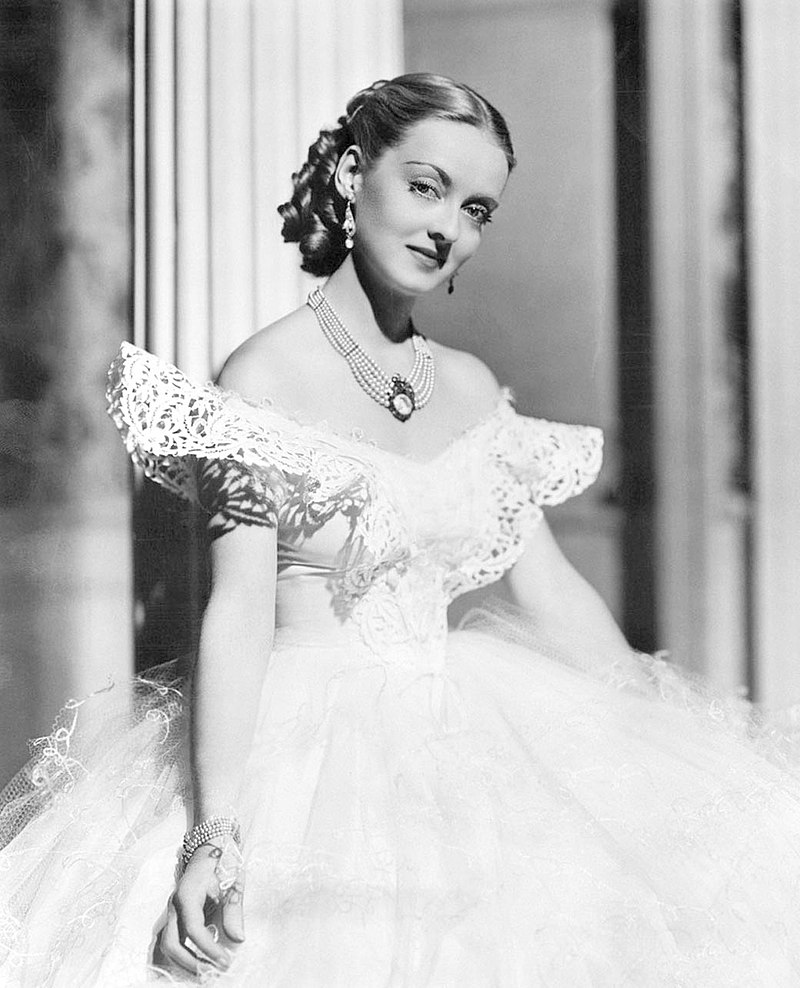
Jezebel
Jezebel () was the daughter of Ithobaal I of Tyre and the wife of Ahab, King of Israel, according to the Book of Kings of the Hebrew Bible (1 Kings 16).

Achaemenes
Achaemenes ( ; ; ) was the progenitor (apical ancestor) and eponymous founder of the Achaemenid dynasty of Persia.
Muhammad al-Mahdi
twelfth and last Imam in Shia Twelver of Islam
Yao
legendary Chinese ruler, one of the Five Emperors
Yu the Great
Xia Dynasty king and founder
Pantaleon
saint
%2C%20297.jpg)
Himiko
, also known as the , was a shamaness-queen of Yamatai-koku in . Early Chinese dynastic histories chronicle tributary relations between Queen Himiko and the Cao Wei Kingdom (220–265) and record that the Yayoi period people chose her as ruler following decades of warfare among the kings of Wa. Early Japanese histories do not mention Himiko, but historians associate her with legendary figures such as Empress Consort Jingū, who is said to have served as regent from 201 to 269.
%20(14779759334).jpg)
Nehemiah
thumb|right|Nehemiah rebuilding Jerusalem, illustration by Adolf Hult, 1919
Nehemiah (; ) is the central figure of the Book of Nehemiah, which describes his work in rebuilding Jerusalem during the Second Temple period as the governor of Yehud Medinata, the autonomous province of Judea within the Achaemenid Empire, under Artaxerxes I (465–424 BC).
Emperor Ku
The legendary ruler of China, one of the five emperors
Shun
legendary ruler of ancient China, one of the Five Emperors
Tomoe Gozen
a female samurai warrior who fought during the Genpei War from 1180 to 1185 CE

Zhuanxu
Zhuanxu (), also known as Gaoyang (), was a mythological emperor of ancient China.

Thiruvalluvar
Thiruvalluvar, commonly known as Valluvar, was an Indian poet and philosopher. He is best known as the author of the Tirukkuṟaḷ, a collection of couplets on ethics, political and economic matters, and love. The text is considered an exceptional and widely cherished work of Tamil literature.

Lei Feng
Chinese soldier and communist icon (1940–1962)

Jie of Xia
17th and last Xia Dynasty king

Tang
Legendary first king of the Shang dynasty in ancient China

Labarna I
Hittite king

Qi of Xia
son of Yu the Great ; second Xia Dynasty king (r. 1978 BCE-1963 BCE)
Bartimaeus
blind man; biblical character (Gospel of Mark)

Zhu of Xia
Xia Dynasty Chinese king
Fa of Xia
16th Chinese king of Xia Dynasty
Tai Kang
Chinese king of Xia Dynasty
Zhong Kang
fourth king of Xia Dynasty, Si Qi's son, Tai Kang's younger brother
Huai of Xia
Chinese king of Xia Dynasty
Shaokang
6th king of the Xia dynasty of ancient China
Mang of Xia
9th Chinese king of Xia Dynasty
Gao of Xia
15th Chinese king of Xia Dynasty
Jin of Xia
13th Chinese king of Xia Dynasty
Kong Jia
14th Chinese king of Xia Dynasty

Shaohao
Shaohao (), also known as Jin Tian (), was a legendary Chinese sovereign, usually identified as a son of the Yellow Emperor. According to some traditions, such as that within the Book of Documents, Shaohao is one of the Five Emperors. His place in the mythical lineage of the Yellow Emperor has been subject to controversy. Members of the 19th–20th century Doubting Antiquity School of historians posited that Shaohao was added to the orthodox succession legend by Liu Xin as part of a politically motivated campaign revising ancient texts .
Xie of Xia
10th Chinese king of Xia Dynasty
Bu Jiang
11th Chinese king of Xia Dynasty
Seleucus VII Kybiosaktes
ruler of the Macedonian Seleucid kingdom
Dorothea of Caesarea
Catholic saint
Vishnu Sharma
Indian writer 3 c. BCE
Jiong of Xia
12th Chinese king of Xia Dynasty
Yuri
the second king of Goguryeo Empire (19 BC–18)
Sasaki Kojirō
Japanese swordsman
Tudiya
Tudiya or Tudia () was, according to the Assyrian King List (AKL), the first Assyrian monarch, ruling in Assyria's early period, though he is not attested in any known contemporary artefacts. He is listed among the "seventeen kings who lived in tents." His existence is unconfirmed archaeologically and uncorroborated by any other source. According to the list, Tudiya was succeeded by Adamu, the earliest attestation of the name "Adam".
Xiang of Xia
Xia Dynasty king
.png)
Cangjie
Cangjie is a legendary figure in Chinese mythology, said to have been an official historian of the Yellow Emperor and the inventor of Chinese characters. Legend has it that he had four eyes, and that when he invented the characters, the deities and ghosts cried and the sky rained millet. He is considered a legendary rather than historical figure, or at least not considered to be the sole inventor of Chinese characters. Cangjie was the eponym for the Cangjiepian proto-dictionary, the Cangjie method of inputting characters into a computer, and a Martian rock visited by the Mars rover Spirit, and
Yang Kyoungjong
Ethnic Korean soldier in the Imperial Japanese Army, Soviet Red Army, and German Wehrmacht

Chedorlaomer
thumb|Battle of Abraham against Chedorlaomer by Cornelis Massijs, 1545
Chedorlaomer, also spelled Kedorlaomer, is a king of Elam mentioned in Genesis 14 in the Hebrew Bible, which contains an account of the Battle of Siddim. Genesis portrays him as allied with three other kings, campaigning against five Canaanite city-states in response to an uprising during the lifetime of Abraham.
Xi Shi
one of the renowned Four Great Beauties of ancient China (b. 506 BC)

Sardanapalus
thumb|right|300px|Eugène Delacroix. [[The Death of Sardanapalus. Oil on canvas. 12 ft 1 in x 16 ft 3 in. Louvre.]]
thumbnail|Lantern slide given the title "Sardanapalus" by [[William Henry Goodyear. Brooklyn Museum Archives, Goodyear Archival Collection]]
According to the Greek writer Ctesias, Sardanapalus ( ; ), sometimes spelled Sardanapallus (), was the last king of Assyria, although in fact Aššur-uballiṭ II (612–605 BC) holds that distinction.