Category
page 1Assistant grand secretaries
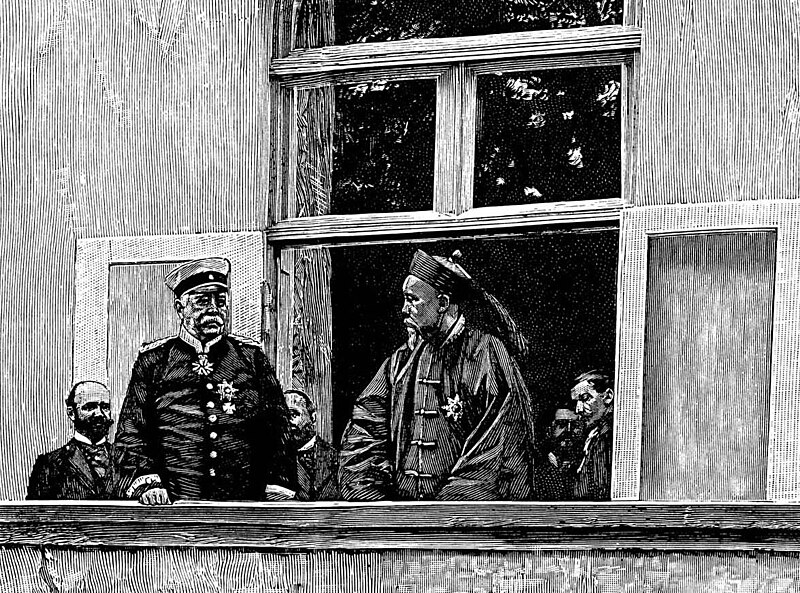
Li Hongzhang
Chinese politician, general and diplomat; governor of Zhili of the late Qing dynasty; Trade Minister of the Beiyang Government (1823–1901)

Zeng Guofan
Chinese politician and military commander (1811–1872)

Hsu Shih-chang
President of the Republic of China (1855–1939)

Heshen
Heshen (; ; 1 July 1750 – 22 February 1799) of the Manchu Niohuru clan, was an official of the Qing dynasty. Favored by the Qianlong Emperor, he was described as the most corrupt official in Chinese history, having acquired an estimated 1.1 billion taels of silver, equal to roughly US$270 billion, during his career. After the death of Qianlong, the Jiaqing Emperor confiscated Heshen's wealth and forced him to commit suicide. Heshen is remembered as one of the richest men in history.
Zuo Zongtang
Qing dynasty general (1812-1885)
Zhang Zhidong
Viceroy of Liangguang (1837-1909)
Ji Yun
Chinese Qing dynasty scholar (1724-1805)
Zhang Tingyu
Chinese politician and historian (1672-1755)
Ye Mingchen
Qing politician (1807-1859)
Ronglu
Ronglu (6 April 1836 – 11 April 1903), courtesy name Zhonghua, was a Manchu political and military leader of the late Qing dynasty. He was born in the Guwalgiya clan, which was under the Plain White Banner of the Manchu Eight Banners. Deeply favoured by Empress Dowager Cixi, he served in a number of important civil and military positions in the Qing government, including the Zongli Yamen, Grand Council, Grand Secretary, Viceroy of Zhili, Beiyang Trade Minister, Secretary of Defence, Nine Gates Infantry Commander, and Wuwei Corps Commander. He was also the maternal grandfather of Puyi, th
Fuk'anggan
'''Fuk'anggan' (Manchu:, Möllendorff: Fuk'anggan''; ; 1748–1796), courtesy name Yaolin (), was a Qing dynasty general from the Fuca clan of the Manchu Bordered Yellow Banner.
Ruan Yuan
Chinese historian, politician and writer (1764–1849)

Fuheng
Fuheng (; ; ; 1720 – July 1770), courtesy name Chunhe (春和), was a Qing dynasty official from the Fuca clan of the Manchu Bordered Yellow Banner, and was a younger brother of the Empress Xiaoxianchun. He served as a senior minister at the court of his brother-in-law, the Qianlong Emperor, from the 1750s to his death in 1770. He is best known for leading the Qing troops in the fourth and last invasion of Burma in the Sino-Burmese War.
Sushun
Qing Dynasty regent (1816-1861)
Qishan
Qing dynasty politician (1786-1864)
Agui
Agui (; ; September 7, 1717 – October 10, 1797) was a Manchu noble general for the Qing dynasty. As the only son of Akdun, he was a scion of a noble family who led a number of important Manchu military operations, including several of the "Ten Great Campaigns".
Keying
politician during the Qing Dynasty (1787-1858)
Weng Tung-ho
Chinese Confucian scholar and imperial tutor during the Qing dynasty (1830-1904)
Chen Hongmou
Chinese official and philosopher (1696—1771)
Liu Yong
calligrapher (1719–1804)
Wang Wenshao
Qing dynasty person CBDB = 57121 (1830–1908)
Yilibu
Yilibu (Manchu: Ilibu; ; 1772 – 4 March 1843), also spelt Elepoo, was a Chinese official of the Qing dynasty. A Manchu of the Bordered Yellow Banner, he was Viceroy of Liangjiang from 1839 to 1840. In 1842, he assisted in negotiating the Treaty of Nanking, which ended the First Opium War between the United Kingdom and China.
Sun Shiyi
Qing Dynasty official
Cao Zhenyong
Chinese politician (1755-1835)
Sun Jianai
imperial tutor of late Qing Dynasty

Chi Chun-tsao
Qing dynasty official and calligrapher (1793–1866)
Songyun
Chinese military governor (1752–1835)
Guanwen
Guanwen (, , 1798 – 1871), courtesy name Xiufeng (), was a Manchu official, Grand Secretariat, military general, Viceroy of Zhili, Huguang and commander of the Army Group Central Plain during the late Qing dynasty in China.
Yijing
Manchu prince of the Qing Dynasty