Category
page 1Astronomy books
Almagest
page=309|thumb|An edition in Latin of the Almagestum in 1515
The Almagest ( ) is a 2nd-century mathematical and astronomical treatise on the apparent motions of the stars and planetary paths, written by Claudius Ptolemy ( ) in Koine Greek. One of the most influential scientific texts in history, it canonized a geocentric model of the Universe that was accepted for more than 1,200 years from its origin in Hellenistic Alexandria, in the medieval Byzantine and Islamic worlds, and in Western Europe through the Middle Ages and early Renaissance until Copernicus. It is also a key source of informati
.png)
ephemeris
In astronomy and celestial navigation, an ephemeris (; ; , ) is a book with tables that gives the trajectory of naturally occurring astronomical objects and artificial satellites in the sky, i.e., the position (and possibly velocity) over time. Historically, positions were given as printed tables of values, given at regular intervals of date and time. The calculation of these tables was one of the first applications of mechanical computers. Modern ephemerides are often provided in electronic form. However, printed ephemerides are still produced, as they are useful when computational devices ar
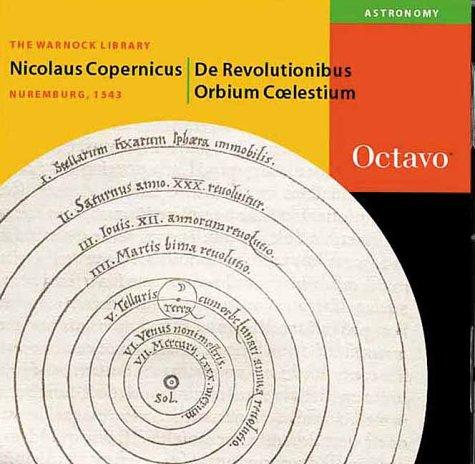
De revolutionibus orbium coelestium
book by Copernicus
Dresden Codex
Pre-columbian Maya astronomic manuscript from Chichen Itza, Mexico

Dialogue Concerning the Two Chief World Systems
1632 book by Galileo Galilei
Sidereus Nuncius
astronomical treatise of Galileo
Harmonices Mundi
book by Johannes Kepler
The Grand Design
popular-science book by Stephen Hawking

Astronomia nova
book by Johannes Kepler
Mysterium Cosmographicum
1597 astronomy book by Johannes Kepler
Surya Siddhanta
Sanskrit text on Indian astronomy

Cosmos
1980 non-fiction work by Carl Sagan
Atlas Coelestis
star atlas

The Sand Reckoner
work by Archimedes
On the Heavens
work by Aristotle

Dream Pool Essays
non-fiction work by Shen Kuo

Commentariolus
The Commentariolus (Little Commentary) is Nicolaus Copernicus's brief outline of an early version of his revolutionary heliocentric theory of the universe. After further long development of his theory, Copernicus published the mature version in 1543 in his landmark work, De revolutionibus orbium coelestium (On the Revolutions of the Heavenly Spheres).

Pale Blue Dot
non-fiction work by Carl Sagan
A Universe from Nothing
book by Lawrence Krauss

Āryabhaṭīya
thumb|
Reference of Kuttaka in Aryabhatiya

The Assayer
1623 essay by Galileo Galilei
Vedanga Jyotisha
work
Poor Richard's Almanack
18th-century American almanac

Harmonia Macrocosmica
book by Andreas Cellarius
Selenographia, sive Lunae descriptio
milestone work by Johannes Hevelius
De sphaera mundi
book by Sacrobosco

Canon of Eclipses
book by Theodor von Oppolzer
On the Sizes and Distances
work by Aristarchus of Samos, Greek astronomer

The Cosmic Connection
essay by Carl Sagan
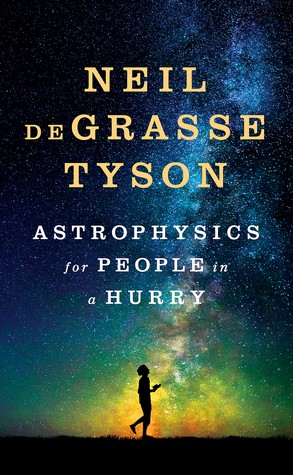
Astrophysics for People in a Hurry
2017 non-fiction work by Neil deGrasse Tyson
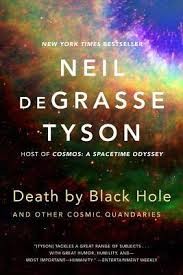
Death by Black Hole
book by Neil deGrasse Tyson

Feynman's Lost Lecture
book by Richard Feynman
A Treatise on the Astrolabe
medieval instruction manual on the astrolabe by Geoffrey Chaucer
Narratio Prima
book from Georg Joachim Rheticus, first publication of Copernican heliocentrism

How I Killed Pluto and Why It Had It Coming
2010 memoir by Michael E. Brown
Tantrasamgraha
Tantrasamgraha, or Tantrasangraha, (literally, A Compilation of the System) is an astronomical treatise written by Nilakantha Somayaji, an astronomer/mathematician belonging to the Kerala school of astronomy and mathematics.
The treatise was completed in 1501 CE. It consists of 432 verses in Sanskrit divided into eight chapters. Tantrasamgraha had spawned a few commentaries: Tantrasamgraha-vyakhya of anonymous authorship and Yuktibhāṣā authored by Jyeshtadeva in about 1550 CE.
Tantrasangraha, together with its commentaries, bring forth the depths of the mathematical accomplishments the Kerala
Yuktibhāṣā
Yuktibhāṣā (), also known as Gaṇita-yukti-bhāṣā and '''' (English: Compendium of Astronomical Rationale''), is a treatise on mathematics and astronomy, written by the Indian astronomer Jyeṣṭhadeva of the Kerala school of mathematics around 1530. The treatise, written in Malayalam, is a consolidation of the discoveries by Madhava of Sangamagrama, Nilakantha Somayaji, Parameshvara Nambudiri, Jyeṣṭhadeva, Achyuta Piṣāraṭi, and other astronomer-mathematicians of the Kerala school. It also exists in a Sanskrit version, with unclear author and date, composed as a rough translation of the Malayalam o

Welcome to the Universe
non-fiction work by Neil deGrasse Tyson
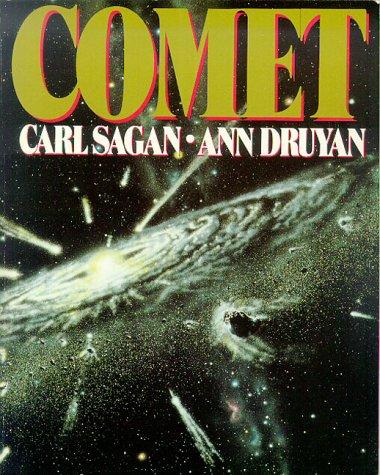
Comet
1985 popular-science book by Carl Sagan and Ann Druyan

Big Bang
non-fiction work by Simon Singh
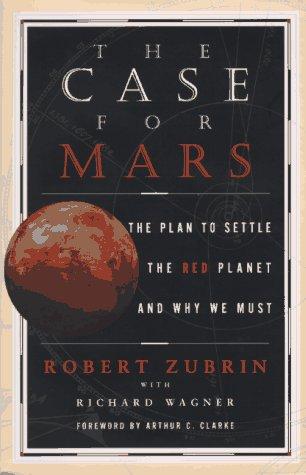
The Case for Mars
book by Robert Zubrin
Khandakhadyaka
Khaṇḍakhādyaka (meaning "edible bite; morsel of food") is a Sanskrit-language astronomical treatise written by Indian mathematician and astronomer Brahmagupta in 665 CE. The treatise contains eight chapters covering such topics as the longitudes of the planets, diurnal rotation, lunar and solar eclipses, risings and settings, the moon's crescent and conjunctions of the planets. The treatise also includes an appendix which in some versions has only one chapter, and in other has three.

The Sleepwalkers
essay by Arthur Koestler

The Pluto Files
book by Neil deGrasse Tyson
Divination by Astrological and Meteorological Phenomena
ancient Chinese astronomy manuscript