Category
page 1Augmented reality

augmented reality
interactive experience of a real-world environment enhanced by computer-generated perceptual information spatially registered to the user's environment

OpenGL
OpenGL (Open Graphics Library) is a cross-language, cross-platform application programming interface (API) for rendering 2D and 3D vector graphics. The API is typically used to interact with a graphics processing unit (GPU), to achieve hardware-accelerated rendering.

avatar
graphical representation of the user or the user's alter ego or character

Apple Vision Pro
XR-Headset by Apple Inc.

uncanny valley
hypothesis that human replicas which appear almost like real human beings elicit revulsion

VTuber
thumb|Kizuna AI was the first VTuber to achieve breakout popularity.A or is an online entertainer who uses a virtual avatar generated using computer graphics. Real-time motion capture software or technology are often—but not always—used to capture movement. The digital trend originated in Japan in the mid-2010s, and has become an international online phenomenon in the 2020s. A majority of VTubers are English- and Japanese-speaking YouTubers or live streamers who use avatar designs. By 2020, there were more than 10,000 active VTubers. Although the term is an allusion to the video platform YouTu
WebGL
WebGL (short for Web Graphics Library) is a JavaScript API for rendering interactive 2D and 3D graphics within any compatible web browser without the use of plug-ins. WebGL is fully integrated with other web standards, allowing GPU-accelerated usage of physics, image processing, and effects in the HTML canvas. WebGL elements can be mixed with other HTML elements and composited with other parts of the page or page background.
simulation hypothesis
hypothesis that reality could be a computer simulation

Vulkan
Vulkan is a cross-platform API and open standard for 3D graphics and computing. It was intended to address the shortcomings of OpenGL, and allow developers more control over the GPU. It is designed to support a wide variety of GPUs, CPUs and operating systems, and modern multi-core CPUs also.
digital twin
digital replica of a living or non-living physical entity
Niantic Games Team
former mobile app development company, now development team inside of Scopely
Google Lens
object recognition tool developed by Google

Microsoft HoloLens
mixed reality device from Microsoft
eye tracking
measuring the point of gaze or motion of an eye relative to the head

smartglasses
thumb|upright=1.2|The touch pad built on the side of the 2013 [[Google Glass can communicate with the user's phone via Bluetooth]]
thumb|Man wearing a 1998 EyeTap Digital Eye Glass
projection mapping
projection technology used to turn objects, often irregularly shaped, into a display surface for video projection
Windows Mixed Reality
mixed reality computing platform by Microsoft
OpenGL ES
port of the OpenGL API for embedded systems

visionOS
visionOS is an extended reality operating system derived primarily from iPadOS and its core frameworks (including UIKit, SwiftUI, ARKit and RealityKit), and MR-specific frameworks for foveated rendering and real-time interaction. It was developed by Apple exclusively for its Apple Vision Pro mixed reality headset. It was unveiled on June 5, 2023, at Apple's WWDC23 event alongside the reveal of the Apple Vision Pro. The software released on February 2, 2024, shipping with the Apple Vision Pro.
Meta Quest 3
virtual reality headset by Meta
Pranav Mistry
Indian computer scientist
six degrees of freedom
freedom of movement of a rigid body in three-dimensional space
Magic Leap
American augmented reality hardware manufacturer
bionic contact lens
virtual display that could have a variety of uses from assisting the visually impaired to video gaming
light field
vector function that describes the amount of light flowing in every direction through every point in space

ARCore
ARCore, also known as Google Play Services for AR, is a software development kit developed by Google that allows for augmented reality (AR) applications to be built. ARCore has been certified for a number of devices, but is software-locked on devices that did not complete the certification procedure. Spoofing the ID of a device that completed the procedure makes ARCore work on more devices. Requirements for certification include the "quality of the camera, motion sensors [and] a powerful enough CPU that integrates with the hardware design". Devices must also ship with Google Play to qualify fo
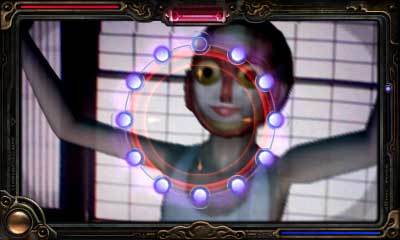
Spirit Camera: The Cursed Memoir
2012 video game
Android XR
extended reality operating system
Tango
mobile computer vision platform for Android developed by Google
Layar
Layar was a Dutch company based in Amsterdam, founded in 2009 by Raimo van der Klein, Claire Boonstra and Maarten Lens-FitzGerald. They created a mobile browser app called Layar. The browser allowed users to find various items, using augmented reality technology.
OpenXR
OpenXR is an open-source, royalty-free standard for interfacing with virtual reality and augmented reality devices. It is developed by a working group managed by the Khronos Group consortium. OpenXR was announced by the Khronos Group on February 27, 2017, during GDC 2017. A provisional version of the standard was released on March 18, 2019, to enable developers and implementers to provide feedback on it. On July 29, 2019, OpenXR 1.0 was released to the public by Khronos Group at SIGGRAPH 2019 and on April 15, 2024, OpenXR 1.1 was released by Khronos.
EyeTap
thumb|275px|Man wearing a one-eyed injection molding|injection-molded EyeTap
thumb|275px|EyeTap inventor Steve Mann (inventor)|Steve Mann wearing a metal frame Laser EyeTap (computer-controlled laser light source run from "GlassEye" camera)
A-Frame
open-source web framework for building virtual reality (VR) experiences
glTF
glTF (Graphics Library Transmission Format or GL Transmission Format and formerly known as WebGL Transmissions Format or WebGL TF) is a standard file format for three-dimensional scenes and models. A glTF file uses one of two possible file extensions: .gltf (JSON/ASCII) or .glb (binary). Both .gltf and .glb files may reference external binary and texture resources. Alternatively, both formats may be self-contained by directly embedding binary data buffers (as base64-encoded strings in .gltf files or as raw byte arrays in .glb files). An open standard developed and maintained by the Khronos Gro
Universal Scene Description
3D computer graphics standard created by Pixar
spatial computing
term regarding augmented reality
SixthSense
SixthSense is a gesture-based wearable computer system developed at MIT Media Lab by Steve Mann in 1994 and 1997 (headworn gestural interface), and 1998 (neckworn version), and further developed by Pranav Mistry (also at MIT Media Lab), in 2009, both of whom developed both hardware and software for both headworn and neckworn versions of it. It comprises a headworn or neck-worn pendant that contains both a data projector and camera. Headworn versions were built at MIT Media Lab in 1997 (by Steve Mann) that combined cameras and illumination systems for interactive photographic art, and also incl
synthetic vision system
set of technologies that use 3D in cockpit displays
Reality–virtuality continuum
concept in computer science
Wonderbook
Wonderbook is an augmented reality peripheral for the PlayStation 3 console. The user holds a physical book-like object and the software displays content on the television's screen.
ARToolKit
ARToolKit is an open-source computer tracking library for creation of augmented reality applications that overlay virtual imagery on the real world. Currently, it is maintained as an open-source project hosted on GitHub.
mirror world
digital representation as a software model of real-world environments
Wikitude
Wikitude was a mobile augmented reality (AR) technology provider based in Salzburg, Austria. Founded in 2008, Wikitude initially focused on providing location-based augmented reality experiences through the Wikitude World Browser App. In 2012, the company restructured its proposition by launching the Wikitude SDK, a development framework that uses image recognition and tracking, and geolocation technology.
filter
effects used to alter the appearance of a digital image
Meta Quest 3S
virtual reality headset by Meta