Category
page 1Augustus

August
thumb|Depiction of harvesting in the August calendar page of the Queen Mary Psalter (fol. 78v), ca. 1310
thumb |In recent decades, the number of warm temperature records in August has outpaced cold temperature records over a growing portion of Earth's surface.
thumb |Chart shows changes in global average temperature annually in August of each year

Augustus
Augustus (born Gaius Octavius; 23 September 63 BC – 19 August AD 14), also known as Octavian (), was the founder of the Roman Empire and the first Roman emperor from 27 BC until his death in AD 14. The reign of Augustus initiated an imperial cult and an era of imperial peace (the or ) in which the Roman world was largely free of armed conflict. The principate, a style of government where the emperor showed nominal deference to the Senate, was established during his reign and lasted until the Crisis of the Third Century.

Battle of Actium
31 BCE decisive confrontation of the Final War of the Roman Republic

Battle of the Teutoburg Forest
battle between a coalition of Germanic peoples and an Imperial Roman army, 9 BCE

Pax Romana
roughly 200-year-long period in Roman history

Gaius Maecenas
Roman political advisor (d. 8 BC)
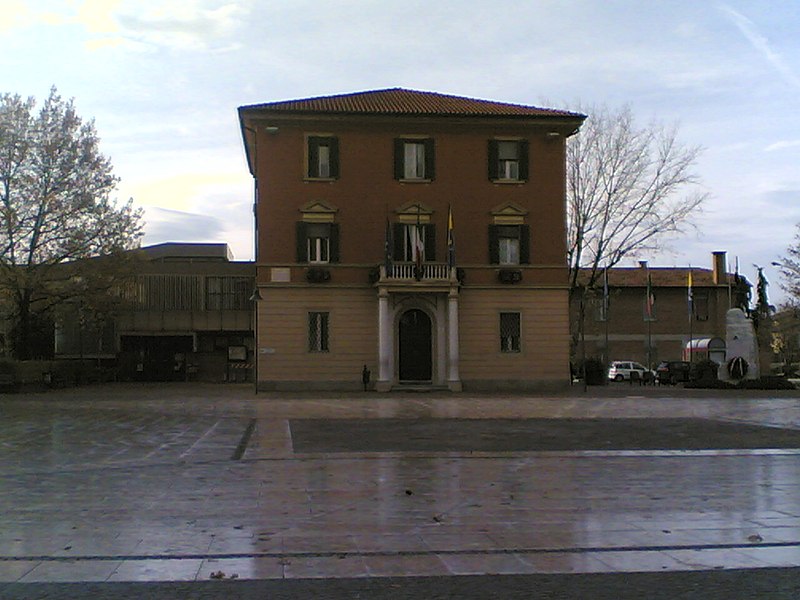
Calderara di Reno
Italian comune

Augustus
imperial rank, honorific and title

Second Triumvirate
Roman political alliance (43–32 BC)

Julia the Elder
daughter of Emperor Augustus (39 BC – AD 14)

Battle of Philippi
battle of the Roman civil war

Res Gestae Divi Augusti
autobiographical inscription of Augustus Caesar, at Temple of Rome and Augustus at Ankara, Turkey
Portland Vase
Roman cameo glass vase
Legio II Augusta
Roman legion
Forum of Augustus
second of the so-called imperial fora at Rome, built by Augustus.
Temple of Caesar
building in Roman Forum, Italy
Ferragosto
Ferragosto is a public holiday celebrated on 15 August in the whole of Italy. It originates from Feriae Augusti, the festival of Emperor Augustus, who made 1 August a day of rest after weeks of hard work on the agricultural sector. It became a custom for the workers to wish their employers buon Ferragosto and receive a monetary bonus in return. This became law during the Roman Renaissance throughout the Papal States. As the festivity was created for political reasons, the Catholic Church decided to move the festivity to 15 August, which is the Assumption of Mary allowing them to include this i
princeps
Princeps (plural: Principes) is a Latin word meaning "first in time or order; the first, foremost, chief, the most eminent, distinguished, or noble; the first person". As a title, Princeps originated in the Roman Republic wherein the leading member of the Senate was designated princeps senatus. It is primarily associated with the Roman emperors as an unofficial title first adopted by Augustus () in 27 BC. Its use in this context continued until the regime of Diocletian (r. 284–305) at the end of the third century. He preferred the title of dominus, meaning "lord" or "master". As a result, the
Legio X Fretensis
Roman legion
Final War of the Roman Republic
Last of the civil wars of the Roman Republic
Legio X Gemina
Roman legion
Liberators' Civil War
Roman civil war between the Second Triumvirate and Caesar's assassins (43–42 BCE)
Legio XIX
Roman legion
Legio XVIII
Roman legion
Perusine War
1st-century BCE civil war in the Roman Republic
Milliarium Aureum
monument, probably of marble or gilded bronze, erected by the Emperor Caesar Augustus near the Temple of Saturn in the central Forum of Ancient Rome
Via Augusta
longest and busiest of the major roads built by the Romans in ancient Hispania
Caesar's Comet
non-periodic comet
Cantabrian Wars
conflict
Great Illyrian Revolt
1st century AD military conflict
Legio XVII
Roman legion
Arch of Augustus
former triumphal arch in Rome, Italy
Bellum Siculum
civil war in the Roman Republic (42–36 BCE)
War of Mutina
a civil war between the Roman Senate and Mark Antony
Via Julia Augusta
Roman road from Placentia to the province of Gallia Narbonensis
Battle of Matina
21 April 43 BCE
Early Imperial campaigns in Germania
series of military conflicts between Germanic tribes and the Romans (12 BC - 16 AD)
Sodales Augustales
Order of Roman priests dedicated to the cult of the Emperor Augustus and the Julii
.png)
Sebastos
' ( , ) was an honorific used by the ancient Greeks to render the Roman imperial title of . The female form of the title was ' (). It was revived as an honorific in the 11th century Byzantine Empire and came to form the basis of a new system of court titles. From the Komnenian period onwards, the Byzantine hierarchy included the title sebastos and variants derived from it, like , , , and .
House of Augustus
domus
Legio X Equestris
Roman legion
Battle of Forum Gallorum
battle
Carmen saeculare
hymn by Horace
Temple of Dakka
ancient Egyptian temple
Arch of Augustus
triumphal arch in Rimini, Italy
Arc de Berà
triumphal arch in Tarraco, Spain
Lucius Cornelius Sulla
Roman consul 5 BC
Octavian's military campaigns in Illyricum
Fourth war between the Romans and Illyrians (35-33 B.C.)
Lex Titia
Roman law

Arch of Augustus
Roman monumental city gate in Fano, Pesaro-Urbino
Pact of Misenum
treaty which ended the naval blockade of the Italian Peninsula during the Sicilian revolt
Arch of Augustus
triumphal arch in Aosta, Italy
Divi Filius
Latin phrase meaning "son of a god"
Asturica Augusta
city
Arch of Augustus
archaeological site in Susa, Italy
Augustan literature
Latin literature written during the reign of Augustus (27 BCE – 14 CE)
Bierzo Edict
The Edict of Augustus from El Bierzo is a controversial document dated to 15 BC
Constitutional reforms of Augustus
Florentia
Roman city

felicior Augusto, melior Traiano
Roman phrase