Category
page 1Aulopiformes families
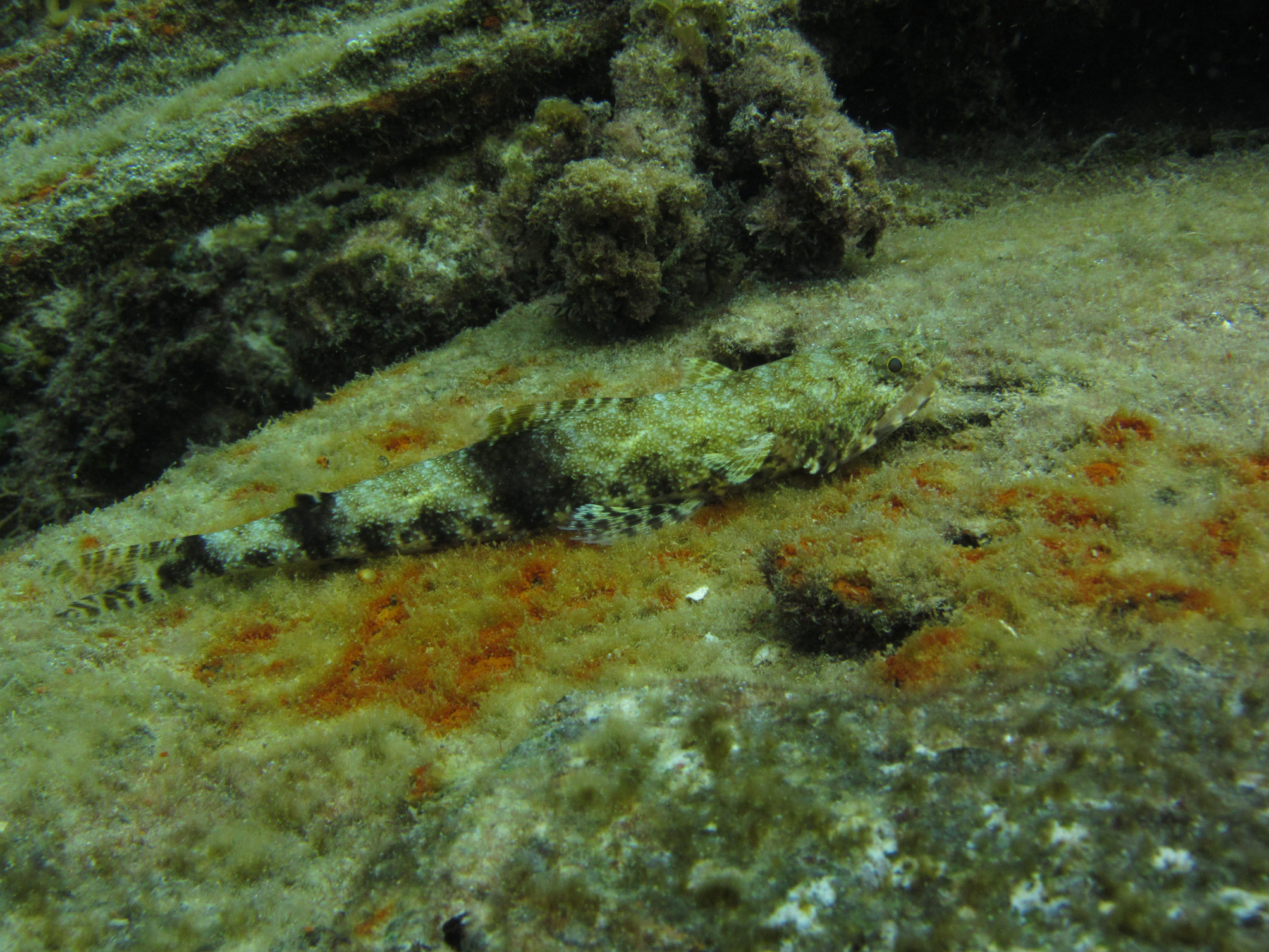
Synodontidae
The Synodontidae or lizardfishes are benthic (bottom-dwelling) marine and estuarine bony fishes that belong to the aulopiform fish order, a diverse group of marine ray-finned fish consisting of some 15 extant and several prehistoric families. They are found in tropical and subtropical marine waters throughout the world.

Ipnopidae
The Ipnopidae (deepsea tripod fishes) are a family of fishes in the order Aulopiformes. They are small, slender fishes, with maximum length ranging from about . They are found in temperate and tropical deep waters of the Atlantic, Indian, and Pacific Oceans. Abiotic factors, such as depth, temperature, dissolved oxygen concentration, pressure, and carbon concentration can all impact their distribution.
thumb|right|Mediterranean spiderfish Bathypterois dubius
A number of species, especially in the genus Bathypterois, have elongated pectoral and pelvic fins. In the case of the tripodfish, Bathy
Aulopidae
The Aulopidae are a small family of aulopiform ray-finned fish. They are found in most tropical and subtropical oceans, such as the Atlantic, Mediterranean, and Pacific. The aulopids are commonly known as flagfins.
Notosudidae
Waryfishes are deep-sea aulopiform fishes in the small family Notosudidae. They are thought to have a circumglobal distribution in subarctic to subantarctic waters. The family name Notosudidae derives from the Greek noton (back) and Latin sudis (a fish, esox, the name of salmon).
Giganturidae
REDIRECT Telescopefish

Bathysauridae
thumb|244px|Bathysaurus use their lower jaw to scoop in the sand
Pseudotrichonotidae
REDIRECT Pseudotrichonotus

Enchodontidae
Enchodontidae is an extinct family of marine enchodontoid aulopiform ray-finned fish from the Cretaceous to potentially the Eocene, being found worldwide. The family itself was diverse within its body form though unlike other enchodontoids, most genera within the family possessed rows of scutes behind the head and sides of the body. Like a large amount of extinct groups, the origin of enchodontids have remained obscured though this is mostly due to a large diversification event that happened in the Late Aptian to Middle Cenomanian. Though the family is diverse in their range and anatomy, all k
Bathysauroididae
REDIRECT Bathysauroides