Category
page 1Autumn equinox

Rosh Hashanah
Rosh Hashanah is the New Year in Judaism. The biblical name for this holiday is Yom Teruah. It is the first of the High Holy Days, as specified by Leviticus 23:23–25, that occur in the late summer/early autumn of the Northern Hemisphere. Rosh Hashanah begins the Ten Days of Repentance, culminating in Yom Kippur, the day of atonement. It is followed by the festival of Sukkot, which ends with Shemini Atzeret in Israel and Simchat Torah everywhere else.
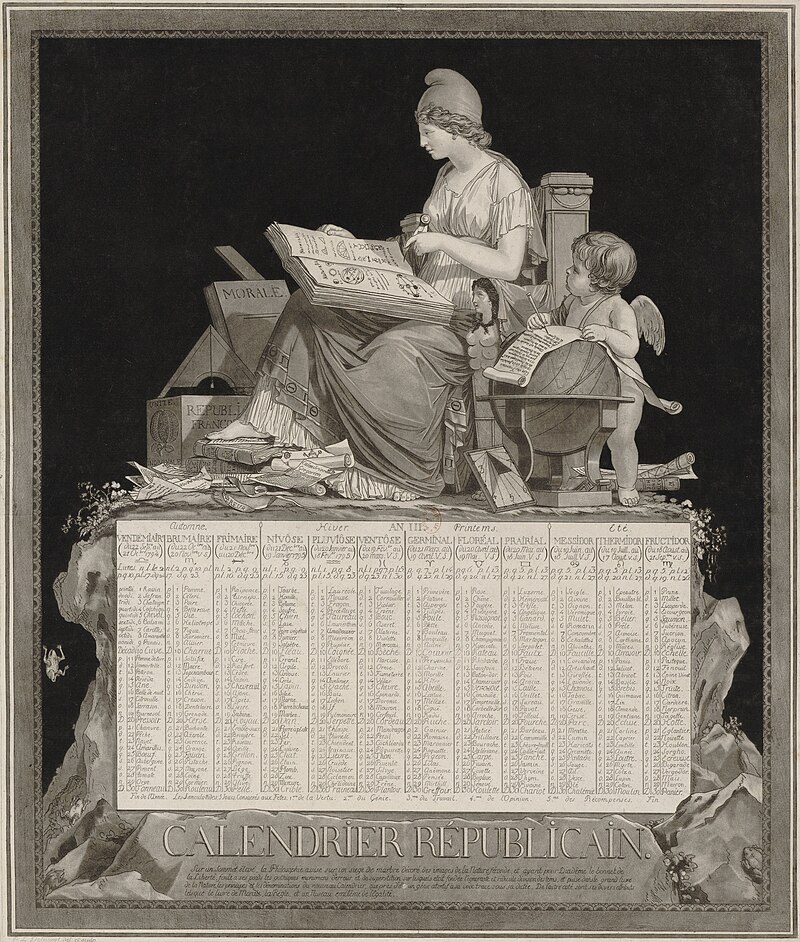
French Republican calendar
calendar

Mid-Autumn Festival
The Mid-Autumn Festival, also known as the Moon Festival or Mooncake Festival, is a harvest festival celebrated in Chinese culture. It occurs on the 15th day of the 8th month of the Chinese lunisolar calendar and can fall between 7 September and 8 October (inclusive) of the Gregorian calendar. On this day, the Chinese believe that the moon is at its fullest and brightest, coinciding with the time of harvest in the middle of autumn.

Navaratri
thumb|Durga Puja pandal

Brú na Bóinne
archaeological site

computus
calculation of the date of Easter
.jpg)
Ephor
The ephors were a board of five magistrates in ancient Sparta. They had an extensive range of judicial, religious, legislative, and military powers, and could shape Sparta's home and foreign affairs.
March equinox
the equinox on the earth when the Sun appears to leave the southern hemisphere and cross the celestial equator
.jpg)
Ch'usŏk
Chuseok (; , ), also known as Hangawi (; ; from Old Korean, "the great middle [of autumn]"), is a major Korean mid-autumn harvest festival which occurs on the 15th day of the 8th month of the lunisolar calendar, on the full moon. In South Korea, the festival lasts for three days, including the days before and after the full moon. In North Korea, Chuseok is a single-day celebration on the full moon only.
thumb|Hanbok
thumb|Songpyeon
As a celebration of the good harvest, Koreans visit their ancestral hometowns and share a feast of Korean traditional food such as songpyeon, yakgwa, fruits like As

Oxalis tuberosa
species of plant
September equinox
the equinox on the earth when the Sun appears to leave the nothern hemisphere and cross the celestial equator

Mehregan
Mehregan () or Jashn-e Mehr ( Mithra Festival) is an Iranian festival celebrated to honor the Zarathustrian yazata Mithra (), which is responsible for friendship, affection and love.
wheel of the year
annual cycle of seasonal festivals observed by many modern Pagans
Mount Monadnock
mountain in New Hampshire, USA

Dozhinki
thumb|Side road effigy during Dożynki festival near Wrocław
Dożynki (Dozhinki, , , ; , Prachystaya; ; ; Dormition) is a Slavic harvest festival. In pre-Christian times the feast usually fell on the autumn equinox, in modern times it is usually celebrated on one of the Sundays following the end of the harvest season, which fall on different days in different regions of Europe.
Brown Willy
hill in Cornwall, England

tsukimi
or , meaning, "moon-viewing", are Japanese festivals honoring the autumn moon, a variant of the Mid-Autumn Festival. The celebration of the full moon typically takes place on the 15th day of the eighth month of the traditional Japanese calendar, known as ; the waxing moon is celebrated on the 13th day of the ninth month, known as . These days normally fall in September and October of the modern solar calendar.
Qiufen
The traditional Chinese lunisolar calendar divides a year into 24 solar terms. Qiūfēn, Shūbun, Chubun, or Thu phân is the 16th solar term. It begins when the Sun reaches the celestial longitude of 180° and ends when it reaches the longitude of 195°. It more often refers in particular to the day when the Sun is exactly at the celestial longitude of 180°. In the Gregorian calendar, it usually begins around September 23 and ends around October 8.
Castlerigg stone circle
stone circle near Keswick in Cumbria, North West England
Sansculottides
The Sansculottides (; also Epagomènes; ) are holidays following the last month of the year on the French Republican calendar which was used following the French Revolution from approximately 1793 to 1805.
Autumnal Equinox Day
public holiday in Japan

Higan
thumb|right|In Japan the red spider lily signals [[shūbun, the arrival of fall. Many Buddhists will use it to celebrate the arrival of fall with a ceremony at the tomb of one of their ancestors.]]
is a Buddhist holiday exclusively celebrated by Japanese sects for seven days; three days before and after both the Spring equinox (shunbun) and Autumnal equinox (shūbun). It is observed by nearly every Buddhist school in Japan. The tradition extends from mild weather that occurs during the time of equinoxes, though the origin of the holiday dates from Emperor Shōmu in the 8th century. People who no
Sun outage
interruption in or distortion of geostationary satellite signals caused by interference from solar radiation
La Hougue Bie
historic site, with museum, in the Parish of Grouville, Jersey
Lammas
Lammas (from Old English hlāfmæsse, "loaf-mass"), also known as Loaf Mass Day, is a Christian holiday celebrated in some English-speaking countries on 1 August. The name originates from the word "loaf" in reference to bread and "Mass" in reference to the Eucharist. It is a festival in the liturgical calendar to mark the blessing of the First Fruits of harvest, with a loaf of bread being brought to the church for this purpose. Lammastide falls at the halfway point between the summer solstice and the autumn equinox. Christians also have church processions to bakeries, where those working therein
Long Meg and Her Daughters
Neolithic stone circle near Penrith, England
Miķeļi
Miķeļi
() or Miķeļdiena is a Latvian autumn equinox and annual harvest festival and market. Latvian Miķeļi dainas referred to good and rich husbands as bread fathers, who are associated with the autumn harvest ripening. In different regions, the Miķeļi celebration was also called Mīkaļiem or Mīklāli, but it is also known to other households as Sila Miķelis, Miega Miķelis, and Miega Mača. According to an old calendar, this holiday is celebrated around autumn equinox time (around 21–23 September), when the duration of night is same as the duration of day.
Tết Trung Thu
traditional Vietnamese festival