Category
page 1Aymara people
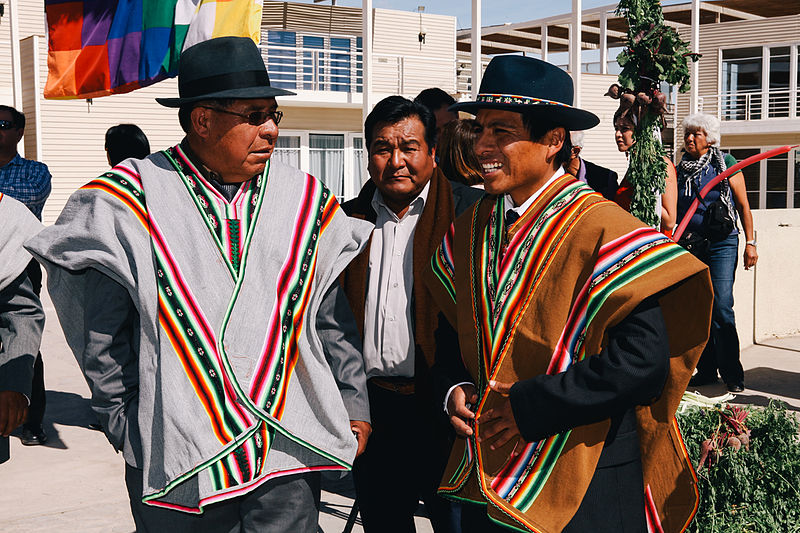
Aymara
indigenous people in the Andes and Altiplano regions of South America

Sillustani
Sillustani is a pre-Inca cemetery on the shores of Lake Umayo near Puno in Peru. The tombs, which are built above ground in tower-like structures called chullpas, are the vestiges of the Qulla people, most likely a Puquina-speaking people, conquered by the Inca Empire in the 15th century.

Chullpa
thumb|right|A chullpa at Sillustani, near [[Lake Titicaca, Peru.]]
Lupaca
The Lupaca, Lupaka, or Lupaqa people were one of the divisions of the ancestral Aymaras. The Lupaca lived for many centuries near Lake Titicaca in Peru and their lands possibly extended into Bolivia. The Lupacas and other Aymara peoples formed powerful kingdoms after the collapse of the Tiwanaku Empire in the 11th century. In the mid 15th century they were conquered by the Inca Empire and in the 1530s came under the control of the Spanish Empire.
aguayo
rectangular carrying cloth used by women in traditional Andean communities in South America
kullawada
The kullawada, also spelled kullahuada, cullaguada, or kullawa, is a dance derived from the word kullawa ("sister" in Spanish), referring to its dancers. In Bolivia, the kullawada is primarily performed during the Fiesta del Gran Poder, the Carnival of Oruro, the Festival of the Virgin of Urkupiña, and the Festival of Chutillos.
Red Ponchos
Bolivian militia
Cholita Climbers
South American mountaineering club