Category
page 1Bacterial plant pathogens and diseases
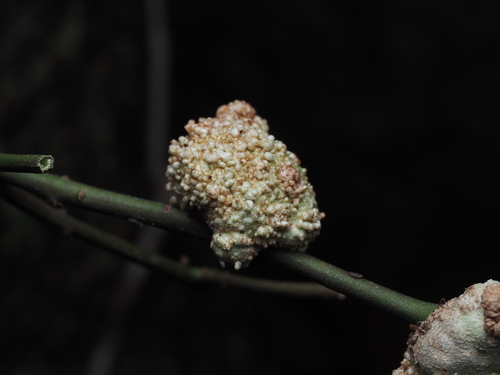
Agrobacterium tumefaciens
species of bacterium
Phytoplasma
Phytoplasmas are obligate intracellular parasites of plant phloem tissue and of the insect vectors that are involved in their plant-to-plant transmission. Phytoplasmas were discovered in 1967 by Japanese scientists who termed them mycoplasma-like organisms. Since their discovery, phytoplasmas have resisted all attempts at in vitro culture in any cell-free medium; routine cultivation in an artificial medium thus remains a major challenge. Phytoplasmas are characterized by the lack of a cell wall, a pleiomorphic or filamentous shape, a diameter normally less than 1 μm, and a very small geno

Pseudomonas syringae
species of bacterium
Erwinia
Erwinia is a genus of Enterobacterales bacteria containing mostly plant pathogenic species which was named for the famous plant pathologist, Erwin Frink Smith. It contains Gram-negative bacteria related to Escherichia coli, Shigella, Salmonella, and Yersinia. They are primarily rod-shaped bacteria.

Xylella fastidiosa
species of Gammaproteobacteria

Xanthomonas campestris
species of bacterium
Transfer DNA
type of DNA in bacterial genomes
Spiroplasma
Spiroplasma is a genus of Mollicutes, a group of small bacteria without cell walls. Spiroplasma shares the simple metabolism, parasitic lifestyle, fried-egg colony morphology and small genome of other Mollicutes, but has a distinctive helical morphology, unlike Mycoplasma. It has a spiral shape and moves in a corkscrew motion. Many Spiroplasma are found either in the gut or haemolymph of insects where they can act to manipulate host reproduction, or defend the host as endosymbionts. Spiroplasma are also disease-causing agents in the phloem of plants. Spiroplasmas are fastidious organisms, whic
Ralstonia solanacearum
species of bacterium
Common scab
Plant disease affecting potatoes and other crops
Pectobacterium carotovorum
species of bacterium
Leaf spot
leaf disease caused by fungal pathogen
pathovar
thumb|Bacterial black spot of mango caused by Xanthomonas citri pv. mangiferaeindicae|Xanthomonas citri pv. mangiferaeindicae
A pathovar is a bacterial strain or set of strains with the same or similar characteristics, that is differentiated at infrasubspecific level from other strains of the same species or subspecies on the basis of distinctive pathogenicity to one or more plant hosts.
thumb|Bacterial leaf blight of common panax (Polyscias guilfoylei) caused by Xanthomonas campestris pv. hederae
Pathovars are named as a ternary or quaternary addition to the species binomial name, for example
Pseudomonas savastanoi
species of bacterium

Bacterial wilt
genus of bacteria
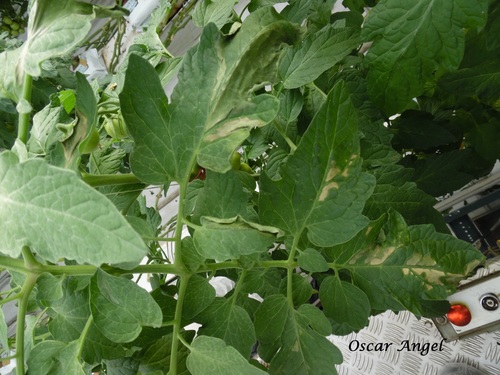
Clavibacter michiganensis
species of bacterium
Pseudomonas marginalis
species of bacterium
Burkholderia glumae
species of bacterium

Aster yellows
Plant disease
Pseudomonas corrugata
species of bacterium
Rhizobacter
Rhizobacter is a bacterial genus from the class Gammaaproteobacteria order Pseudomonadales. It is a plant pathogenic bacterium and, like a few other phytopathogenic bacteria, produces tumors in infected plants. It appears to have an extremely wide host range, producing tumors (galls) on the roots, stems and tubers of at least 46 species of plants from 24 families, which includes many economically important species such as tomato (Solanum lycopersicum) and cabbage (Brassica oleracea). The type species, Rhizobacter dauci was first identified causing carrot bacterial gall in Japan and was describ
Xanthomonas oryzae
species of bacterium

Acidovorax citrulli
species of bacterium
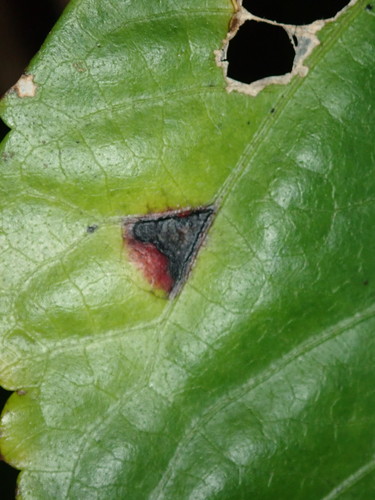
Pseudomonas cichorii
species of bacterium
Rhodococcus fascians
species of bacterium