Category
page 1Bacterial vaginosis

bacterial vaginosis
vaginal infection caused by excessive growth of bacteria

Mycoplasma
Mycoplasma is a genus of bacteria that, like the other members of the class Mollicutes, lack a cell wall (peptidoglycan) around their cell membrane. The absence of peptidoglycan makes them naturally resistant to antibiotics such as the beta-lactam antibiotics that target cell wall synthesis. They can be parasitic or saprotrophic.

vaginal discharge
mixture of liquid, cells, and bacteria, produced in the vagina and cervix, lubricating and protecting the vagina

Bifidobacterium
Bifidobacterium is a genus of gram-positive, nonmotile, often branched anaerobic bacteria. They are ubiquitous inhabitants of the gastrointestinal tract though strains have been isolated from the vagina and mouth (B. dentium) of mammals, including humans. Bifidobacteria are one of the major genera of bacteria that make up the gastrointestinal tract microbiota in mammals. Some bifidobacteria are used as probiotics.

douche
A douche is a device used to introduce a stream of water into the body for medical or hygienic reasons, or for the stream of water itself. Douche usually refers to vaginal irrigation, the rinsing of the vagina, but it can also refer to the rinsing of any body cavity. A douche bag is a piece of equipment for douching—a bag for holding the fluid used in douching. To avoid transferring intestinal bacteria to the vagina, the same bag must not be used for both an enema and a vaginal douche.
Ureaplasma urealyticum
species of bacterium

Mycoplasma hominis
species of bacterium
Porphyromonas gingivalis
species of bacterium
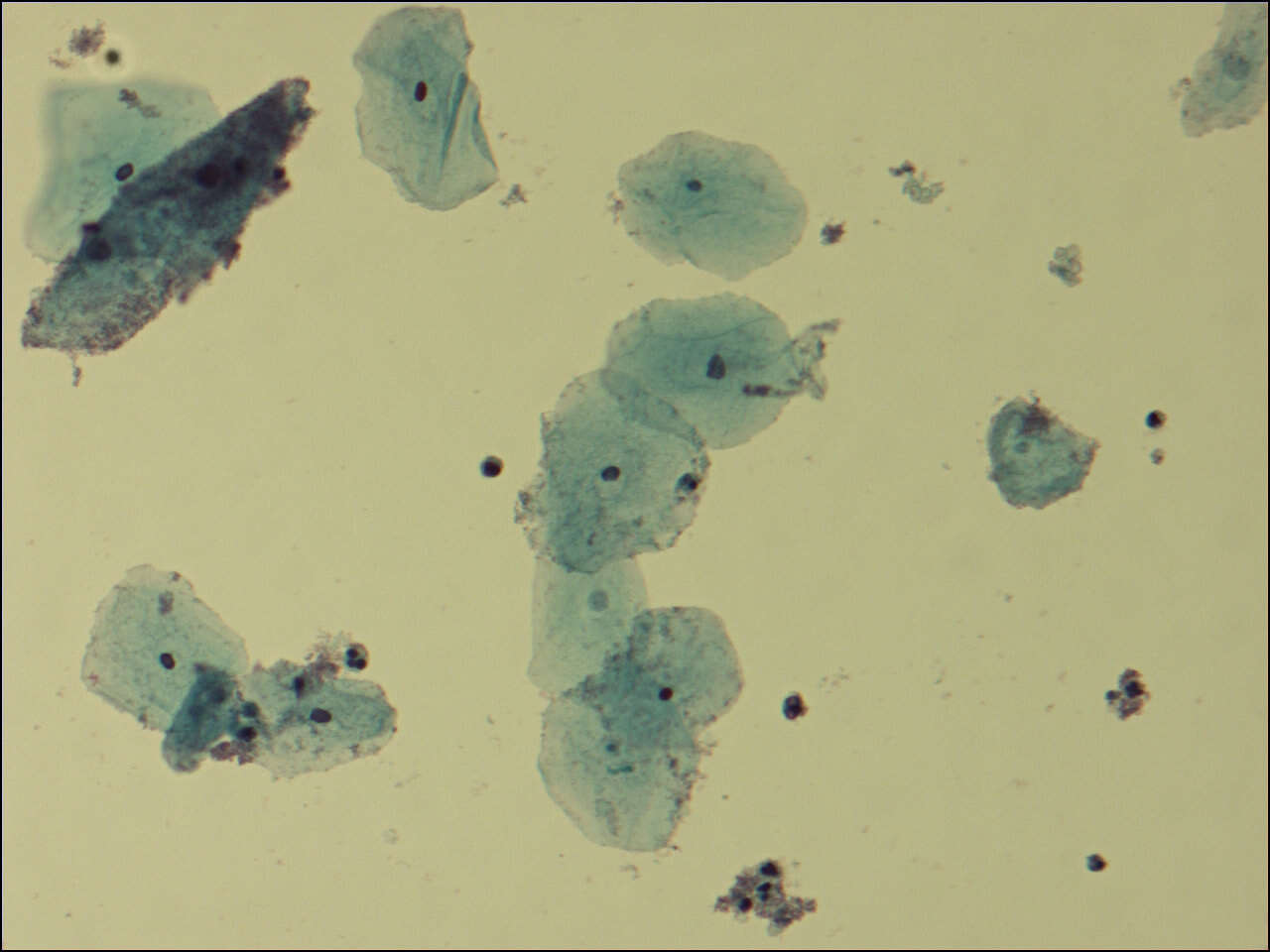
Gardnerella vaginalis
species of facultative anaerobic bacteria

Peptostreptococcus
Peptostreptococcus is a genus of anaerobic, Gram-positive, non-spore forming bacteria. The cells are small, spherical, and can occur in short chains, in pairs or individually. They typically move using cilia. Peptostreptococcus are slow-growing bacteria with increasing resistance to antimicrobial drugs. Peptostreptococcus is a normal inhabitant of the healthy lower reproductive tract of women.
Actinomycetota
The Actinomycetota (previously known as "Actinobacteria") are a diverse phylum of Gram-positive bacteria with high guanine-cytosine content (GC content or G+C content). They can be terrestrial or aquatic. They are of great importance to land flora because of their contributions to soil systems. In soil, they help decompose organic matter of dead organisms so the molecules can be taken up anew by plants. While this role is also played by fungi, actinomycetota are much smaller and likely do not occupy the same ecological niche. In this role, the colonies often grow extensive mycelia, as fungi do
Peptococcus
Peptococcus is a Gram-positive bacterium genus in the family Peptococcaceae.
Fusobacterium nucleatum
species of bacterium
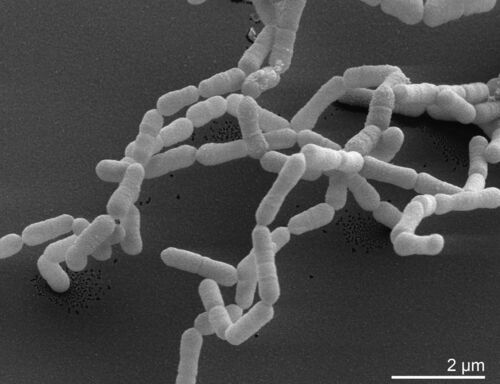
Eggerthella
Eggerthella is a bacterial genus of Actinomycetota, in the family Coriobacteriaceae. Members of this genus are anaerobic, non-sporulating, non-motile, Gram-positive bacilli that grow singly, as pairs, or in short chains. They are found in the human colon and feces and have been implicated as a cause of ulcerative colitis, liver and anal abscesses and systemic bacteremia.
Tannerella forsythia
species of bacterium
Aggregatibacter actinomycetemcomitans
species of bacterium
Eubacterium
Eubacterium is a genus of Gram-positive bacteria in the family Eubacteriaceae. These bacteria are characterised by a rigid cell wall. They may either be motile or nonmotile. If motile, they have a flagellum. A typical flagellum consists of a basal body, filament, and hook. The long filament is the organ which helps eubacteria move.
Prevotella intermedia
species of bacterium
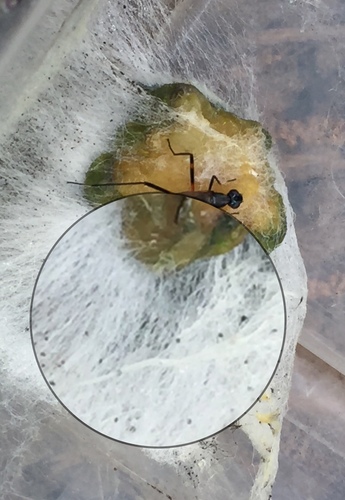
Actinomyces naeslundii
species of bacterium

Megasphaera
Megasphaera is a genus of Bacillota bacteria classified within the class Negativicutes.
Treponema denticola
species of bacterium
Mobiluncus
Mobiluncus is a genus of Gram-positive, anaerobic, rod-shaped bacteria. These bacteria may be stained either Gram-negative or Gram-variable. However, they are classified as Gram-positive rods due to the fact that they possess a Gram-positive cell wall, lack endotoxin and are sensitive to vancomycin, erythromycin and ampicillin, but resistant to colistin.
Peptoniphilus
Peptoniphilus is a genus of bacteria in the phylum Bacillota (Bacteria).
Veillonella parvula
species of bacterium
Anaerococcus
Anaerococcus is a genus of bacteria. Its type species is Anaerococcus prevotii. These bacteria are Gram-positive and strictly anaerobic. The genus Anaerococcus was proposed in 2001. Its genome was sequenced in August 2009. The genus Anaerococcus is one of six genera classified within the group GPAC (Gram-Positive Anaerobic Cocci). These six genera (Peptostreptococcus, Peptoniphilus, Parvimonas, Finegoldia, Murdochiella, and Anaerococcus) are found in the human body as part of the commensal human microbiota.