Category
page 1Baeomycetales

Baeomycetales
The Baeomycetales are an order of mostly lichen-forming fungi in the subclass Ostropomycetidae, in the class Lecanoromycetes. It contains 8 families, 33 genera and about 170 species. As a result of molecular phylogenetics research published in the late 2010s, several orders were folded into the Baeomycetales, resulting in a substantial increase in the number of taxa.

Baeomyces rufus
species of fungus

Trapelia
Trapelia is a genus of lichen-forming fungi in the family Trapeliaceae. These lichens form tight, crusty patches on rocks and bark that may appear smooth at first but often crack into small plates over time. The genus was established by the French lichenologist Maurice Choisy in 1929 and contains more than 20 species found worldwide. Most species reproduce through small, -shaped fruiting bodies that range from pale pink-brown to nearly black, and many can be identified by specific chemical compounds they produce.
Baeomycetaceae
REDIRECT Baeomycetales
Trapeliaceae
Trapeliaceae is a family of lichens in the order Baeomycetales. The family contains 12 genera and about 125 species.
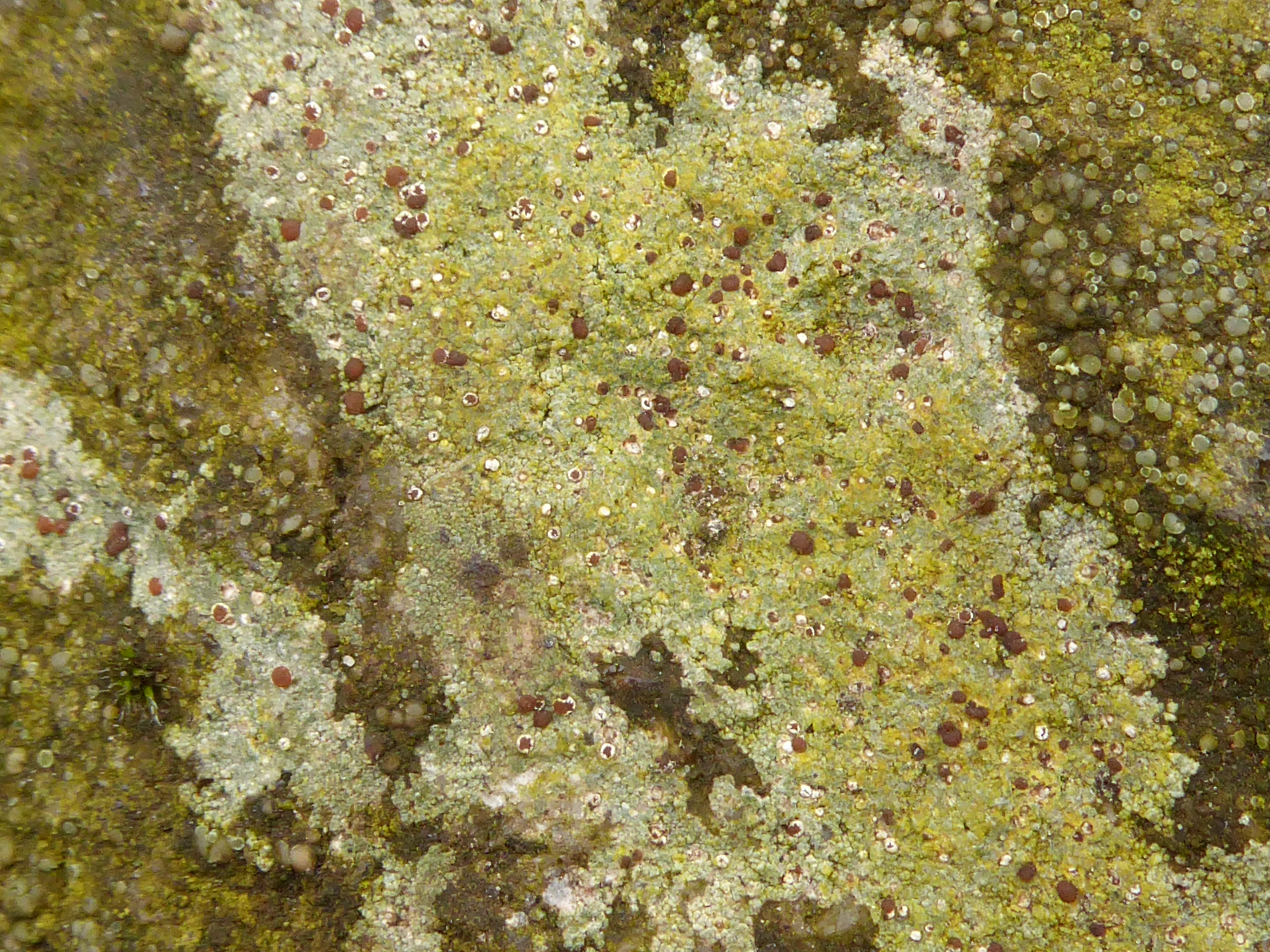
Trapelia coarctata
species of fungus

Baeomyces
Baeomyces is a genus of lichen-forming fungi in the family Baeomycetaceae. Members of Baeomyces are commonly called beret lichens. These lichens are radily recognised by their distinctive "matchstick" appearance, with small brown fruiting bodies held up on short stalks above a crusty base. They typically grow in disturbed habitats such as roadsides, bare soil, and mining sites, where they act as pioneer colonisers of acidic ground.

Trapeliopsis
Trapeliopsis is a genus of lichen-forming fungi in the family Trapeliaceae. These lichens form thin, granular crusts or tiny overlapping scales () that create miniature rosette patterns on their growing surface. The genus was established in 1980 by Hannes Hertel and Gotthard Schneider and includes about 20 species found worldwide.

Xylographa
Xylographa is a genus of lichen-forming fungi in the family Xylographaceae. These lichens are commonly found growing on decaying wood, where they form thin, often nearly invisible crusts. The genus is most readily recognized by its distinctive elongated, slit-like fruiting bodies that follow the grain of the wood.

Placynthiella
Placynthiella is a genus of lichen-forming fungi in the family Trapeliaceae. The genus has a complex naming history involving multiple independent descriptions by different scientists between 1909 and 1939, with the current accepted name dating to the earliest valid publication by Alexander Elenkin. These lichens form thin, dark green-brown crusts that blend closely with their growing surfaces, making them challenging to spot in the field on acidic soils, decaying wood, and bark. The genus is distinguished from similar lichen groups by its distinctive brown, brick-like fruiting body margins an

Hymeneliaceae
Hymeneliaceae is a family of lichen-forming fungi in the order Baeomycetales. It contains three genera and about 40 species. The family was circumscribed by German lichenologist Gustav Wilhelm Körber in 1855.

Protothelenellaceae
The Protothelenellaceae are a family of mostly lichen-forming fungi in the order Baeomycetales. The family was established in 1985 and includes three genera with about 22 species worldwide. These fungi typically form thin crusts on rocks, soil, mosses, plant debris, or wood, and are found on nearly every continent. Most family members produce flask-shaped fruiting bodies embedded in their crusty thalli, with spores that have internal dividing walls. The family's evolutionary relationships have been debated, with some scientists arguing whether certain genera should be separated into their own

Ainoa
Ainoa is a genus of lichens in the family Baeomycetaceae. It was named in honour of the German lichenologist Aino Henssen. These rock-dwelling lichens form thin crusts that break into small flakes and are distinguished by their abundant dark brown to black button-like fruiting bodies that sit on short stalks. The genus includes three species found in cool mountainous regions, where they grow on hard siliceous rocks and can withstand repeated cycles of wetting and drying.
Arctomiaceae
The Arctomiaceae are a family of lichen-forming fungi in the Ascomycota, class Baeomycetales. The family was named by Theodor Magnus Fries in 1861, with Arctomia as the type genus. Species in this family are found in arctic and subarctic habitats, usually associated with bryophytes. In overall morphology, the Arctomiaceae combine features that are otherwise uncommon together within the Ostropomycetidae: a consistent association with cyanobacterial genus Nostoc, gelatinous thalli, and fruiting bodies that develop openly rather than being enclosed.

Ptychographa xylographoides
Ptychographa is a fungal genus in the family Xylographaceae. It is a monospecific genus, containing the single species Ptychographa xylographoides. This inconspicuous lichen grows as a barely visible coating of dark grains on rotting logs and branches in undisturbed old forests. The species is most readily identified by its narrow, elongated black fruiting structures that run parallel to the wood grain.

Baeomyces heteromorphus
species of fungus

Trapeliopsis steppica
species of fungus

Rimularia
Rimularia is a genus of lichen-forming fungi in the family Trapeliaceae. Established by the Finnish lichenologist William Nylander in 1868 from specimens collected on granitic rocks in France, the genus comprises 14 accepted species as of 2025. These rock-dwelling lichens form thin, crust-like growths that range from reddish-brown to dark olive-brown in colour and produce small black fruiting bodies with distinctive branched internal structures.

Xylographa soralifera
species of fungus

Rimularia exigua
species of fungus

Lithographa
Lithographa is a genus of lichen-forming fungi in the family Xylographaceae. These rock-dwelling lichens form tightly attached crusts that crack into small tile-like patches, typically appearing in shades of grey, brown, or nearly black. The genus includes six species found primarily in cold regions and high mountains, where they grow on hard rock surfaces in harsh environments. They reproduce through distinctive elongated or round fruiting bodies that appear as dark slits or discs embedded in the crusty surface.
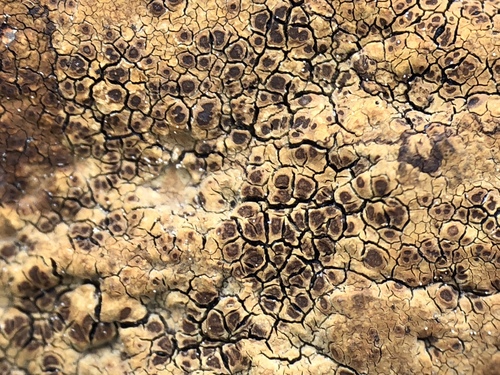
Ionaspis
Ionaspis is a genus of lichen-forming fungi in the family Hymeneliaceae. It contains six species of saxicolous (rock-dwelling), crustose lichens. The genus was originally circumscribed in 1871 by Theodor Magnus Fries. He segregated the genus from Aspicilia based on the presence of Trentepohlia rather than Trebouxia as the partner.

Baeomyces carneus
species of fungus

Thrombium
Thrombium is a genus of lichen-forming fungi in the family Protothelenellaceae. The genus was established in 1831 by the German lichenologist Karl Friedrich Wilhelm Wallroth, who originally described numerous species under this name. Thrombium species are characterized by their extremely thin, often barely visible crusty thalli and tiny black fruiting bodies embedded in the substrate. These lichens grow on soil, rocks, mosses, and plant debris in various habitats around the world. The genus has undergone significant taxonomic revision over the years, with DNA studies confirming its placement i
Orceolina
Orceolina is a small genus of lichen-forming fungi in the family Trapeliaceae. Established in 1970 as a replacement name for an earlier genus that was already used for flowering plants, Orceolina comprises just two species that form orange to deep red crusty patches on sun-exposed rocks. These lichens are found exclusively on the windswept subantarctic islands of the southern Indian Ocean, where they grow from sea level to alpine ridges on basaltic and granitic surfaces.

Protothelenella
Protothelenella is a genus of fungi in the family Protothelenellaceae. It contains 11 species, some of which form lichens. Protothelenella species have a crustose thallus with spherical to pear-shaped, dark brown to blackish . Microscopic characteristics of the genus include asci with an amyloid , and that are colourless and contain multiple internal partitions. Some species grow on acidic including rocks, soil, bryophytes, plant detritus or rotten wood. Other species are lichenicolous (lichen-dwelling), growing on species of Solorina, Peltigera, Pseudocyphellaria, or Cladonia.
Xylographaceae
Xylographaceae is a family of lichen-forming fungi in the order Baeomycetales. It contains four genera and 25 species.

Arctomia
Arctomia is a genus of lichen-forming fungi in the family Arctomiaceae. The genus was established in 1860 by the Swedish lichenologist Theodor Magnus Fries, and species of Arctomia are mainly distributed in circumpolar regions of the Northern Hemisphere. A comprehensive molecular study published in 2025 confirmed that the genus forms a distinct evolutionary lineage within its family. Species typically grow as thin, reddish-brown to blackish crusts on plant debris, mosses, or tree bark in cold northern regions, with their distribution ranging from the Arctic tundra to boreal forests and alpine

Xylographa vitiligo
species of fungus