Category
page 1Baleen whales
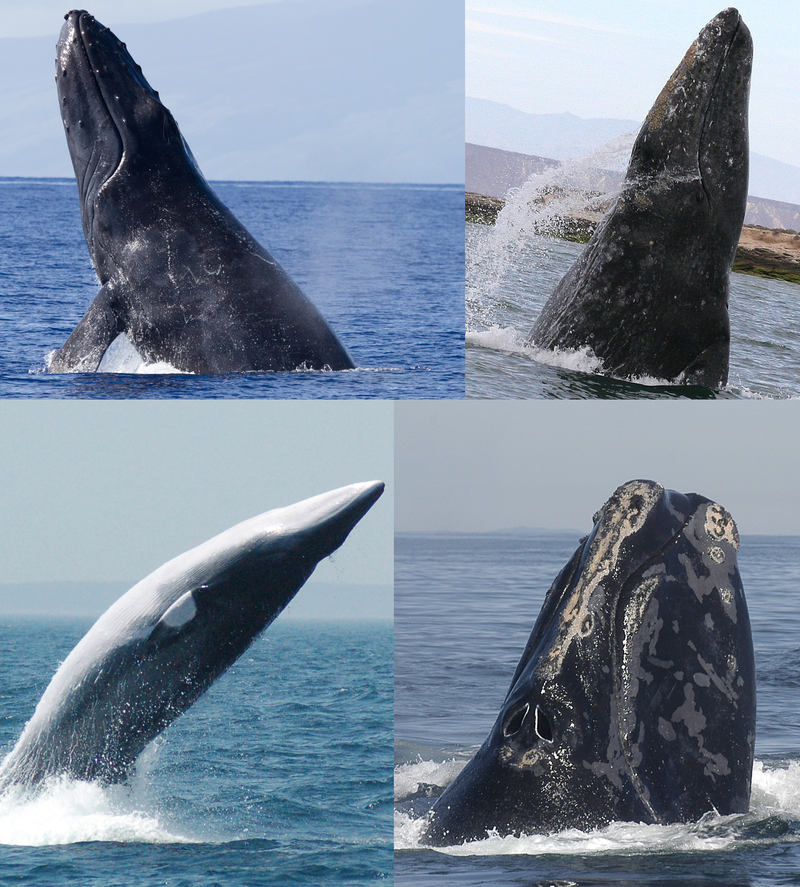
Mysticeti
parvorder of mammals

Balaenopteridae
Rorquals () are the largest group of baleen whales, comprising the family Balaenopteridae, which contains nine extant species in two genera. They include the largest animal ever known to have lived, the blue whale, which can reach , and the fin whale, which reaches ; even the smallest of the group, the northern minke whale, reaches .

Balaenidae
Balaenidae () is a family of whales of the parvorder Mysticeti (baleen whales) that contains mostly fossil taxa and two living genera: the right whale (genus Eubalaena), and the closely related bowhead whale (genus Balaena).
Cetotheriidae
Cetotheriidae is a family of baleen whales (parvorder Mysticeti). The family is known to have existed from the Late Oligocene to the Early Pleistocene before going extinct. Although some phylogenetic studies conducted by recovered the living pygmy right whale as a member of Cetotheriidae, making the pygmy right whale the only living cetotheriid, other authors either dispute this placement or recover Neobalaenidae as a sister group to Cetotheriidae.

Eschrichtiidae
Eschrichtiidae or the gray whales is a family of baleen whale (Parvorder Mysticeti) with a single extant species, the gray whale (Eschrichtius robustus), as well as four described fossil genera: Archaeschrichtius (Miocene), Glaucabalaena and Eschrichtioides (Pliocene) from Italy, and Gricetoides from the Pliocene of North Carolina. Some phylogenetic studies have found this family to be invalid, with its members nesting inside of the clade Balaenopteridae. The names of the extant genus and the family honours Danish zoologist Daniel Eschricht.

Balaenoptera edeni
species of mammal

Janjucetus
Janjucetus is an extinct genus of baleen whale that lived during the Late Oligocene (Chattian) in south-east Australia, around 25 million years ago. Remains of the genus have been found in the Jan Juc Marl in the Jan Juc Formation near the township of the same name, and have been assigned to two species: the type species J. hunderi and J. dullardi. This locality has yielded remains of more extinct cetaceans, including Prosqualodon, Waipatia, and the related Mammalodon.
Mammalodon
Mammalodon is an extinct genus of archaic baleen whale belonging to the family Mammalodontidae.
Neobalaenidae
Neobalaenidae is a defunct family of baleen whales (suborder Mysticeti) including the extant pygmy right whale. Although traditionally considered related to balaenids, recent studies by Fordyce and Marx (2013) and Ludovic Dutoit and colleagues (2023) have recovered the living pygmy right whale as a member of Cetotheriidae, making it the only extant cetotheriid. Not all authors agree with this placement.
Mystacodon
Mystacodon is a genus of toothed baleen whale from the Late Eocene Yumaque Member of Paracas Formation (previously called as Yumaque Formation) of the Pisco Basin in southwestern Peru. It is the oldest known baleen whale, and was probably a suction feeder of small prey on the seafloor.
Mammalodontidae
Mammalodontidae is a family of extinct whales known from the Oligocene of Australia and New Zealand.
Eobalaenoptera
Eobalaenoptera is an extinct genus of baleen whale belonging to Balaenopteroidea.
Aetiocetidae
Aetiocetidae is an extinct family of toothed baleen whales known from the Oligocene and latest Eocene, so far only from rocks deposited in the North Pacific Ocean. The whales ranged in size from long. Many of the described specimens were discovered from the Upper Oligocene of the Japanese Morawan Formation, the largest known one from the Morawan's Upper tuffaceous siltstone. Other formally described extinct toothed mysticetis from this time are smaller, from in length. Mysticeti with true baleen are seen in fossils from the Upper Oligocene. The monophyly of the family is still uncertain, as ar
Llanocetidae
Llanocetidae is an extinct family of ancient toothed baleen whales from the Eocene. It was named by American paleontologist Edward Mitchell in 1989 after describing the Antarctic Llanocetus, but a 2018 study by paleontologists Ewan Fordyce and Felix Marx included the Peruvian Mystacodon and an undescribed New Zealand specimen OU GS10897.
Pelocetidae
Pelocetidae is an extinct family of baleen whales. This family existed during the Miocene in North America, Europe, Australia and Japan.
Llanocetus
Llanocetus ( "Llano's whale" ) is a genus of extinct toothed baleen whales from the Late Eocene of Antarctica and New Zealand. The type species, Llanocetus denticrenatus, reached gigantic proportions, with the juvenile specimen reaching an estimated in length; a second, unnamed species, known only from three isolated premolar teeth, reached an estimated total body length of up to . Like other contemporary baleen whales of the Eocene, Llanocetus completely lacked baleen in its jaws. It was probably a suction feeder like the modern beaked and pygmy right whales.
Eomysticetidae
Eomysticetidae is a family of extinct mysticetes belonging to Chaeomysticeti (toothless mysticetes). It is one of two families in the basal chaeomysticete clade Eomysticetoidea (the other being Cetotheriopsidae).
Idiocetus
Idiocetus ("unique whale") is a genus of extinct cetaceans of the family Balaenidae.
Yamatocetus
Yamatocetus canaliculatus is an extinct species of eomysticetid baleen whale from the Late Oligocene of Japan.