Category
page 2Barnacles
Catophragmidae
The Catophragmidae are a family of barnacles in the superfamily Chthamaloidea with eight shell wall plates (a rostrum plate, carinal plates, paired rostrolateral plates, carinolateral plates I and II), surrounded by several whorls of imbricating plates. The basis is membranous.
Iblidae
Iblidae is a family of crustaceans belonging to the order Iblomorpha. There are two genera in the family, each with its own subfamily.
Lepas hilli
species of crustacean
Lithotrya
Lithotrya is a genus of crustaceans belonging to the monotypic family Lithotryidae.
Euraphia hembeli
species of crustacean
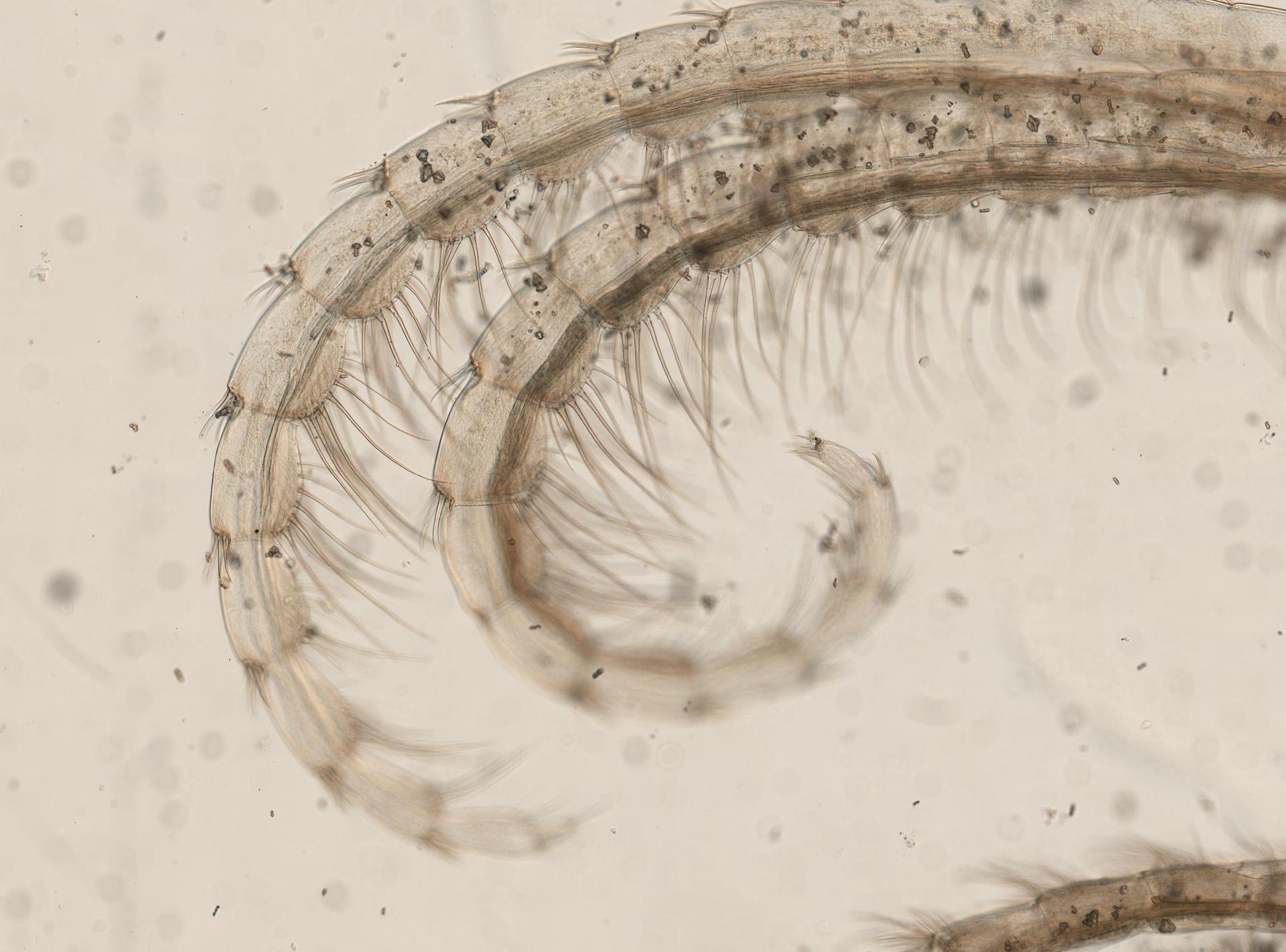
Lepas pectinata
species of crustacean
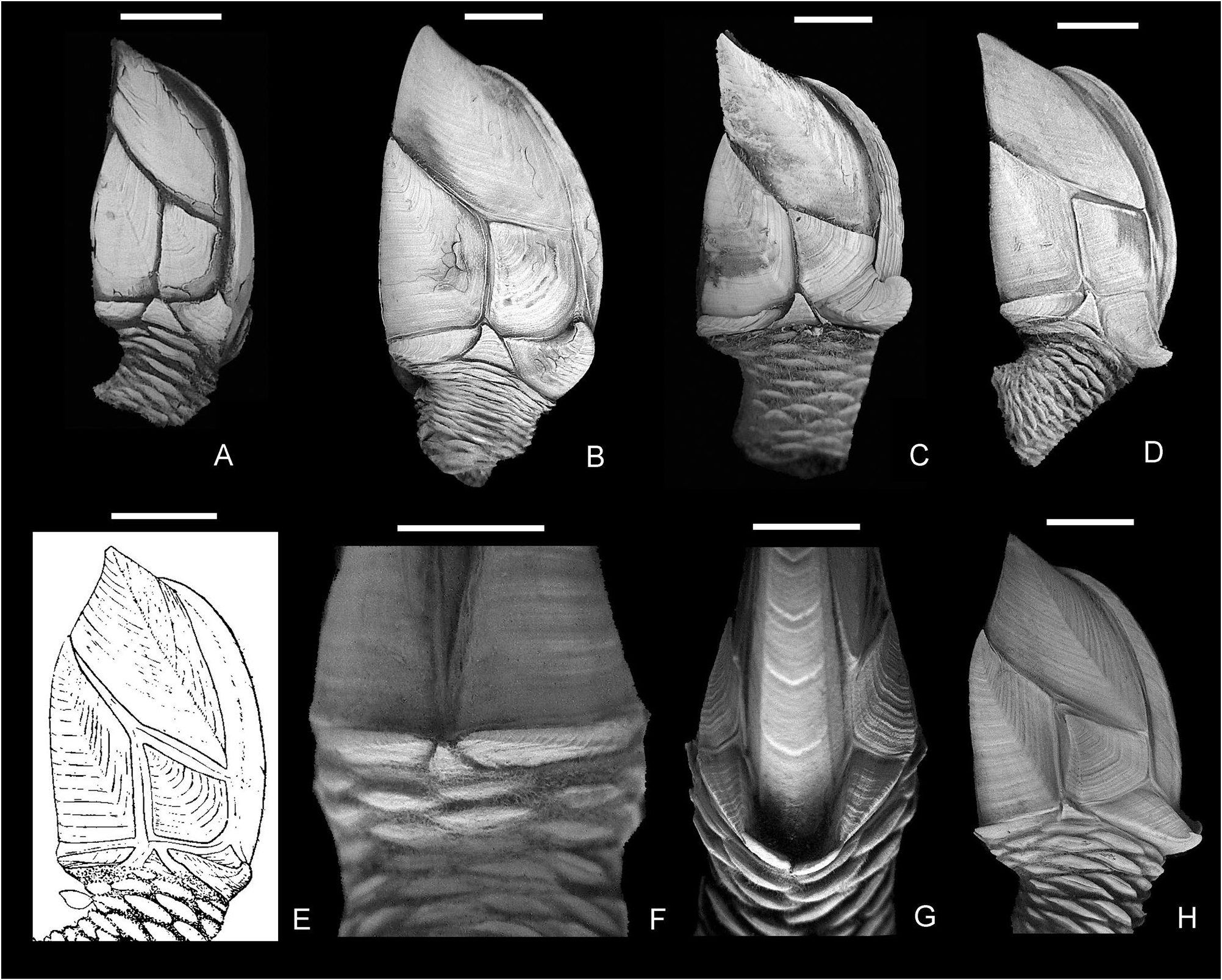
Arcoscalpellum
Arcoscalpellum is a large genus of stalked barnacles found worldwide. It is classified in the family Scalpellidae, subfamily Scalpellinae, and species are found from shallow waters down to depths of over 5 kilometres. The genus is well-represented in the fossil record as far back as the Cretaceous period.
Peltogasterella sulcata
species of crustacean
Oxynaspididae
Oxynaspididae is a family of goose barnacles in the order Lepadiformes.
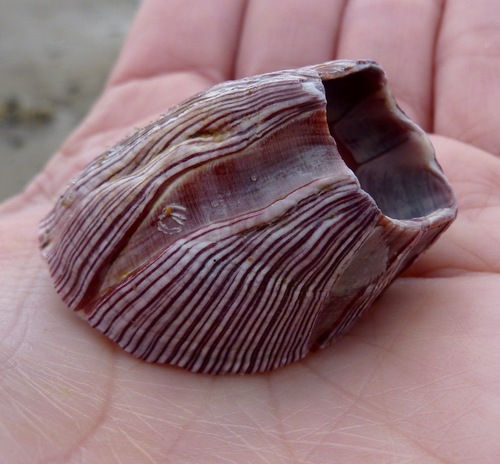
Megabalanus californicus
species of crustacean
Koleolepadidae
In the past, Koleolepadidae was considered a family of barnacles with a single genus, Koleolepas. Research published in 2021 by Chan et al. resulted in Koleolepas being moved to the family Heteralepadidae. The family Koleolepadidae is no longer active.
Verrucomorpha
Verrucomorpha is an order of asymmetrical sessile barnacles in the class Thecostraca. They are typically found in deeper and deep-sea habitats. There are 2 families and more than 100 described species in Verrucomorpha.
Loxothylacus
Loxothylacus is a genus of parasitic barnacles in the family Sacculinidae. There are more than 20 described species in Loxothylacus.
Lernaeodiscidae
In the past, Lernaeodiscidae has been considered a family of barnacles. Research published in 2021 by Chan et al. resulted in the genera of Lernaeodiscidae being merged with that of Peltogastridae, which now contains the members of both families. As an exception, the species Triangulus galatheae was moved to the genus Paratriangulus in the family Triangulidae.
Heterosaccus
Heterosaccus is a genus of barnacles in infraclass Rhizocephala. Like other taxa in this group, they parasitize crabs. Geoffroy Smith circumscribed the genus in 1906; he initially only included H. hians. Smith circumscribed a genus distinct from Sacculina due to a difference of the mesentery; in Heterosaccus, the mesentery does not stretch down to the mantle opening but rather only is present on the ring of attachment.
Dosima
Dosima is a genus of goose barnacles in the family Lepadidae. There are at least two described species in Dosima.
Cryptophialus
Cryptophialus is a genus of barnacles. It was described by Charles Darwin in 1854.
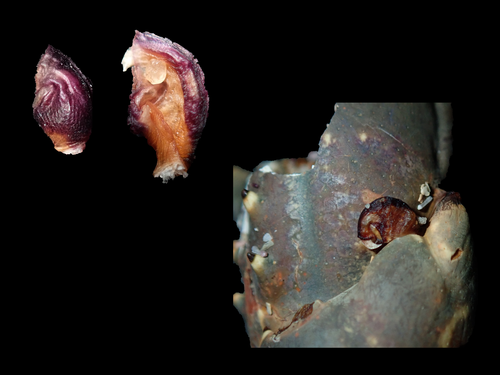
Paralepas
Paralepas is a genus of goose barnacles in the family Heteralepadidae.

Peltogasterella
Peltogasterella is a genus of parasitic barnacles in the family Peltogasterellidae. There are at least four described species in Peltogasterella.
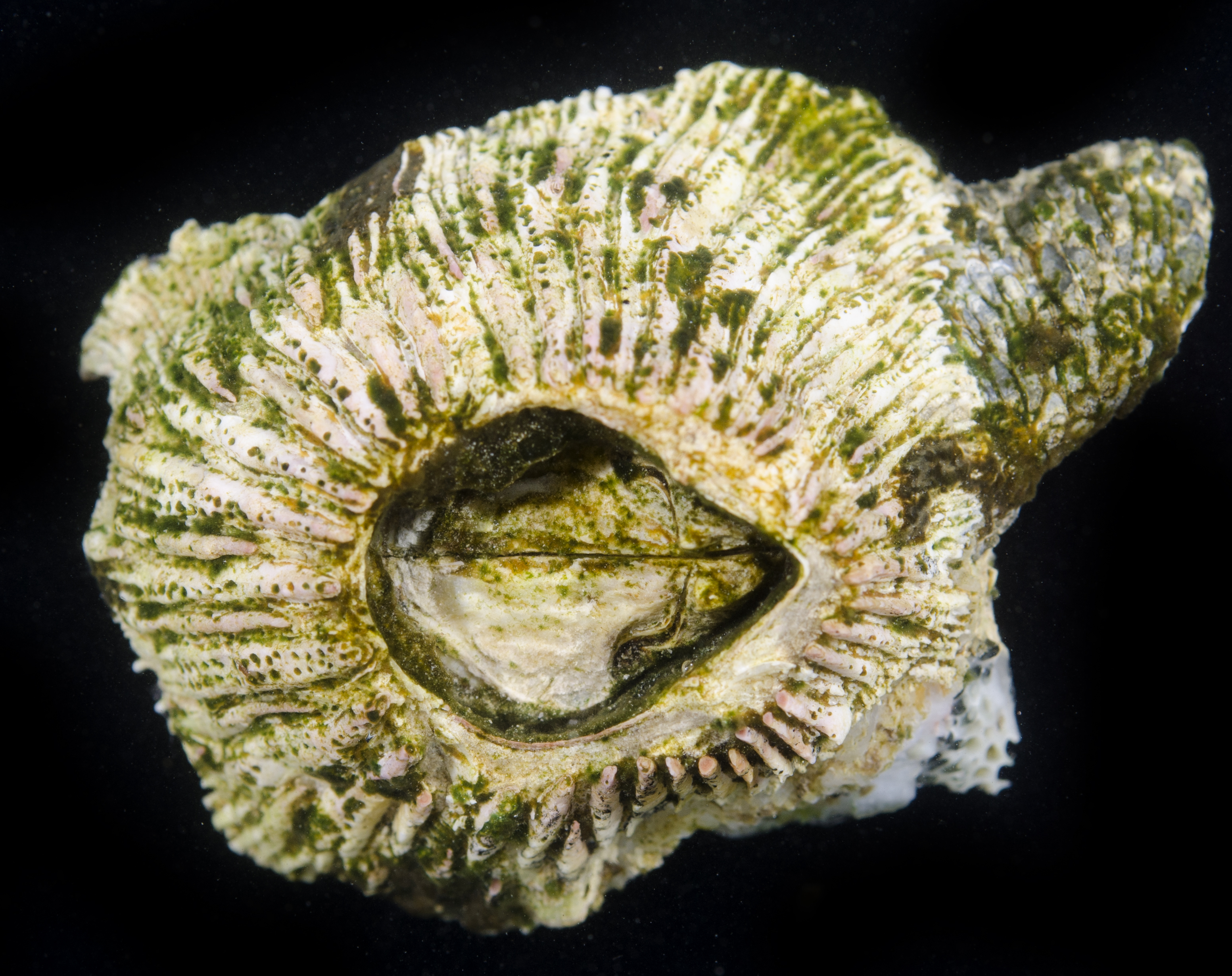
Euraphia
Euraphia is a genus of star barnacles in the family Chthamalidae. There are at least three described species in Euraphia.
Platylepas
Platylepas is a genus of barnacles in the family Platylepadidae of the subphylum Crustacea.
Koleolepas
Koleolepas is a genus of crustaceans belonging to the family Heteralepadidae.
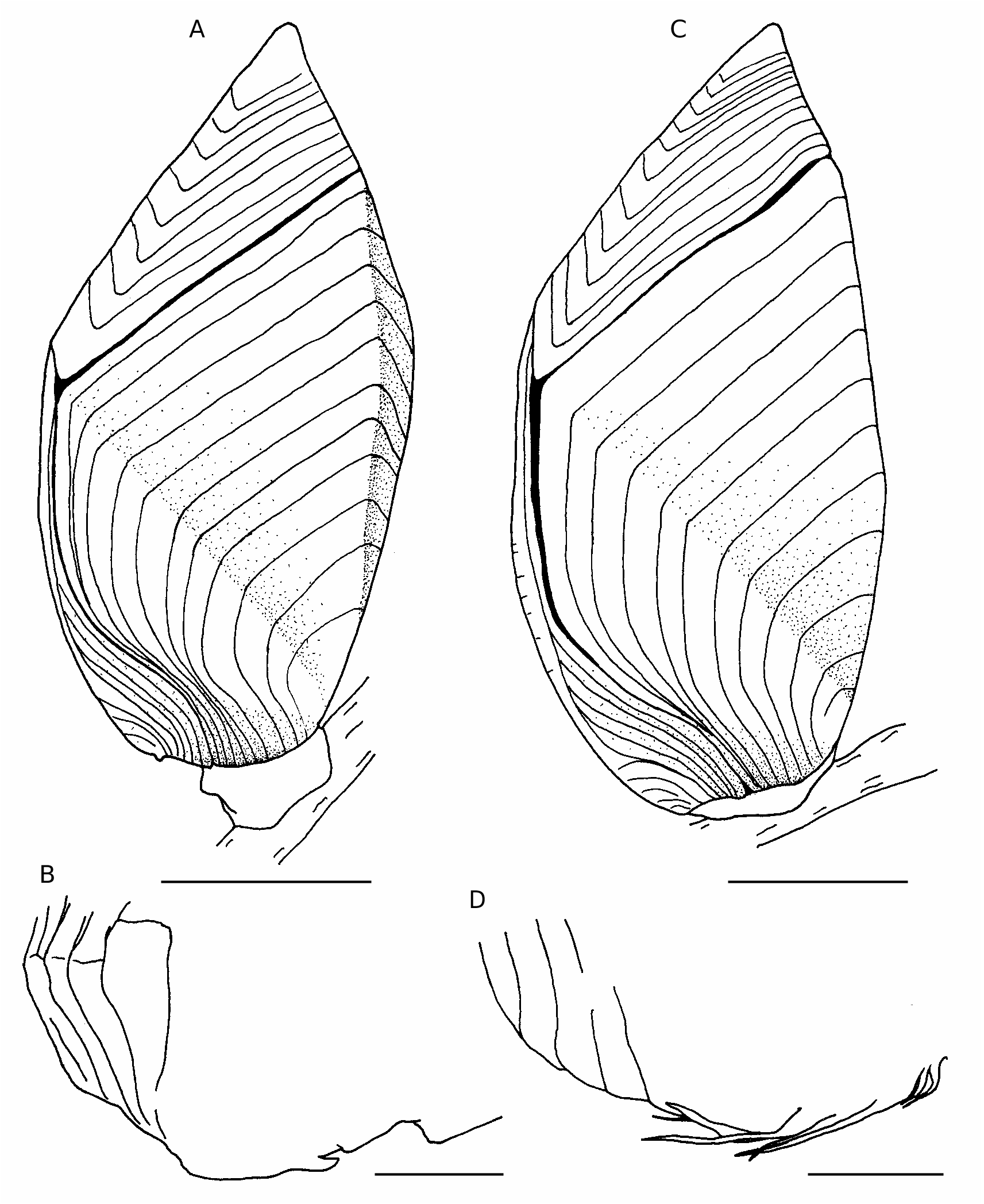
Glyptelasma hamatum
species of crustacean
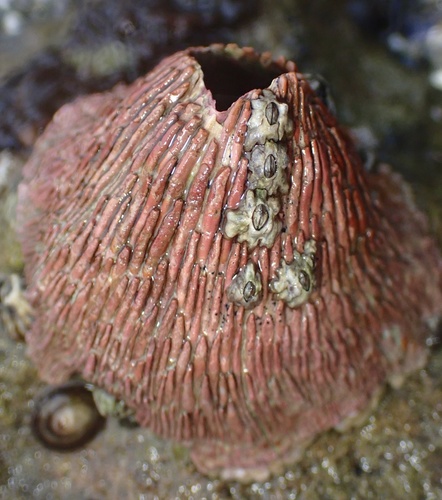
Tetraclita
Tetraclita is a genus of sessile barnacles in the family Tetraclitidae. There are more than 20 described species in Tetraclita.
Duplorbidae
Duplorbidae is a family of barnacles belonging to the infraclass Rhizocephala.

Oxynaspis
Oxynaspis is a genus of goose barnacles in the order Lepadiformes.

Pachylasma
Pachylasma is a genus of symmetrical sessile barnacles in the family Pachylasmatidae. There are about eight described species in Pachylasma.
Rhizolepas
Rhizolepas is a genus of crustaceans belonging to the monotypic family Rhizolepadidae.

Verruca
genus of crustaceans

Thompsonia
genus of crustaceans
Chamaesipho brunnea
species of crustacean
Thompsoniidae
The Thompsoniidae are a family of parasitic barnacles belonging to the highly apomorphic superorder Rhizocephala, and therein to the more diverse of the two orders, the Akentrogonida.
Scillaelepas
Scillaelepas is a genus of barnacle. Most of the species in the genus are androdioecious and the genus dates back to the Upper Jurassic period.
Neoverrucidae
Neoverrucidae is a family of crustaceans belonging to the order Scalpellomorpha.
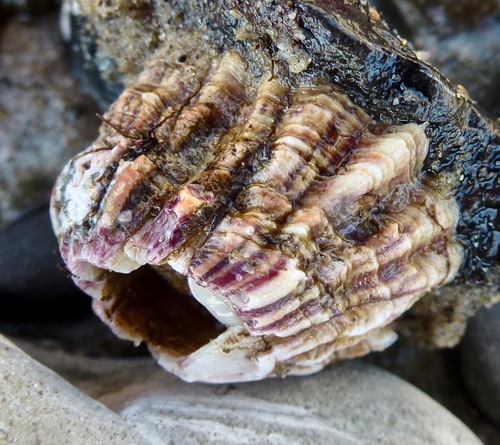
Menesiniella
Menesiniella is a genus of barnacle in the family Balanidae that includes the following species:
Chamaesipho
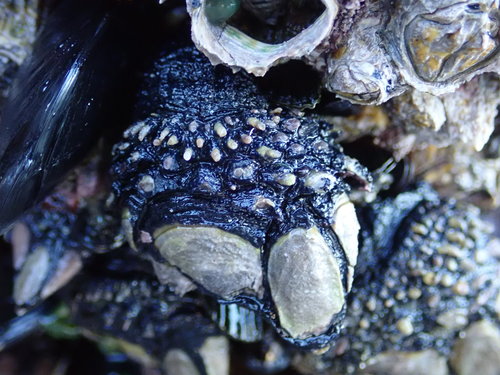
Chamaesipho is a genus of four-plated notochthamaline barnacles in the Pacific Ocean limited to Australian/New Zealand temperate waters. They are intertidal in preference, and tend to form crowded columnar colonies. They can be identified in the field by having a four-plated wall, an unfused rostrum, and narrow opercular plates. Elminius, which also inhabits the same area, has four plates in its shell wall. However, in Elminius, the rostrum and rostrolatera are fused completely, and the compound rostrum receives the alae of the adjacent carinolaterals. In Chamaesipho, the unfused rostrum bears
Calantica
genus of barnacles

Chamaesipho columna
species of crustacean
Pollicipes caboverdensis
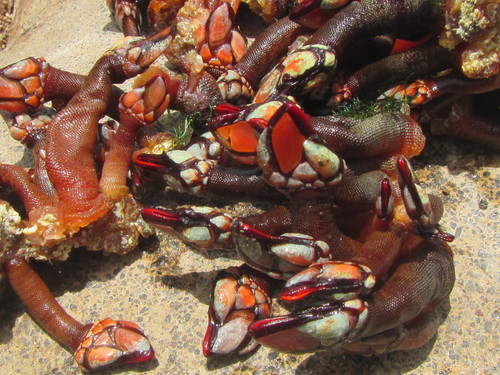
species of barnacle
Fistulobalanus
Fistulobalanus is a genus of barnacles, comprising the following species:
Fistulobalanus abeli (Lami & André, 1932)
Fistulobalanus albicostatus (Pilsbry, 1916)
Fistulobalanus amaraquaticus (Yamaguchi, 1980)
Fistulobalanus citerosum (Henry, 1973)
Fistulobalanus dentivarians (Henry, 1973)
†Fistulobalanus klemmi Zullo, 1984
Fistulobalanus kondakovi (Tarasov & Zevina, 1957)
Fistulobalanus pallidus (Darwin, 1854)
Fistulobalanus patelliformis (Bruguière, 1789)
Fistulobalanus shiloensis (Pilsbry, 1930)
Fistulobalanus sumbawaensis Prabowo & Yamaguchi, 2005
Fistulobalanus suturaltus (Henry, 1973)
Vulcanolepas osheai
species of crustacean
Nesochthamalus
The barnacle genus Nesochthamalus was erected by Foster & Newman, 1987, to include sole species Chthamalus intertextus originally named by Darwin in 1854. It is widespread on islands in Western Pacific Ocean, including Hawaii, and presents combinations of unusual features which make easily recognizable for field workers. These include dirty white shell exterior with deep purple colored interior, operculars colored purple. Opercular plates on each side calcify together in all but youngest individuals, and cannot be separated or easily distinguished from each other. This feature is shared only b
Pollicipes elegans
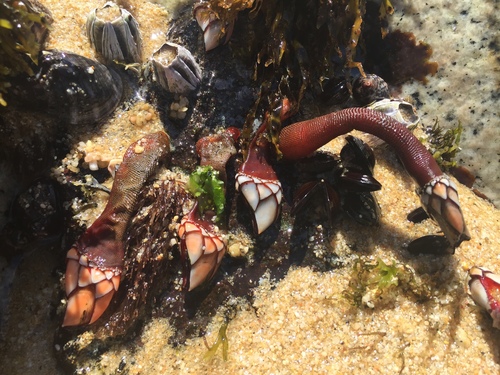
species of crustacean
Triangulus
genus of crustaceans
Phosphatothoracica
Phosphatothoracica is a paraphyletic superorder of barnacles in the infraclass Thoracica. It contains one extant order, Iblomorpha, as well as the extinct order Eolepadomorpha.
Ibla
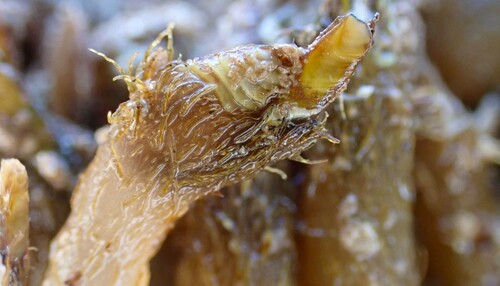
Ibla is a genus of barnacle. In 1848, Charles Darwin studied the genus and found species with hermaphrodites and tiny males. In this genus the number of androdioecious species is uncertain because some authors use the words female and hermaphrodite interchangeably.
Adna anglica
species of crustacean
Fistulobalanus albicostatus
species of Maxillopoda
Chirona
Chirona is a genus of acorn barnacles in the family Balanidae. There are about six described species in Chirona.
Epopella
Epopella is a genus of symmetrical sessile barnacles in the family Tetraclitidae. There are about six described species in Epopella.
Pollicipedomorpha
Pollicipedomorpha is an order of pedunculated barnacles in the class Thecostraca. There are 3 families and more than 30 described species in Pollicipedomorpha.
Anelasmatidae
In the past, Anelasmatidae has been considered a family of barnacles of the order Lepadiformes. Research published in 2021 by Chan et al. resulted in the sole genus of this family, Anelasma, being moved to the family Pollicipedidae, and this family is no longer used.