Category
page 1Battle of Marathon

Aeschylus
Aeschylus (, ; ; /524 – /455 BC) was an ancient Greek tragedian often described as the father of tragedy. Academic knowledge of the genre begins with his work, and understanding of earlier Greek tragedy is largely based on inferences made from reading his surviving plays. According to Aristotle, he expanded the number of characters in the theatre and allowed conflict among them. Formerly, characters interacted only with the chorus.

Battle of Marathon
490 BCE battle in the Greco-Persian wars
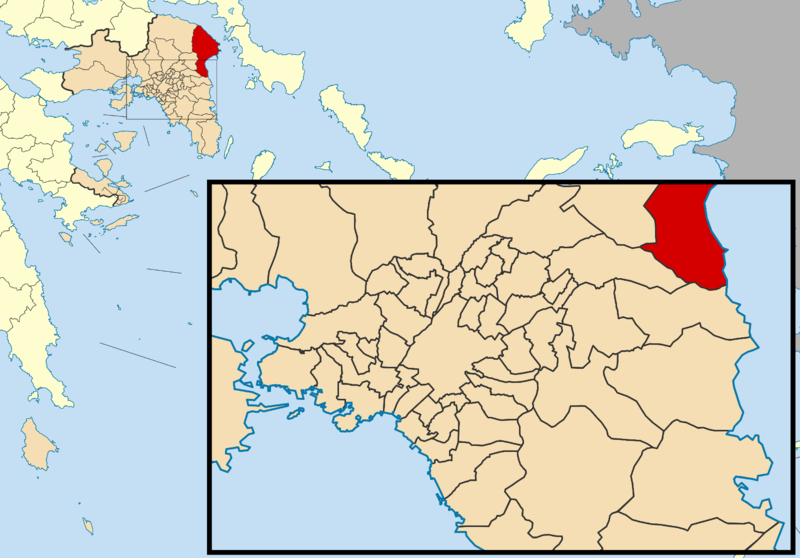
Marathon
modern town in Attica, Greece

Miltiades
Miltiades (; ; c. 550 – 489 BC), also known as Miltiades the Younger, was a Greek Athenian statesman known mostly for his role in the Battle of Marathon, as well as for his downfall afterwards. He was the son of Cimon Coalemos, a renowned Olympic chariot-racer, and the father of Cimon, the noted Athenian statesman.

Aristides
thumb|An [[ostrakon bearing the name "Aristeides [son] of Lysimachus", displayed in the Ancient Agora Museum in Athens]]
Aristides ( ; , ; 530–468 BC) was an ancient Athenian statesman. Nicknamed "the Just" (δίκαιος, díkaios), he flourished at the beginning of Athens' Classical period and is remembered for his generalship in the Persian War. The ancient historian Herodotus cited him as "the best and most honourable man in Athens", and he received similarly reverent treatment in Plato's Socratic dialogues.

Pheidippides
Pheidippides (; ; , , ) or Philippides () was a 5th-century-BC Athenian running courier who was the central figure in the story that inspired the marathon race.
Spartathlon
Spartathlon is a ultramarathon race held annually in Greece since 1983, between Athens and Sparta, the modern town on the site of ancient Sparta. The Spartathlon is based on the run of Pheidippides, an Athenian messenger who travelled from Athens to Sparta before the Battle of Marathon in a day and a half to seek aid against the Persians. Five Royal Air Force officers attempted the course in 1982 and the competition was started the next year.
Datis
Datis or Datus (, Old Iranian: *Dātiya-, Achaemenid Elamite: Da-ti-ya) was a Median noble and admiral who served the Persian Empire during the reign of Darius the Great (522–486 BC). He is known for his role in leading the Persian amphibious expedition against Greece in 490 BC during the Greco-Persian Wars. Along with Darius's nephew Artaphernes, he was tasked with subduing Eretria and Athens, succeeding the previously defeated Mardonius.
Callias II
5th-century BC Greek statesman, soldier and diplomat
Xanthippus
Athenian politician and father of Pericles (c.525–475 BC)
Callimachus
Athenian polemarch at Battle of Marathon in 490 BC
Artaphernes
5th-century Persian general and satrap
Parthenio
mountain range forming border of Arkadia and Argolis, Greece
flanking maneuver
military tactic

Psychiko
Psychiko ( ) is a town and a suburb in the Athens agglomeration, Greece. Since the 2011 local government reform it is part of the municipality Filothei-Psychiko, of which it is the seat and a municipal unit. The municipality has an area of .
Cynaegirus
Cynegirus or Cynaegirus ( or ; died 490 BC) was an ancient Greek general of Athens. His two brothers were the playwright Aeschylus and Ameinias, a hero of the battle of Salamis, while his sister was Philopatho (), the mother of the Athenian tragic poet Philokles. He was the son of Euphorion () from Eleusis and member of the Eupatridae, the ancient nobility of Attica.

The Fifteen Decisive Battles of the World
non-fiction work by Edward Shepherd Creasy
Echetlus
thumb|Echetlus fighting with the plow on an Etruscan funerary urn
Stouronisi
Stouronisi () or Styronisi (Στυρονήσι, "island of Styra") is a small island in the South Euboean Gulf opposite Styra. It is the largest island of a small island complex comprising 7 islets and rocks. The island has an area about 2 km2. Stouronisi has recently become known because of some plans of the Greek government for a development of a high-class summer resort in the island.
Archaeological Museum of Marathon
Archaeological musuem in Marathon, Attica, Greece
Agrotera
Agrotera (, "the huntress") was an epithet of the Greek goddess Artemis, the most important goddess to Attic hunters.