Category
page 1Biological pest control agents
biocide
A biocide is defined in the European legislation as a chemical substance or microorganism intended to destroy, deter, render harmless, or exert a controlling effect on any harmful organism. The US Environmental Protection Agency (EPA) uses a slightly different definition for biocides as "a diverse group of poisonous substances including preservatives, insecticides, disinfectants, and pesticides used for the control of organisms that are harmful to human or animal health or that cause damage to natural or manufactured products". When compared, the two definitions roughly imply the same, althoug
Phytoseiidae
The Phytoseiidae are a family of predatory mites which feed on thrips and other mite species. They are often used as a biological control agent for managing mite pests. Because of their usefulness as biological control agents, interest in Phytoseiidae has steadily increased over the past century. Public awareness of the biological control potential of invertebrates has been growing, though mainly in the US and Europe. In 1950, there were 34 known species. Today, there are 2,731 documented species organized in 90 genera and three subfamilies.
thumb|thumbtime=6|A Phytoseiidae|predatory mite inve
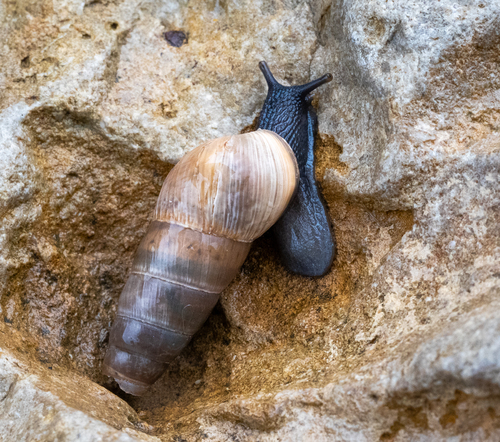
Decollate snail
species of mollusc

Marisa cornuarietis
species of large freshwater snail
beneficial organism
organism that is beneficial for human activity
Typhlodromus vulgaris
species of arachnid

Puccinia myrsiphylli
species of fungus
liquid plant manure
liquid fertilizer or phytopharmaceutical from fermented plant biomass