Category
page 1Biology articles needing expert attention
sciatic nerve
large nerve in humans and other animals
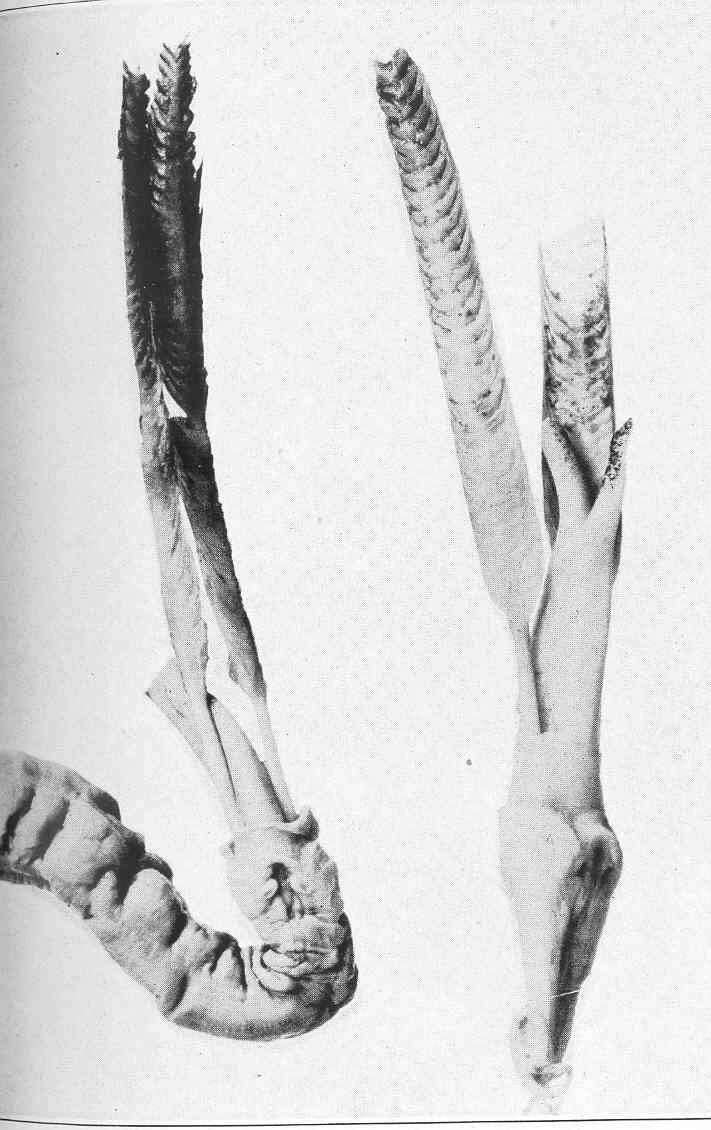
Teredinidae
The shipworms, also called teredo worms or simply teredo (, via Latin ), are marine bivalve molluscs in the family Teredinidae, a group of saltwater clams with long and soft bodies. They are notorious for boring into (and commonly eventually destroying) wood that is immersed in seawater, including such structures as wooden piers, docks, and ships; they drill passages by means of a pair of very small shells ("valves") borne at one end, with which they rasp their way through. They are sometimes called "termites of the sea". Carl Linnaeus assigned the common name Teredo to the best-known genus of
animal euthanasia
medical practice of intentionally ending a life of an animal in order to relieve pain and suffering

poikilotherm
thumb|250 px|right|The common frog is a poikilotherm and is able to function over a wide range of body core temperatures.
A poikilotherm () is an animal (Greek poikilos – 'various', 'spotted', and therme – 'heat') whose internal temperature varies considerably. Poikilotherms have to survive and adapt to environmental stress. One of the most important stressors is outer environment temperature change, which can lead to alterations in membrane lipid order and can cause protein unfolding and denaturation at elevated temperatures. Poikilotherm is the opposite of homeotherm – an animal which mainta

morphogen
thumb|Morphogenesis of Drosophila fruit flies is intensively studied in the laboratory
Sulfolobus solfataricus
species of prokaryote

Citrus mangshanyegan
wild citrus fruit species
Intercalation
Insertion of molecules between DNA
caramboxin
Caramboxin (CBX) is a neurotoxin that is found in star fruit (Averrhoa carambol). The fruit was used as traditional Chinese medicine, for treating fever, cough, and asthma, and it is believed to have more beneficial effects.
Juan Carlos Izpisúa Belmonte
Spanish biochemist