Category
page 1Bird common names
chicken
The chicken (Gallus gallus domesticus) is a domesticated form of the red junglefowl (Gallus gallus), originally native to Southeast Asia. It was first domesticated around 8,000 years ago and is one of the most common and widespread domesticated animals in the world. Chickens are primarily kept for their meat and eggs, though they are also kept as pets.

eagle
Eagle is the common name for certain large birds of prey within the family of the Accipitridae. While on a genetic level, only the subfamily Aquilinae comprises "true eagles", many other species are commonly referred to as eagles, such as the bald eagle, and the term generally carries no taxonomic weight. Most of the 68 species of eagles are from Eurasia and Africa. Outside this area, just 14 species can be found—two in North America, nine in Central and South America, and three in Australia.

duck
Duck is the common name for numerous species of waterfowl in the family Anatidae. Ducks are generally smaller and shorter-necked than swans and geese, which are members of the same family. Divided among several subfamilies, they are a form taxon; they do not represent a monophyletic group (the group of all descendants of a single common ancestral species), since swans and geese are not considered ducks. Ducks are mostly aquatic birds, and may be found in both fresh water and sea water.

falcon
Falcons () are birds of prey in the genus Falco, which includes about 40 species. Some small species of falcons with long, narrow wings are called hobbies, and some that hover while hunting are called kestrels. Falcons are widely distributed on all continents of the world except Antarctica, though closely related raptors did occur there in the Eocene.
%20black%20vulture%20wake%20at%20road%20kill%20-%20wiki.jpg)
vulture
A vulture is a bird of prey that scavenges on carrion. There are 23 extant species of vulture (including condors). Old World vultures include 16 living species native to Europe, Africa, and Asia; New World vultures are restricted to North and South America and consist of seven species.
A particular characteristic of many vultures is a bald, unfeathered head. This bare skin is thought to keep the head clean when feeding, and also plays an important role in thermoregulation.
%20(cropped).jpg)
goose
thumb|upright=1.35|A greylag goose (Anser anser)
A goose (: geese) is a bird of any of several waterfowl species in the family Anatidae. This group comprises the genera Anser (grey geese and white geese) and Branta (black geese). Some members of the Tadorninae subfamily (e.g., Egyptian goose, Orinoco goose) are commonly called geese, but are not considered "true geese" taxonomically. More distantly related members of the family Anatidae are swans, most of which are larger than true geese, and ducks, which are smaller.
peafowl
Peafowl is a common name for two bird species of the genus Pavo and one species of the closely related genus Afropavo within the tribe Pavonini of the family Phasianidae (the pheasants and their allies). Male peafowl are referred to as peacocks, and female peafowl are referred to as peahens. Despite this, peacock is usually used to refer to both sexes, in common language.

Tetraoninae
thumb|A ruffed grouse found at the [[Kortright Centre for Conservation.]]
Grouse are a group of birds from the order Galliformes, in the family Phasianidae. Grouse are presently assigned to the tribe Tetraonini (formerly the subfamily Tetraoninae and the family Tetraonidae), a classification supported by mitochondrial DNA sequence studies, and applied by the American Ornithologists' Union, ITIS, International Ornithological Congress, and others.
.jpg)
Emberiza
The buntings are a group of Old World passerine birds forming the genus Emberiza, the only genus in the family Emberizidae. The family contains 44 species. They are seed-eating birds with stubby, conical bills.

kite
subgroup of birds of prey

Larinae
thumb|right|Immature (probably 2nd year) Armenian gull in flight, flying over [[Lake Sevan]]
Gulls or seagulls are seabirds of the subfamily Larinae. They are most closely related to terns and skimmers, and are placed with them in the family Laridae. They are also related, more distantly, to auks and skuas, and more distantly still to waders. Until the 21st century, most gulls were placed in the genus Larus, but that arrangement is now considered polyphyletic, leading to the readoption and revision of several genera.

hawk
thumb|Sharp-shinned hawk, a small member of the [[Accipitrinae subfamily]]

Himantopus
Stilt is a common name for several species of birds in the family Recurvirostridae, which also includes those known as avocets. Most sources recognize 6 species in 2 genera, with Himantopus being the more speciose genus, though the lone species of Cladorhynchus is also considered a stilt. Additionally, the white-backed and Hawaiian stilts are occasionally considered subspecies of the black-necked stilt.

partridge
A partridge is a medium-sized galliform bird in any of several genera, with a wide native distribution throughout parts of Europe, Asia and Africa. Several species have been introduced to the Americas. They are sometimes grouped in the Perdicinae subfamily of the Phasianidae (pheasants, quail, etc.). However, molecular research suggests that partridges are not a distinct taxon within the superfamily Phasianoidea, but that some species are closer to the pheasants, while others are closer to the junglefowl.

wading birds
thumb|245px|A flock of Dunlin and [[Red knot in Sweden]]
Waders or shorebirds are birds of the order Charadriiformes commonly found wading along shorelines and mudflats in order to forage for food crawling or burrowing in the mud and sand, usually small arthropods such as aquatic insects or crustaceans. The term "wader" is used in Europe, while "shorebird" is used in North America, where "wader" may be used instead to refer to long-legged wading birds such as storks and herons.

Darwin's finches
group of related bird species in the Galápagos Islands

condor
Condor is the common name for two genera of New World vultures, each with one extant species. The name derives from the Quechua kuntur. They are the largest flying land birds in the Western Hemisphere.

macaw
Macaws are a group of large New World parrots that are long-tailed and often colorful, in the tribe Arini. They are popular in aviculture or as companion parrots, although there are conservation concerns about several species in the wild.

pheasant
thumb|Pheasant fowling, "Showing how to catch pheasants", facsimile of a miniature in the manuscript of the "Livre du Roy Modus" (fourteenth century).
thumb|Cheer pheasant pair in Himalaya, India

crow
thumb|right|A carrion crow scavenging on a beach in [[Dorset, England]]
A crow is a bird of the genus Corvus, or more broadly, a synonym for all of Corvus. The word "crow" is used as part of the common name of many species. The related term "raven" is not linked scientifically to any certain trait but is rather a general grouping for larger-sized species of Corvus. The collective name for a group of crows is a "murder".

Crested Guineafowl
species of bird
Old World vulture
informal group of birds, use Q13428438 for the Aegypiinae

Hawaiian honeycreeper
subfamily of birds
magpie
Magpies are birds of various species of the family Corvidae. Like other members of their family, they are widely considered to be intelligent creatures. The Eurasian magpie, for instance, is thought to rank among the world's most intelligent creatures, and is one of the few nonmammalian species able to recognize itself in a mirror test. Magpies have shown the ability to make and use tools, imitate human speech, grieve, play games, and work in teams. They are particularly well known for their songs and were once popular as cagebirds. In addition to other members of the genus Pica, corvids consi
Crestless Fireback
species of bird
mockingbird
Mockingbirds are a group of New World passerine birds from the family Mimidae. They are best known for the habit of some species mimicking the songs of other birds and the sounds of insects and amphibians, often loudly and in rapid succession and for being extremely territorial when raising hatchlings. Studies have shown the ability of some species to identify individual humans and treat them differently based on learned threat assessments.
kestrel
The term kestrel (from , derivative from , i.e. ratchet) is the common name given to several species of predatory birds from the falcon genus Falco. Kestrels are most easily distinguished by their typical hunting behaviour which is to hover at a height of around over open country and swoop down on ground prey, usually small mammals, lizards or large insects, while other falcons are more adapted for active hunting during flight.
.jpeg)
jay
Jays are a paraphyletic grouping of passerine birds within the family Corvidae. Although the term "jay" carries no taxonomic weight, most or all of the birds referred to as jays share a few similarities; they are small to medium-sized, usually have brightly coloured feathers and short tails, and are quite noisy. These superificial characteristics set them apart from most other corvids such as crows, ravens, jackdaws, rooks and magpies, which are mostly larger, or longer-tailed, and have darker plumage. Many so-called "jays" are genetically closer to these other corvids than other jays, however

egret
An egret (, ) is a type of heron; they are generally long-legged wading birds that have white or buff plumage and develop fine plumes (usually milky white) during the breeding season. Egrets are not a biologically distinct group from herons and have the same build.

raven
thumb|right|Common raven of California (Corvus corax clarionensis) in flight
A raven is any of several large-bodied passerine bird species in the genus Corvus. These species do not form a single taxonomic group within the genus. There is no consistent distinction between crows and ravens; the two names are assigned to different species chiefly by size.

parakeet
A parakeet is any one of many small- to medium-sized species of parrot, in multiple genera, that generally has long tail feathers. Most species belong to the genus Pyrrhura.

Hemispingus
thumb|Superciliaried hemispingus (Thlypopsis superciliaris)
Hemispingus is a former scientific genus name of slender-billed tanagers in the family Thraupidae in highland forest in South America, especially in the Andes. The name is retained in the common name for several species of birds previously included in the genus:
%20(one%20of%20a%20pair)%20MET%20DP-12314-002.jpg)
quetzal
Quetzals () are strikingly colored birds in the trogon family. They are found in forests, especially in humid highlands, with the five species from the genus Pharomachrus being exclusively Neotropical, while a single species, the eared quetzal, Euptilotis neoxenus, is found in Guatemala, sometimes in Mexico and very locally in the southernmost United States. In the highlands of the states of Sonora, Chihuahua, Sinaloa, Durango, Nayarit, Zacatecas, Jalisco, and Michoacán, the eared quetzal can be found from northwest to west-central Mexico. It is a Mesoamerican indigenous species, but some repo

myna
The mynas (; also spelled mynah) are a group of birds in the starling family (Sturnidae). They are passerine birds native to large parts of Central Asia and South Asia, especially Iran, Afghanistan, India, Pakistan, Bangladesh, Nepal and Sri Lanka. Several species have been introduced to areas such as North America, Australia, South Africa, Fiji and New Zealand, especially the common myna, which is often regarded as an invasive species. In Singapore, they are sometimes known as "Selarang" in Malay and "Teck Meng" in Chinese due to their high population there.
shearwater
Shearwaters are medium-sized long-winged seabirds in the petrel family Procellariidae. They have a global marine distribution, but are most common in temperate and cold waters, and are pelagic outside the breeding season.

snipe
A snipe is any of about 26 wading bird species in three genera in the family Scolopacidae. They are distinguished by a very long, slender bill, eyes placed high on the head, and cryptic/camouflaging plumage. The snipes in the genus Gallinago have a nearly worldwide distribution, the Lymnocryptes snipes are restricted to Asia and Europe, and the snipes in the genus Coenocorypha are now found only in the outlying islands of New Zealand. The genus Lymnocryptes is more closely related to woodcocks (Scolopax) than it is to other snipes; with woodcocks included, the four genera form a monophyletic g
francolins
Francolins are birds in the tribe Gallini that traditionally have been placed in the genus Francolinus, but now commonly are divided into multiple genera.
Nycticoracini
tribe of birds

treepie
The treepies (known also as crypsirinines from the subfamily's name, Crypsirininae) comprise four closely related genera (Dendrocitta, Crypsirina, Temnurus and Platysmurus) of long-tailed passerine birds in the family Corvidae. There are 12 species of treepie. Some treepies are similar to magpies. Most treepies are black, white, gray or brown. They are found in Southeast Asia. They live in tropical forests. They are highly arboreal and rarely come to the ground to feed.
Recurvebill
REDIRECT Syndactyla

petrel
REDIRECT Procellariiformes

Mareca
The wigeons or widgeons are a group of birds, dabbling ducks currently classified in the genus Mareca along with two other species. There are three extant species of wigeon, in addition to one recently extinct species.
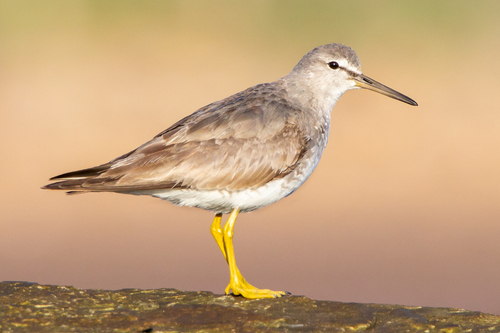
Tattler
genus of birds
warbler
thumb|300px|A garden warbler (Sylviidae), giving its prolonged warbling song
thumb|300px|A wood warbler (Phylloscopidae)
thumb|300px|A magnolia warbler (Parulidae)
Sylviidae sensu lato
family of birds (in wide sense)
redstart
thumb|Male Common Redstart
Redstart is a name used for a number of songbirds that are not closely related to each other:
Perching duck
tribe of birds
guillemot
thumb|right|Common guillemots, one in bridled form (with "spectacles"), and one [[Brünnich's guillemot (U. lomvia, with white-marked bills) from the genus Uria]]
thumb|right|Black guillemot (C. grylle icelandicus)
thumb|right|Common guillemot in bridled form, a white circle around the eye with an extension backwards suggesting they are wearing spectacles
goshawk
Goshawk may refer to several species of birds of prey in the family Accipitridae:
buzzard
Buzzard is the common name of several species of birds of prey.
siskin
thumb|A Eurasian siskin Spinus spinus giving 'siskin' calls
thumb|A Eurasian siskin Spinus spinus
The name siskin when referring to a bird is derived from an adaptation of the German dialect words sisschen, zeischen, which are diminutive forms of Middle High German (zîsec) and Middle Low German (ziseke, sisek) words, with cognates in Slavic languages, cf. Czech čížek; these names are of onomatopoeic origin. The name siskin was first recorded in written English in 1544 in William Turner's Avium praecipuarum, quarum apud Plinium et Aristotelem mentio est, brevis et succincta historia, referring
conure
Conures are a diverse, loosely defined group of small to medium-sized parrots. They belong to several genera within a long-tailed group of the New World parrot subfamily Arinae. Most conures belong to the tribe Arini, though Myiopsitta is an exception. The term "conure" is used primarily in bird keeping, though it has appeared in some scientific journals. The American Ornithologists' Union uses the generic term parakeet for all species elsewhere called conure, though Joseph Forshaw, a prominent Australian ornithologist, uses conure.
grosbeak
right|thumb|This female evening grosbeak (Hesperiphona vespertina) is considered to be a "typical" grosbeak.
Grosbeak is a form taxon containing various species of seed-eating passerine birds with large beaks. Although they all belong to the superfamily Passeroidea, these birds are not part of a natural group but rather a polyphyletic assemblage of distantly related songbirds. Some are cardueline finches in the family Fringillidae, while others are cardinals in the family Cardinalidae; one is a member of the weaver family Ploceidae. The word "grosbeak", first applied in the late 1670s, is a p
Storm petrel
Wikimedia disambiguation page
puffleg
Pufflegs are hummingbirds from the genera Eriocnemis and Haplophaedia. They occur in humid forest, woodland and shrub at altitudes of 1000 to 4800 m. asl in the Andes of Argentina, Bolivia, Peru, Ecuador, Colombia, and Venezuela. The males have a colorful green, coppery or blue plumage, and the females are generally somewhat duller. The most striking feature of both sexes is their dense snow-white leg puffs which consist of feather tufts that resemble woolly panties. One species – the black-thighed puffleg – is characterized by black coloured leg puffs, and another – the buff-thighed puffleg –
Argus
bird in the family Phasianidae
prions
informal group of birds
Kakariki
The three species of kākāriki (also spelled kaakaariki, without macrons), or New Zealand parakeets, are the most common species of parakeets in the genus Cyanoramphus, family Psittaculidae. The most commonly used name kākāriki is Māori in origin meaning "small parrot" (from kākā ‘parrot’ and riki ‘small’); it has also been used to refer to the colour green because of the birds' predominantly green plumage. The patches of red on the birds' rumps are, according to legend, the blood of the demigod Tāwhaki.
Fulmarine petrel
group of birds
Pitohui
thumb|Hooded pitohui