Category
page 1Brachyura
.jpg)
Brachyura
thumb|Gecarcinus quadratus, a [[land crab from Central America]]
Raninoidea
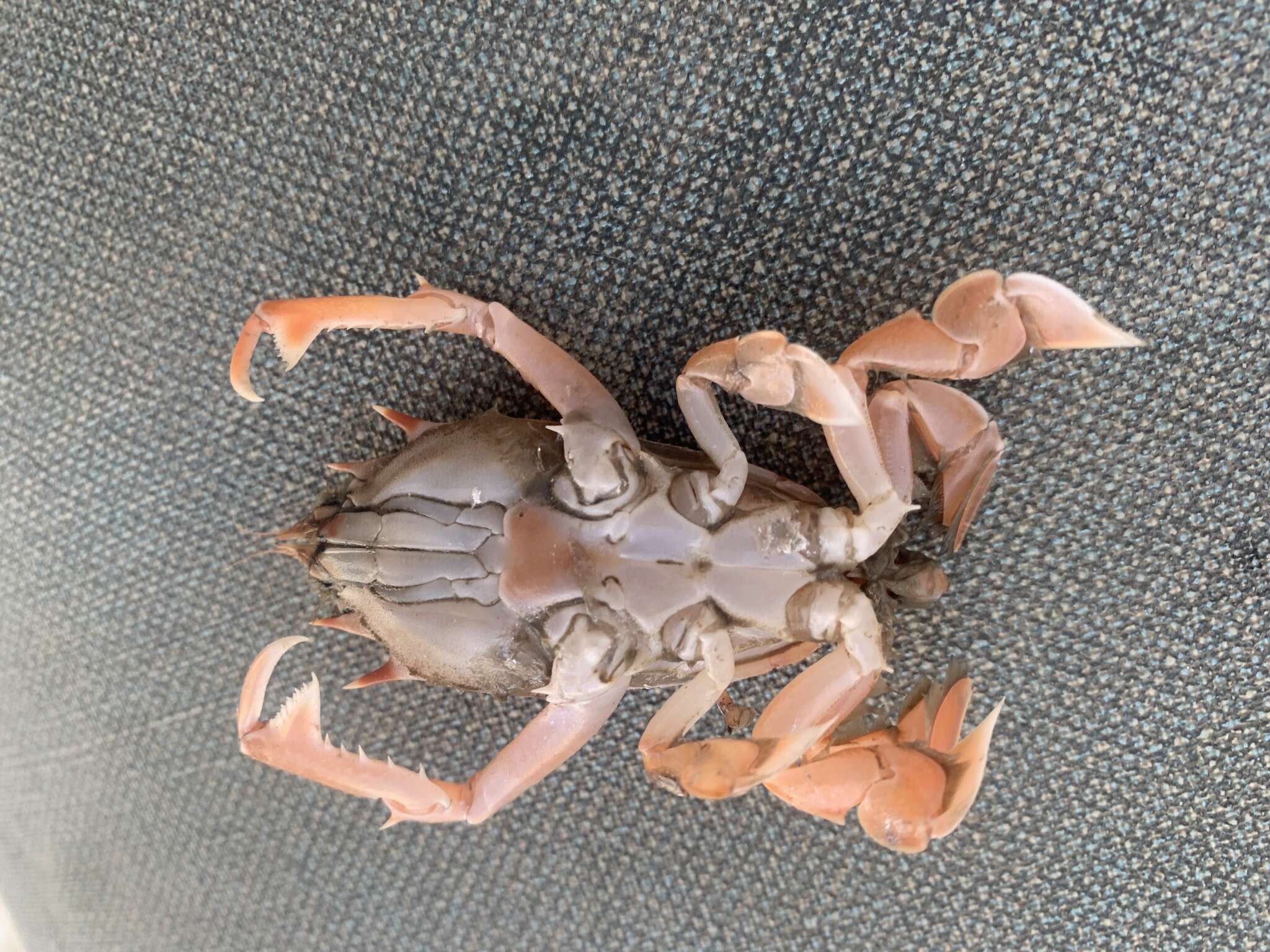
Raninoida is a taxonomic section of the crabs, containing a single extant superfamily, Raninoidea, and two extinct, Necrocarcinoidea and Palaeocorystoidea. This group of crabs is unlike most, with the abdomen not being folded under the thorax. As of 2009, it comprised 46 extant species, and nearly 200 species known only from fossils.
Eubrachyura
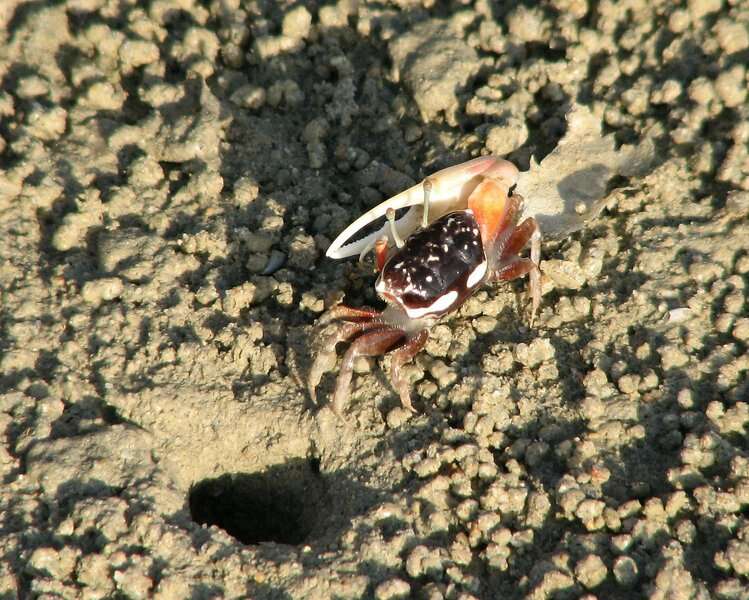
Eubrachyura is a group of decapod crustaceans (ranked as a "section") comprising the more derived crabs. It is divided into two subsections, based on the position of the genital openings in the two sexes. In the Heterotremata, the openings are on the legs in the males, but on the sternum in females, while in the Thoracotremata, the openings are on the sternum in both sexes. This contrasts with the situation in other decapods, in which the genital openings are always on the legs. Heterotremata is the larger of the two groups, containing the species-rich superfamilies Xanthoidea and Pilumnoidea
Dromiacea
Dromiacea is a group of crabs, ranked as a section. It contains 240 extant and nearly 300 extinct species. Dromiacea is the most basal grouping of Brachyura crabs, diverging the earliest in the evolutionary history, around the Late Triassic or Early Jurassic. Below is a cladogram showing Dromiacea's placement within Brachyura:
Cyclodorippoida
Cyclodorippoida is a group of crabs, ranked as a section. It contains the single superfamily Cyclodorippoidea, which holds three families, Cyclodorippidae, Cymonomidae and Phyllotymolinidae.