Category
page 1British traditional history
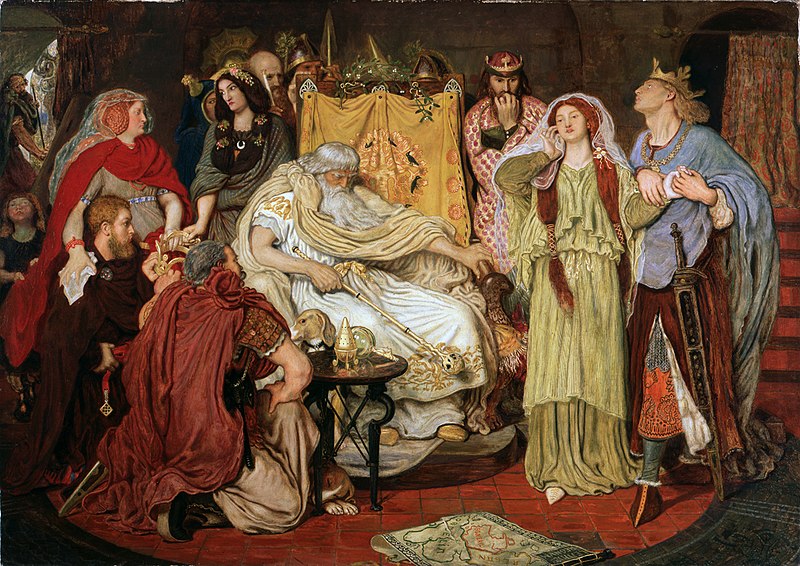
King Lear
tragedy by William Shakespeare

Constantius Chlorus
Roman emperor (250-306)

Geta
Roman emperor from 209 to 211

Joseph of Arimathea
disciple of Jesus, donated his heart for the burial of Jesus

Magnus Maximus
late 4th-century Roman emperor of Britain and usurper of the West

Constantine III
Western Roman Emperor from 407 to 411

The History of the Kings of Britain
pseudohistorical account of British history (c.1136)
Carausius
Marcus Aurelius Mausaeus Carausius (died 293) was a military commander of the Roman Empire in the 3rd century. He was a Menapian from Belgic Gaul, who usurped power in 286, during the Carausian Revolt, declaring himself emperor in Britain and northern Gaul (Imperium Britanniarum). He did this only 13 years after the Gallic Empire was ended in 273. He held power for seven years, fashioning the name "Emperor of the North" for himself, before being assassinated by his finance minister Allectus.

Cymbeline
thumb|right|302x302px|Imogen (Cymbeline)|Imogen in her bedchamber in Act II, scene ii, when Iachimo witnesses the mole under her breast. Painting by [[Wilhelm Ferdinand Souchon, 1872]]
Cymbeline (), also known as The Tragedie of Cymbeline or Cymbeline, King of Britain, is a play by William Shakespeare set in Ancient Britain () and based on legends that formed part of the Matter of Britain concerning the early historical Celtic British King Cunobeline. Although it is listed as a tragedy in the First Folio, modern critics often classify Cymbeline as a romance or even a comedy. Like Othello and '

Allectus
Allectus (died 296) was a Roman-Britannic usurper in Britain and northern Gaul from 293 to 296.
Brutus of Troy
legendary descendant of the Trojan hero Aeneas
Constans II
Western Roman Emperor from 409 to 411
Matter of Britain
body of Medieval literature associated with Great Britain and Brittany, and the legendary kings and heroes associated with it, particularly King Arthur

Cunobeline
thumb|upright|Coin of Cunobeline
Cunobeline or Cunobelin (Common Brittonic: *Cunobelinos, "Dog-Strong"), also known by his name's Latin form '''', was a king in pre-Roman Britain from about to about He is mentioned in passing by the classical historians Suetonius and Dio Cassius, and many coins bearing his inscription have been found. He controlled a substantial portion of southeastern Britain, including the territories of the Catuvellauni and the Trinovantes, and he was called "King of the Britons" (Britannorum rex'') by Suetonius. Cunobeline may have been a client king of Rome, based on the

sub-Roman Britain
period of Late Antiquity in Great Britain, covering the end of Roman rule in the late 4th and early 5th centuries, and its aftermath into the 6th century
Cordelia of Britain
legendary Queen of the Britons
Queen Gwendolen
legendary figure
Hengist and Horsa
legendary brothers said to have led the invasion of Britain in 5th century
.jpg)
Cunedda
Cunedda ap Edern, also called 'Cunedda Wledig''''' (reigned – c. 460), was an important early Welsh leader, and the progenitor of the royal dynasty of Gwynedd, one of the very oldest of Western Europe.
list of legendary kings of Britain
Wikimedia list article
Coel Hen
legendary post-Roman king of north Britain
Welsh Triads
series of Welsh triads about the legendary figures of Britain
Gratian
Roman usurper who was proclaimed emperor in 406 in Roman Britain
Julius Asclepiodotus
Late 3rd-century Roman politician

Scota
thumb|right|"Queen Scota unfurls the sacred banner", illustration from an 1867 book of Irish history
Vita Merlini
literary work by Geoffrey of Monmouth
Ceredig Ceredigion
Ceredig ap Cunedda (died 453), was a possibly fictional or at least not well attested in reliable sources king of Ceredigion in Wales.
Queen Marcia
mythical queen regnant of the Britons
Gorboduc
English play from 1561
Einion Yrth ap Cunedda
King of Gwynedd
Ferrex
Ferrex was the son of the legendary king Gorboduc of the Britons, and fought with his brother Porrex for the throne, according to Geoffrey of Monmouth.
Cador
Cador () is a legendary Duke of Cornwall, known chiefly through Geoffrey of Monmouth's pseudohistorical Historia Regum Britanniae and previous manuscript sources such as the Life of Carannog. In Welsh genealogical records, he appears as Cado (), the son of Cornish king Geraint. Early sources present him as a relative of King Arthur, though the details of their kinship are usually left unspecified.
Eudaf Hen
legendary king of Britain
Albanactus
thumb|Attributed arms of Albanactus from the [[Book of Baglan]]
Albanactus, according to Geoffrey of Monmouth, was the founding king of Albania or Albany. He is in effect Geoffrey's eponym for Scotland. His territory was that north of the Humber estuary. This myth was then taken up by Giraldus Cambrensis.
Aurelius Conanus
prince
Calchfynydd
Calchfynydd (Welsh calch "lime" + mynydd "mountain") was an obscure Britonnic kingdom or sub-kingdom of sub-Roman Britain. Its exact location is uncertain, although the name suggests somewhere in one of Great Britain's Chalk Groups and might refer to southern Scotland, the Cotswolds, or the Chilterns. Virtually nothing else definitive is known about it.
Corineus
Corineus, in medieval British legend, was a prodigious warrior, a fighter of giants, and the eponymous founder of Cornwall.
Goídel Glas
medieval Irish and Scottish legendary figure
Historicity of King Arthur
debate about whether King Arthur was a historical person
Caradocus
Caradocus (middle Welsh: Karadawc), according to Geoffrey of Monmouth's Historia regum Britanniae, a pseudohistorical account of the kings of the Britons, was the duke of Cornwall under the reign of Octavius, who became king of Cornwall and died during the Emperor Magnus Maximus' reign.
Humber the Hun
legendary Figure
Amlawdd Wledig
legendary king
Cambra
In British legend, Cambra was the daughter of Belinus the Great, a legendary king of the Britons, and married to Antenor, the second King of the Cimmerians. The Cimmerians changed the name of their tribe to Sicambri in honor of Cambra. Cambra's son by Antenor, Priamus the Younger, succeeded his father when he was twenty-six.
Goneril
Goneril is a character in William Shakespeare's tragic play King Lear (1605). She is the eldest of King Lear's three daughters. Along with her sister Regan, Goneril is considered a villain, obsessed with power and overthrowing her elderly father as ruler of the kingdom of Britain.
Dionotus
thumb|Dionotus, Saint Ursula's father, in a 1495 painting by [[Vittore Carpaccio]]
Dionotus was a legendary king of Cornwall in Geoffrey of Monmouth's Historia regum Britanniae, an account of the rulers of Britain based on ancient Welsh sources and disputed by many historians. Dionotus succeeding his brother Caradocus, and was regent of Britain during the campaigns in Gaul of Emperor Magnus Maximus. The curious thing about this king is that the Welsh chronicles, which parallel most of Geoffrey of Monmouth's book, do not mention this king by name. However, Geoffrey uses Latin versions of Welsh