Category
page 1Brood parasites

Common Cuckoo
species of bird
%20-%20Juvenile%20fed%20by%20host%20parent%20Rock-loving%20Cisticola.jpg)
Indicatoridae
Honeyguides (family Indicatoridae) are a family of 16 species of birds in the order Piciformes. They are also known as indicator birds, or honey birds, although the latter term is also used more narrowly to refer to species of the genus Prodotiscus. They have an Old World tropical distribution, with the greatest number of species in Africa and two in Asia. These birds are best known for their interaction with humans. Honeyguides are noted and named from one or two species that will deliberately lead humans directly to bee colonies, so that they can feast on the grubs and beeswax that are left

Asian Koel
species of bird

Jacobin Cuckoo
Species of bird

Great Spotted Cuckoo
species of bird

Baer's Pochard
species of bird
brood parasitism
reproduction strategy used by an organism that relies on others to raise its young

Phengaris arion
species of insect

Brown-headed Cowbird
species of bird

Black-headed Duck
species of bird

Greater Honeyguide
species of bird
%20breeding%20male.jpg)
Viduidae
The indigobirds, whydahs and cuckoo-finch make up the family Viduidae; they are small passerine birds native to Africa.

Indian cuckoo
species of bird

changeling
thumb|upright=1.2|Der Wechselbalg by Henry Fuseli, 1781

Molothrus
Cowbirds are birds belonging to the genus Molothrus in the family Icteridae. They are of New World origin, but some species not native to North America are invasive there, and are obligate brood parasites, laying their eggs in the nests of other species.

Long-tailed Cuckoo
species of bird

Phengaris alcon
species of insect

Diederic Cuckoo
species of bird

Shiny Cowbird
species of bird

Striped Cuckoo
species of bird

Bronzed Cowbird
species of bird

Giant Cowbird
species of bird

Cuckoo-finch
The cuckoo-finch (Anomalospiza imberbis), also known as the parasitic weaver or cuckoo weaver, is a small passerine bird now placed in the family Viduidae with the indigobirds and whydahs. It occurs in grassland in Africa south of the Sahara. The male is mainly yellow and green while the female is buff with dark streaks. They lay their eggs in the nests of other birds.

Ammophila sabulosa
species of insect

Pheasant Cuckoo
species of bird
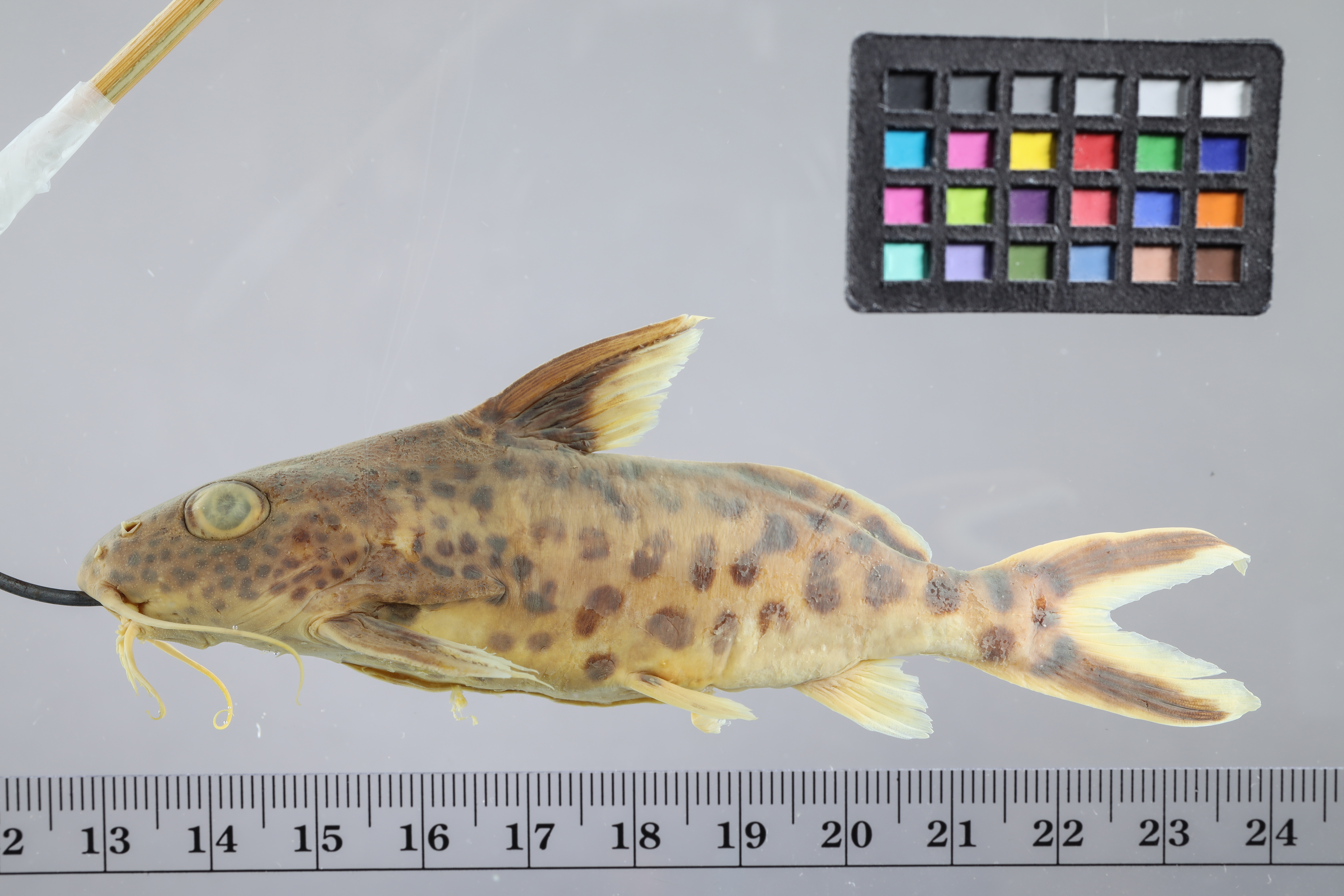
Synodontis multipunctatus
species of fish

Sapygidae
The Sapygidae are a family of solitary kleptoparasitic aculeate wasps. They are generally black wasps, similar in appearance to some Tiphiidae or Thynnidae, with white or yellow markings developed to various degrees.
.jpg)
Nomada
With over 850 species, the genus Nomada is one of the largest genera in the family Apidae, and the largest genus of cuckoo bees. Cuckoo bees are so named because they enter the nests of a host and lay eggs there, stealing resources that the host has already collected. The name "Nomada" is derived from the Greek word nomas (νομάς), meaning "roaming" or "wandering."
.jpg)
Nomadinae
Nomadinae is a subfamily of bees in the family Apidae. They are known commonly as cuckoo bees.

Vespula austriaca
species of insect
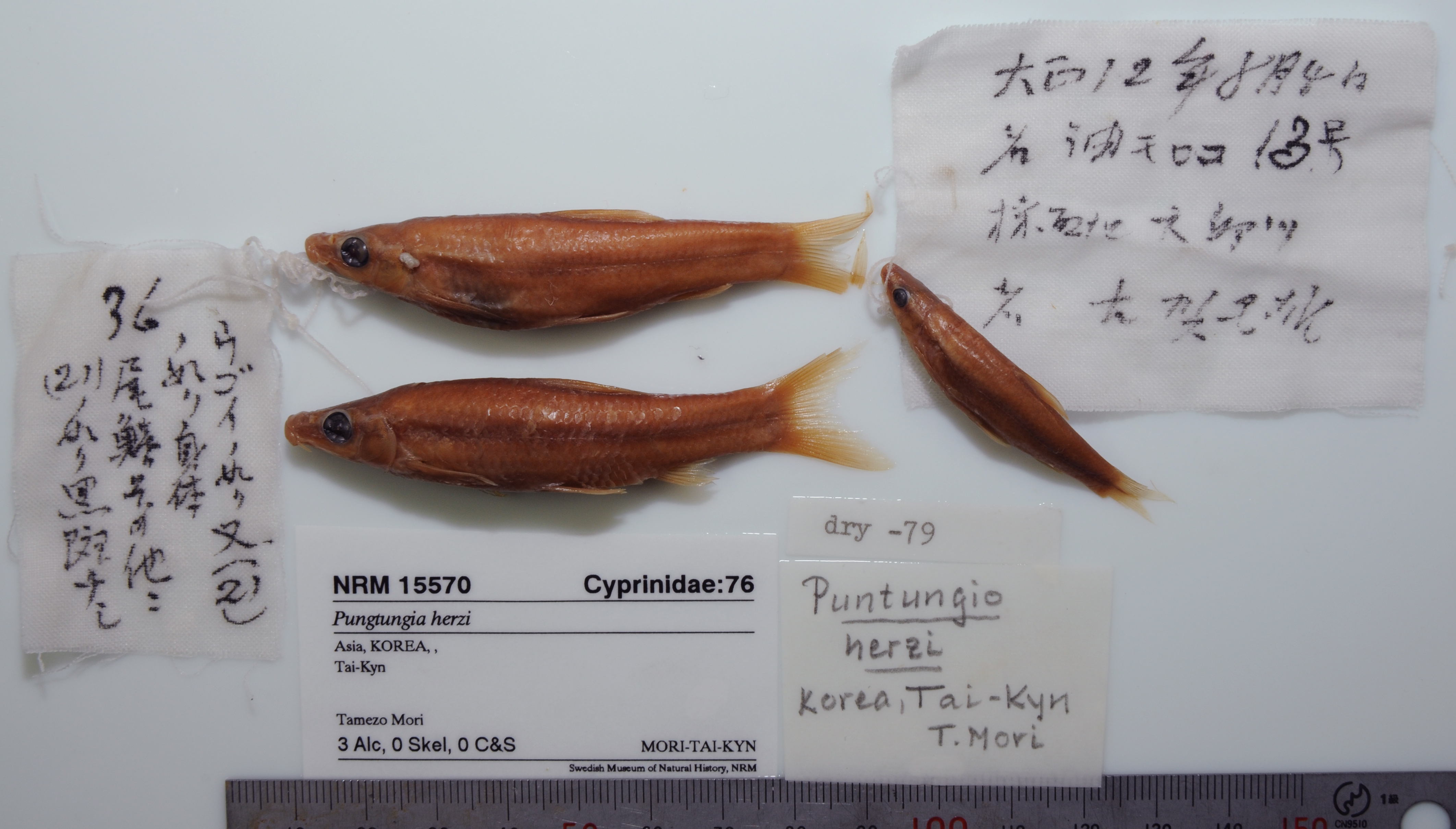
Pungtungia herzi
species of fish

Dolichovespula adulterina
species of insect

Sphecodes
Sphecodes is a genus of cuckoo bees from the family Halictidae, the majority of which are black and red in colour and are colloquially known as blood bees. Sphecodes bees are kleptoparasitic on ground-nesting bees, especially bees in the genera Lasioglossum, Halictus and Andrena. The adults consume nectar, but because they use other bees' provisions to feed their offspring they do not collect pollen.
Coelioxys
Coelioxys, common name leaf-cutting cuckoo bees or sharp-tailed bees, is a genus of solitary kleptoparasitic cuckoo bees belonging to the family Megachilidae.

Phengaris rebeli
species of insect
Thyreus
Thyreus is an Old World genus of bees, one of many that are commonly known as cuckoo bees, or cloak-and-dagger bees, and are kleptoparasites of other species of bees, mostly in the genus Amegilla. They all have strongly contrasting patterns of coloration – three species from the Sydney region, Thyreus nitidulus, T. lugubris, and T. caeruleopunctatus are bright blue and black.

Stelis
genus of kleptoparasitic bees

Triepeolus
Triepeolus is a genus of cuckoo bees in the family Apidae. There are at least 140 described species in the genus Triepeolus. The majority of species whose life history is known are kleptoparasitic in the nests of bees in the tribe Eucerini, especially the genera Melissodes and Svastra.
thumb|Triepeolus simplex
cuckoo bee
type of parasitic bee

Melecta
thumb|Melecta albifrons
Melecta is a genus of cuckoo bees in the family Apidae. There are at least 50 described species in Melecta.

slave-making ant
species of ants that steal young ants of another species to contribute to their colony
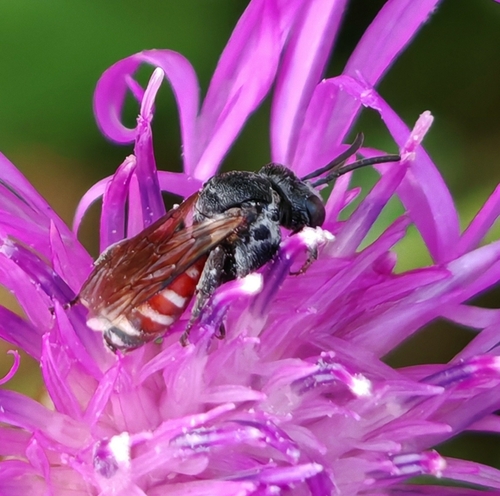
Ammobates
Ammobates is a genus of cuckoo bees belonging to the family Apidae.

Epeolus
thumb|right|Epeolus tarsalis
Epeolus is a genus of cuckoo bees in the family Apidae. They are often known as variegated cuckoo-bees. The species is uncommon to rare, and has strong patterns of black and white on the thorax and abdomen. These patterns are made of tiny fat hairs lying flush with the integument or "skin" of the bee. Species of the genus are easily mistaken for those of the genus Triepeolus, but are often smaller.
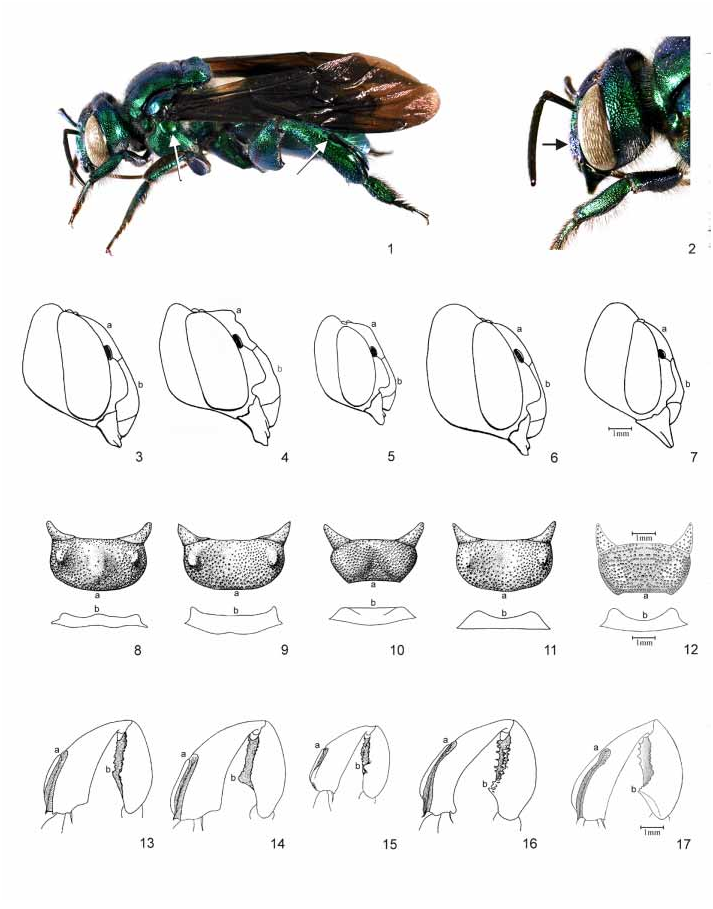
Exaerete
Exaerete is a genus of euglossine bees found from Mexico to northern Argentina. Like all orchid bees, they are restricted to the Neotropics. All but one species is metallic green, and they are cleptoparasites in the nests of other euglossines in the genera Eufriesea and Eulaema. It contains the following species:
left|thumb|181x181px|Exaerete smaragdina|E. smaragdina, [[Peru]]
Exaerete azteca Moure, 1964
Exaerete dentata (Linnaeus, 1758)
Exaerete fallaciosa Engel, 2018
Exaerete frontalis (Guérin-Méneville, 1845)
Exaerete kimseyae Oliviera, 2011
Exaerete lepeletieri Oliviera & Nemesio, 20

Polistes atrimandibularis
species of hymenopteran insect

Pasites
thumb | 220x124px | right | Pasites maculatus, White-spotted Red Cuckoo Bee
Pasites is a genus of cuckoo bees belonging to the family Apidae.

Epeoloides
Epeoloides is a genus of cuckoo bees which lay their eggs in the nests of melittid bees of the genus Macropis. One species, Epeoloides pilosulus, is classified as Endangered by the State of Connecticut.

Nysson
Nysson is a Holarctic genus of kleptoparasitic wasps in the family Bembicidae. Over 100 species are known.
Biastes
genus of insects
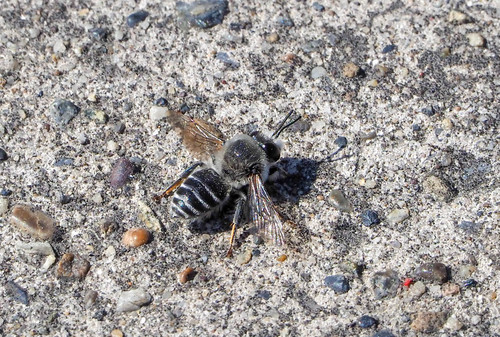
Ammobatoides
Ammobatoides is a genus of cuckoo bees belonging to the family Apidae.

Holcopasites
Holcopasites is a genus of cuckoo bees in the family Apidae. There are at least 20 described species in Holcopasites. They are uncommon and very small. Unlike nearly all other genera of Apidae males of the species have 12 antennal segments instead of 13. In the most common, Eastern species, abdomens are red with bright white patches of hair.
thumb|Holcopasites stevensi
Chrysidinae
The subfamily Chrysidinae contains those species that are most commonly recognized as cuckoo wasps, being by far the largest and most familiar subfamily. The group contains 3000 species with 48 genera worldwide. They are highly sculptured, with brilliantly metallic-colored bodies, covering the entire spectrum, but primarily blues and greens.

Neolarra
Neolarra is a genus of cuckoo bees in the family Apidae. There are about 16 described species in Neolarra, all from North America. These bees are smaller than a grain of rice and are kleptoparasites of Perdita bees.
Polistes sulcifer
species of insect

Sphecodopsis
Sphecodopsis is a genus of cleptoparasitic cuckoo bees in the family Apidae. Endemic to southern Africa, the wasp-like bees of this genus are generally small, varying from in length, and mostly black, with orange-ish or reddish colouring of the metasoma in some of the species. The bee genus Scrapter is recognised as a host for the cleptoparasitic life cycle of some Sphecodopsis, but further data regarding preferred hosts is not available for most of the species.
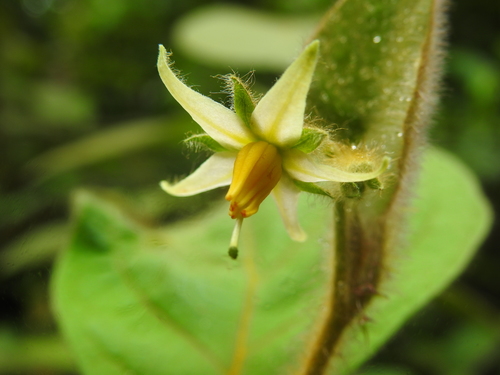
Mesoplia
Mesoplia is a genus of cuckoo bees in the family Apidae. There are 17 described species in Mesoplia.
Osiris (Bee)
kind of bee
Dioxys
genus of insects
Euaspis
Euaspis is a genus of cuckoo bees belonging to the family Megachilidae.
Townsendiella
Townsendiella is a genus of cuckoo bees in the family Apidae, found in Mexico, and the southwestern United States.
thumb|Townsendiella rufiventris