Category
page 1Buddhist monasticism

saṅgha
thumb|Monks, Tibetan Buddhist monastery, [[Rato Dratsang, India, January 2015|right]]

vihara
thumb|Mahabodhi Temple in India.
Vihāra generally refers to a Buddhist temple or Buddhist monastery for Buddhist renunciates, mostly in the Indian subcontinent. The concept is ancient and in early Pali texts, it meant any arrangement of space or facilities for dwellings. The term evolved into an architectural concept wherein it refers to living quarters for monks with an open shared space or courtyard, particularly in Buddhism. The term is also found in Jain monastic literature, usually referring to temporary refuge for wandering monks or nuns during the annual Indian monsoons. In modern Jaini

Buddhist monk
A bhikkhu (, ) is an ordained male in Buddhist monasticism. Male and female monastics (bhikkhunī) are members of the Sangha (Buddhist community).

ordination
thumb|upright=1.5|Ordination of a Catholic deacon, 1520 AD: the [[bishop bestows vestments.]]
Buddhist council
convention of Buddhist monastic leaders
Mahapajapati Gotami
Disciple of Gautama Buddha
.jpg)
Buddhist nun
A bhikkhunī (, ) is a fully ordained Buddhist nun. Bhikkhunīs live by the Vinaya, a set of monastic rules and ethical precepts. The total of codes of conduct prescribed for nuns amounts to either 311 (Theravada school), 348 (Dharmaguptaka school), or 364 (Mulasarvastivada school). Until recently, the lineages of female monastics only remained in Mahayana Buddhism and thus were prevalent in countries such as China, Korea, Taiwan, Japan, and Vietnam, while a few women have taken the full monastic vows in the Theravada and Vajrayana schools. The official lineage of Tibetan Buddhist bhikkhunīs rec

samana
In Indian religions and philosophies, a śramaṇa (from Sanskrit) or samaṇa (from Pali), sometimes anglicised as shramana, is a person "who labours, toils, or exerts themselves for some higher or religious purpose" or a "seeker, or ascetic, one who performs acts of austerity".

vinaya
thumb|An ordination ceremony at Wat Yannawa in [[Bangkok. The Vinaya codes regulate the various official acts of the Buddhist monastic community (sangha-kamma), including the ordination of new monks.]]

Buddhist laity
thumb|right|Upasakas praying in Yangon, Myanmar.
Upāsaka (masculine) or Upāsikā (feminine) are from the Sanskrit and Pāli words for "attendant". This is the title of followers of Buddhism (or, historically, of The Buddha) who are not monks, nuns, or novice monastics in a Buddhist order, and who undertake certain vows. In modern times they have a connotation of dedicated piety that is best suggested by terms such as "lay devotee" or "devout lay follower".

śrāmaṇera
thumb|Sāmaṇeras from Theravada Buddhism, [[Thailand]]
thumb|Sāmaṇeras from the Jogye Order of [[Korean Seon]]
A '''''' (Pali; ) is a novice male monastic in Buddhism. A novice female monastic is a , in Sanskrit or .
Buddhist monasticism
monastery tradition
ordination hall
type of Buddhist building

upasampadā
thumb|Upasampadā of a Buddhist monk in Burma
Upasampadā (Pali) literally denotes "approaching or nearing the ascetic tradition." In more common parlance it specifically refers to the rite and ritual of ascetic vetting (ordination) by which a candidate, if deemed acceptable, enters the community as upasampadān (ordained) and is authorised to undertake ascetic life.
pabbajjā
Pabbajjā (Pali; Skt.: '''') literally means "to go forth" and refers to an ordination in Buddhism when a layperson leaves home to live the life of a Buddhist renunciate among a community of bhikkhus (fully ordained monks). This generally involves preliminary ordination as a novice (m. samanera, f. samaneri''). It is sometimes referred to as "lower ordination". It is the ceremony that precedes the upasampadā ordination and allows the novice to experience monastic life for the first time. After a period or when the novice reaches 20 years of age, the novice can be considered for the upasampadā o
thero
Thero (commonly appearing in the masculine and feminine forms thera and therī respectively) is an honorific term in Pali for senior bhikkhus and bhikkhunis (Buddhist monks and nuns) in the Buddhist monastic order. The word literally means "elder". These terms, appearing at the end of a monastic's given name, are used to distinguish those who have at least 10 years since their upasampada (higher ordination). The name of an important collection of very early Buddhist poetry is called the Therigatha, "Verses of the Therīs".
Five Mountain System
Buddhist network active in East Asia
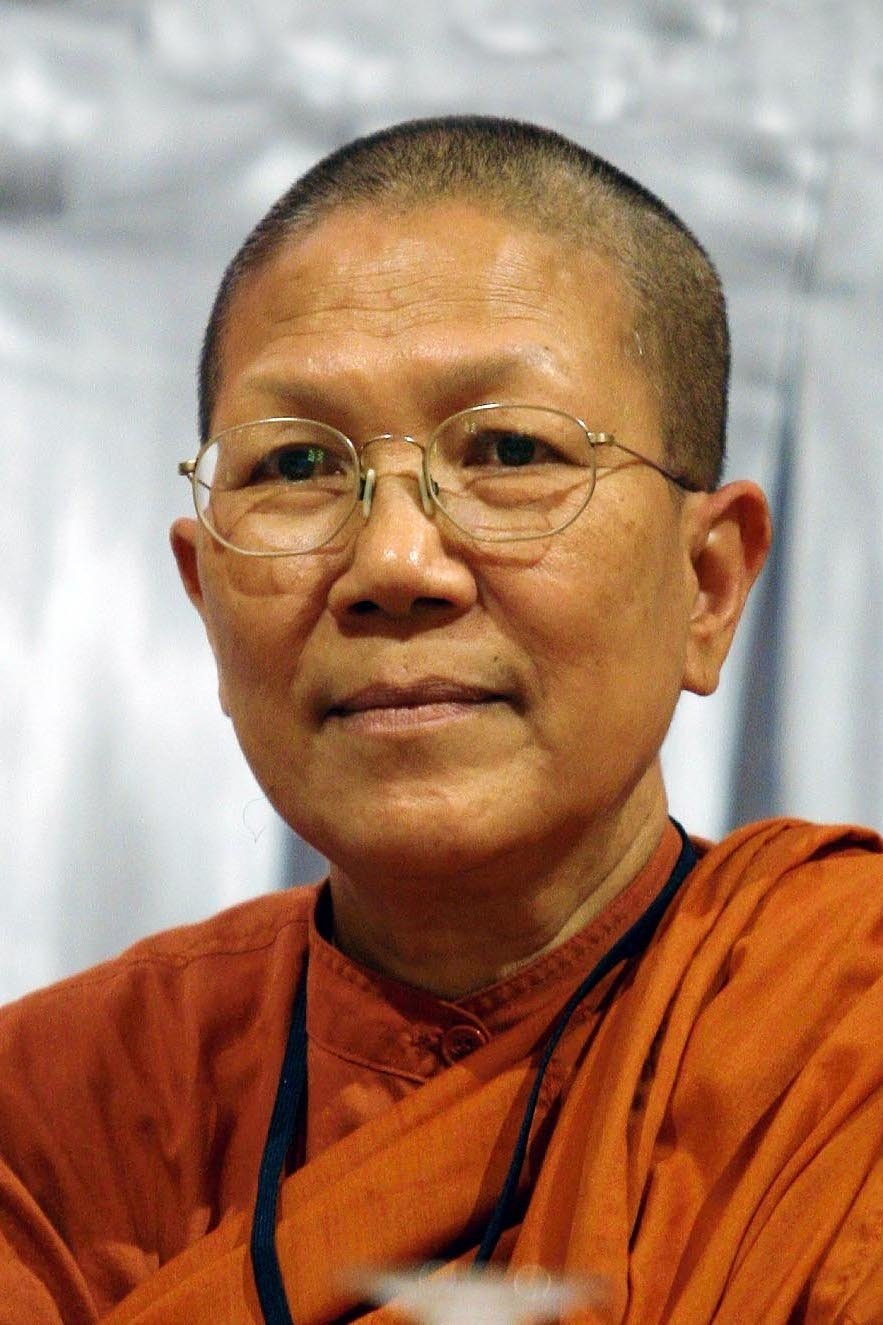
Dhammānandā
Buddhist nun
Dharma name
name for a Buddhist who has taken refuge in three treasures, following the five precepts
.jpg)
piṇḍacāra
thumb|350px|Mural depicting the Buddha on almsround, from the [[Ajanta Caves]]

anagārika
alt=Anagarika the person who dedicated his life to practice Buddhism|thumb|Anagarika Dharmapala
In Buddhism, an anagārika (Pali, 'homeless one', ; f. anagārikā ) is a person who has given up most or all of their worldly possessions and responsibilities to commit full-time to Buddhist practice. It is a midway status between a bhikkhu or bhikkhuni (fully ordained monastics) and laypersons. An anagārika takes the Eight Precepts, and might remain in this state for life.
Eight Garudhammas
additional precepts required of bhikkhunis
World Buddhist Sangha Council
Buddhist ecumenical organization
Vajracharya
thumb|300px|Padmasambhāva|Padmasambhava, the archetypal vajra master in [[Tibetan Buddhism, holding a vajra and a skullcup, both important tantric ritual implements.]]
mahavihara
Mahavihara () is the Sanskrit and Pali term for a great vihara (centre of learning or Buddhist monastery) and is used to describe a monastic complex of viharas.
thilashin
thumb| during alms round in Yangon, [[Myanmar (Burma).]]
thumb|Young before alms round in Pyin Oo Lwin train station (Myanmar).
A '''' (, ,(, ), "possessor of morality", from Pali sīla) is a female renunciant in Burmese Buddhism; a Burmese Theravada Buddhist nun. They are not fully ordained nuns (bhikkhuni), as the full ordination is not legal for women in Burma, but are closer to sāmaṇerīs'', 'novice nuns'. According to 2016 statistics published by the State Sangha Maha Nayaka Committee, there were 4,106 nunneries and 60,390 in Myanmar (Burma), over a quarter of whom live in Yangon Region.
samu
physical work done with mindfulness
Dob-dob
thumb|right|Two dob-dobs at Tibetan New Year|Lhasa's New Year celebration (Losar), 1938
A dob-dob ( or in some sources ldab ldob) is a member of a type of Tibetan Buddhist monk fraternity that existed in Gelug monasteries in Tibet such as Sera Monastery and are reported to still exist in Gelug monasteries today, although possibly in a somewhat altered form. The status of dob-dobs tended to be somewhat ambiguous and they were generally the less academic monks who had an interest in sports, fighting and other "worldly" matters.
monastic attendant
Kappiya is a Buddhist lay manciple (attendant or steward) who resides in a monastery (vihāra) and assists Buddhist monks (bhikkhu in Pali).
mae ji
thumb|281x281px|Maechi Sansanee Sthirasuta|Sansanee, Thailand
Maechi, Maeji or Mae Chee (; ), "respected mother" (แม่ + honorific suffix "-ji"), are Theravada Buddhist Nuns in Thailand. As female monastics ordained under The Eight or Ten Precepts (i.e., more than the Five Precepts taken by laypersons), they formally occupy a position similar to sāmaṇerī and wear white robes, but are in practice resemblant of Theravāda bhikkhus - renunciants who have dedicated their life to Buddhist practice, meditation, vowing celibacy and ascetisicm.