Category
page 1Burkholderiaceae
Burkholderia pseudomallei
species of bacterium
Burkholderia
Burkholderia is a genus of Pseudomonadota whose pathogenic members include the Burkholderia cepacia complex, which attacks humans and plants; Burkholderia mallei, responsible for glanders, a disease that occurs mostly in horses and related animals; Burkholderia pseudomallei, causative agent of melioidosis; and Burkholderia cenocepacia, an important pathogen of pulmonary infections in people with cystic fibrosis (CF). Burkholderia species is also found in marine environments. S.I. Paul et al. isolated and characterized Burkholderia cepacia from marine sponges of the Saint Martin's Island of the

Burkholderia mallei
species of bacterium

Ralstonia
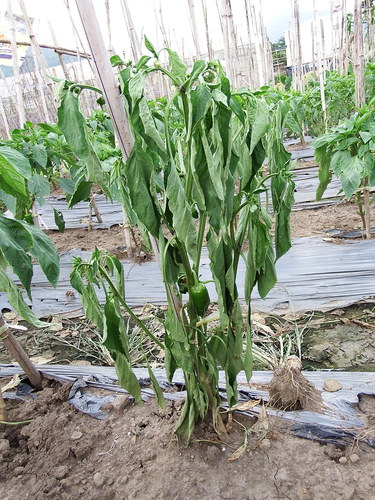
thumb|Symptoms of southern bacterial wilt in tomato caused by Ralstonia solanacearum
Ralstonia solanacearum
species of bacterium
Burkholderiaceae
The Burkholderiaceae are a family of bacteria included in the order Burkholderiales. It includes some pathogenic species, such as Burkholderia mallei (glanders) and Burkholderia pseudomallei (melioidosis). This family was found to be enriched in scale-eating pupfish (Cyprinodon desquamator) guts, even after being fed a common laboratory diet, suggesting it may aid in scale-digestion (Heras and Martin 2022).
Cupriavidus metallidurans
species of bacterium
Cupriavidus necator
species of bacterium
Burkholderia gladioli
species of bacterium
Cupriavidus
Cupriavidus is a genus of bacteria that includes the former genus Wautersia. They are characterized as Gram-negative, motile, rod-shaped organisms with oxidative metabolism. They possess peritrichous flagella, are obligate aerobic organisms, and are chemoorganotrophic or chemolithotrophic. Resistance to metals (including copper) has been described. These organisms have been found in both soil and in clinical isolates.
Burkholderia cenocepacia
species of bacterium
Burkholderia cepacia complex
group of phenotypically similar but genotypically distinct species (genomovars) in the genus Burkholderia
Burkholderia glumae
species of bacterium
Polynucleobacter
Polynucleobacter is a genus of bacteria, originally established by Heckmann and Schmidt (1987) to exclusively harbor obligate endosymbionts of ciliates belonging to the genus Euplotes.
Cupriavidus pinatubonensis
species of bacterium
Paraburkholderia
Paraburkholderia is a genus of Pseudomonadota that are gram negative, slightly curved rods that are motile by means of flagella. Paraburkholderia members are usually environmental bacteria, including some that can associate with plants or form root nodules, and unlike Burkholderia species are not commonly associated with human infection. Paraburkholderia members form a monophyletic clade within the Burkholderiaceae family, which is what prompted their distinction as a genus independent from Burkholderia species, in combination with the finding of robust conserved signature indels which are uni