Category
page 1Business cycle

recession
In economics, a recession is a business cycle contraction that occurs when there is a period of broad decline in economic activity. Recessions generally occur when there is a widespread drop in spending (an adverse demand shock). This may be triggered by various events, such as a financial crisis, an external trade shock, an adverse supply shock, the bursting of an economic bubble, or a large-scale anthropogenic or natural disaster (e.g. a pandemic). There is no official definition of a recession, according to the International Monetary Fund.

business cycle
fluctuation in the degree of utilization of the production potential of an economy
economic bubble
economic phenomenon of very high prices driven by speculation

bank run
banking crisis when many clients withdraw their money from a bank, because they believe the bank may cease to function in the near future
economic stagnation
prolonged period of slow economic growth
vicious circle
complex chain of events that reinforces itself through a feedback loop
Clément Juglar
French economist (1819–1905)
overproduction
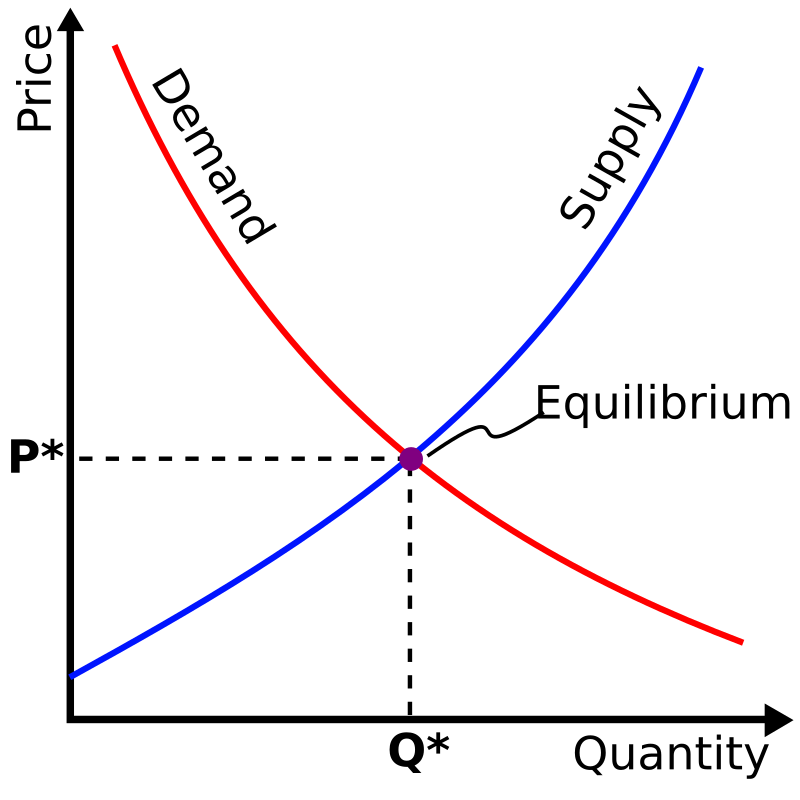
In economics, overproduction, oversupply, excess of supply, or glut refers to excess of supply over demand of products being offered to the market. This leads to lower prices and/or unsold goods along with the possibility of unemployment.
supply shock
an unexpected event that suddenly increases or decreases the supply of a commodity or service
New Normal
a state to which an economy, society, etc. settles following a crisis, when this differs from the situation that prevailed prior to the start of the crisis
Macroprudential regulation
regulation designed to mitigate systemic financial risk
economic stability
absence of excessive fluctuations in the macroeconomy
economic expansion
increase in economic activity
Skyscraper Index
idea that the construction of skyscrapers predicts an economic crash
Buffer stock scheme
economic recovery
phase of the business cycle following a recession
Great Moderation
phenomenon in economies of developed nations since the mid-1980s
credit cycle
the expansion and contraction of access to credit over time period, regarded by some as the fundamental process driving the business cycle
Deleveraging
At the micro-economic level, deleveraging refers to the reduction of the leverage ratio, or the percentage of debt in the balance sheet of a single economic entity, such as a household or a firm. It is the opposite of leveraging, which is the practice of borrowing money to acquire assets and multiply gains and losses.
Geoffrey H. Moore
American economist
structural change
in economics, a shift in the way a market operates