Category
page 1Calicut kingdom
Os Lusíadas
Portuguese epic poem by Luís de Camões

calico
thumb|The weave of calico sample from a shopping bag shown against a [[centimetre scale]]
Calico (; in British usage since 1505) is a heavy plain-woven textile made from unbleached, and often not fully processed, cotton. It may also contain unseparated husk parts. The fabric is coarser than muslin, but less coarse and thick than canvas or denim. It is still very cheap owing to its unfinished and undyed appearance.
Abd al-Razzaq Samarqandi
Persian Timurid islamic scholar, diplomat and historian
Battle of Diu
1509 battle between a great Muslim compound and Portuguese-Hindu forces in India

Zamorin of Calicut
The Samoothiri (Anglicised as Zamorin; Malayalam: , , Arabic: sāmuri, Portuguese: Samorim, Dutch: Samorijn, Chinese: Shamitihsi) was the title of the erstwhile ruler and monarch of the Calicut kingdom in the South Malabar region of India. Originating from the former feudal kingdom of Nediyiruppu Swaroopam, the Samoothiris and their vassal kings from Nilambur Kovilakam established Calicut as one of the most important trading ports on the southwest coast of India. At the peak of their reign, they ruled over a region extending from Kozhikode Kollam to the forested borders of Panthalayini Kollam (
Battle of Cannanore
indo-Portuguese battle

Siege of Cannanore
1507 siege in India
Kunhali Marakkar
title given to the Muslim naval chief of the Zamorin of Calicut
Battle of Cochin
1504 battle
Hong Bao
Chinese explorer
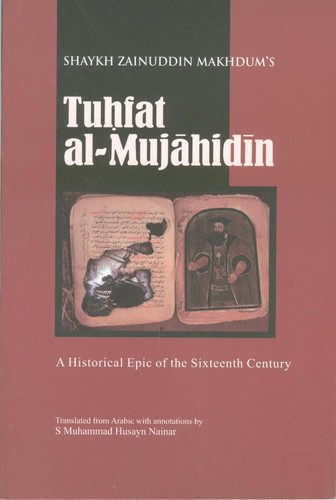
Tuhfat al-Mujahidin
Literally work by Zayn al-Dīn al-Malībarī
7th Portuguese India Armada
historical naval fleet