Category
page 1Carboniferous plants
.jpg)
Calamites
Calamites is a genus of extinct arborescent (tree-like) horsetails to which the modern horsetails (genus Equisetum) are closely related. Unlike their herbaceous modern cousins, these plants were medium-sized trees, growing to heights of . They were components of the understories of coal swamps of the Carboniferous Period (around ).

Pteridospermatophyta
Pteridosperms, also known as seed ferns, are a polyphyletic grouping of extinct seed-producing plants. The earliest fossil evidence for plants of this type are the lyginopterids of late Devonian age. They flourished particularly during the Carboniferous and Permian periods. Pteridosperms declined during the Mesozoic Era and had mostly disappeared by the end of the Cretaceous Period, though Komlopteris seem to have survived into Eocene times, based on fossil finds in Tasmania.
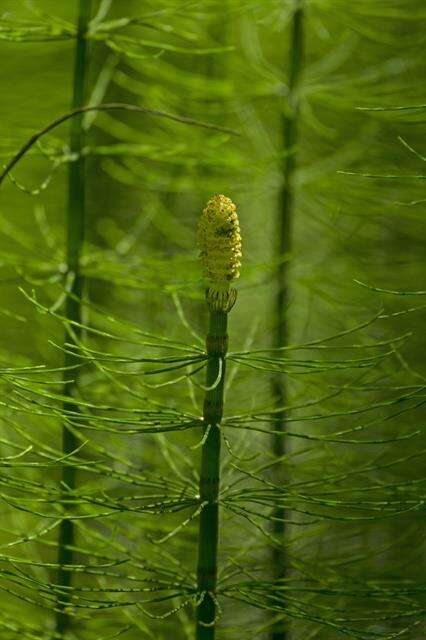
Equisetales
Equisetales is an order of subclass Equisetidae with only one living family, Equisetaceae, containing the genus Equisetum (horsetails), as well as a variety of extinct groups, including the tree-like Calamitaceae.

Archaeopteris
Archaeopteris is an extinct genus of progymnosperm tree with fern-like leaves. A useful index fossil, this tree is found in strata dating from the Upper Devonian to Lower Carboniferous (), the oldest fossils being 385 million years old, and had global distribution.

Lepidodendrales
Lepidodendrales (from the Greek for "scale tree") or arborescent lycophytes are an extinct order of primitive, vascular, heterosporous, arborescent (tree-like) plants belonging to Lycopodiopsida. Members of Lepidodendrales are the best understood of the fossil lycopsids due to the vast diversity of Lepidodendrales specimens and the diversity in which they were preserved; the extensive distribution of Lepidodendrales specimens as well as their well-preservedness lends paleobotanists exceptionally detailed knowledge of the coal-swamp giants’ reproductive biology, vegetative development, and role

Calamitaceae
Calamitaceae is an extinct family of equisetalean plants related to the modern horsetails, known from the Carboniferous and Permian periods. Some members of this family like Arthropitys attained tree-like stature, with heights over , with extensive underground rhizomes. They were largely found in wetland environments.
Sphenophyllales
Sphenophyllales is an extinct order of articulate land plants and a sister group to the present-day Equisetales (horsetails). They are fossils dating from the Devonian to the Triassic. They were common during the Late Pennsylvanian to Early Permian, with most of the fossils coming from the Carboniferous period.
Pecopteris
Pecopteris is a very common form genus of leaves. Most Pecopteris leaves and fronds are associated with the marattialean tree fern Psaronius. However, Pecopteris-type foliage also is borne on several filicalean ferns, and at least one seed fern.
Pecopteris first appeared in the Devonian period, but flourished in the Carboniferous, especially the Pennsylvanian. Plants bearing these leaves became extinct in the Permian period, due to swamps disappearing and temperatures on Earth dropping.
Annularia
Annularia is a form taxon, applied to fossil foliage belonging to extinct plants of the genus Calamites in the order Equisetales.
Stigmaria
Stigmaria is a form taxon for common fossils found in Carboniferous rocks. They represent the underground rooting structures of arborescent lycophytes such as Sigillaria and Lepidodendron under the order Lepidodendrales.
Walchia
Walchia is a primitive fossil conifer found in upper Pennsylvanian (Carboniferous) and lower Permian (about 310-290 Mya) rocks of Europe and North America. A forest of in-situ Walchia tree-stumps is located on the Northumberland Strait coast at Brule, Nova Scotia.
Zygopteridales
Zygopteridales is an extinct order of ferns or fern-like plants which grew primarily during the Carboniferous. It comprises two families: Zygopteridaceae, which contains at least a dozen named genera, and Teledeaceae, which comprises two genera (Teledea and Senftenbergia). A few other genera are of uncertain placement and are not assigned to any family yet.
Equisetites
Equisetites is an extinct genus of vascular plants within Equisetaceae, a family of vascular plants that reproduce by spores rather than seeds. The genus was named by Sternberg (1833) and contains at least 40 named species and two unnamed species, with the earliest known species being E. hemingwayi from the Westphalian of Yorkshire, England, though the affinity of this genus to modern Equistaceae is uncertain.
Callistophytales
Callistophytales is an extinct order of spermatophytes (seed plants) which lived from the Pennsylvanian (Late Carboniferous) to Permian periods. They were mainly scrambling and lianescent (vine-like) plants found in the wetland "coal swamps" of Euramerica and Cathaysia. Like many other early spermatophytes, they could be described as "seed ferns", combining ovule-based reproduction with pinnate leaves superficially similar to modern ferns.
Sphenopteris
Sphenopteris is a genus of seed ferns containing the foliage of various extinct plants, ranging from the Devonian to Late Cretaceous. One species, S. höninghausi, was transferred to the genus Crossotheca in 1911.
Lyginopteridales
The Lyginopteridales are an extinct group of seed plants known from the Paleozoic. They were the first plant fossils to be described as pteridosperms (a polyphyletic group sometimes referred to as "seed ferns") and, thus, the group on which the concept of pteridosperms was first developed; they are the stratigraphically oldest-known pteridosperms, occurring first in late Devonian strata; and they have the most primitive features, most notably in the structure of their ovules. During early and most of middle Pennsylvanian times the Medullosales took over as the more important of the larger pter
Gangamopteris
Gangamopteris is a genus of Carboniferous-Permian plants, very similar to Glossopteris. Previously, it was classified as fern with reproduction by seed. The genus is usually only applied to leaves, making it a form taxon. Gangamopteris dominates some coal deposits, such as those of the Beacon Supergroup.
Alethopteris
Alethopteris is a prehistoric plant genus of fossil pteridospermatophytes (seed ferns) that developed in the Pennsylvanian (around ).
thumb|left|Alethopteris florentina De Stefani, 1901, Natural History Museum University of Pisa
thumb|Alethopteris, at the State Museum of Pennsylvania in Harrisburg.|left
thumb|Alethopteris sp.