Category
page 1Cardiac anatomy

heart
The heart is a muscular organ found in humans and other animals. This organ pumps blood through the blood vessels. The heart and blood vessels together make up the circulatory system. The pumped blood carries oxygen and nutrients to the tissue, while carrying metabolic waste such as carbon dioxide to the lungs. In humans, the heart is approximately the size of a closed fist and is located between the lungs, in the middle compartment of the chest, called the mediastinum.

aorta
The aorta ( ; : aortas or aortae) is the main and largest artery in the human body, originating from the left ventricle of the heart, branching upwards immediately after, and extending down to the abdomen, where it splits at the aortic bifurcation into two smaller arteries (the common iliac arteries). The aorta distributes oxygenated blood to all parts of the body through the systemic circulation.

myocardium
middle layer of the heart wall, which consists of cardiac muscle

pericardium
The pericardium (), also called pericardial sac, is a double-walled sac containing the heart and the roots of the great vessels. It has two layers, an outer layer made of strong inelastic connective tissue (fibrous pericardium), and an inner layer made of serous membrane (serous pericardium). It encloses the pericardial cavity, which contains pericardial fluid, and defines the middle mediastinum. It separates the heart from interference of other structures, protects it against infection and blunt trauma, and lubricates the heart's movements.

atrium
chamber of the heart

ventricle of the heart
chamber of the heart
heart valve
flap of tissue that prevent backflow of blood around the heart
coronary artery
artery of the coronary circulation which transports blood into and out of the cardiac muscle
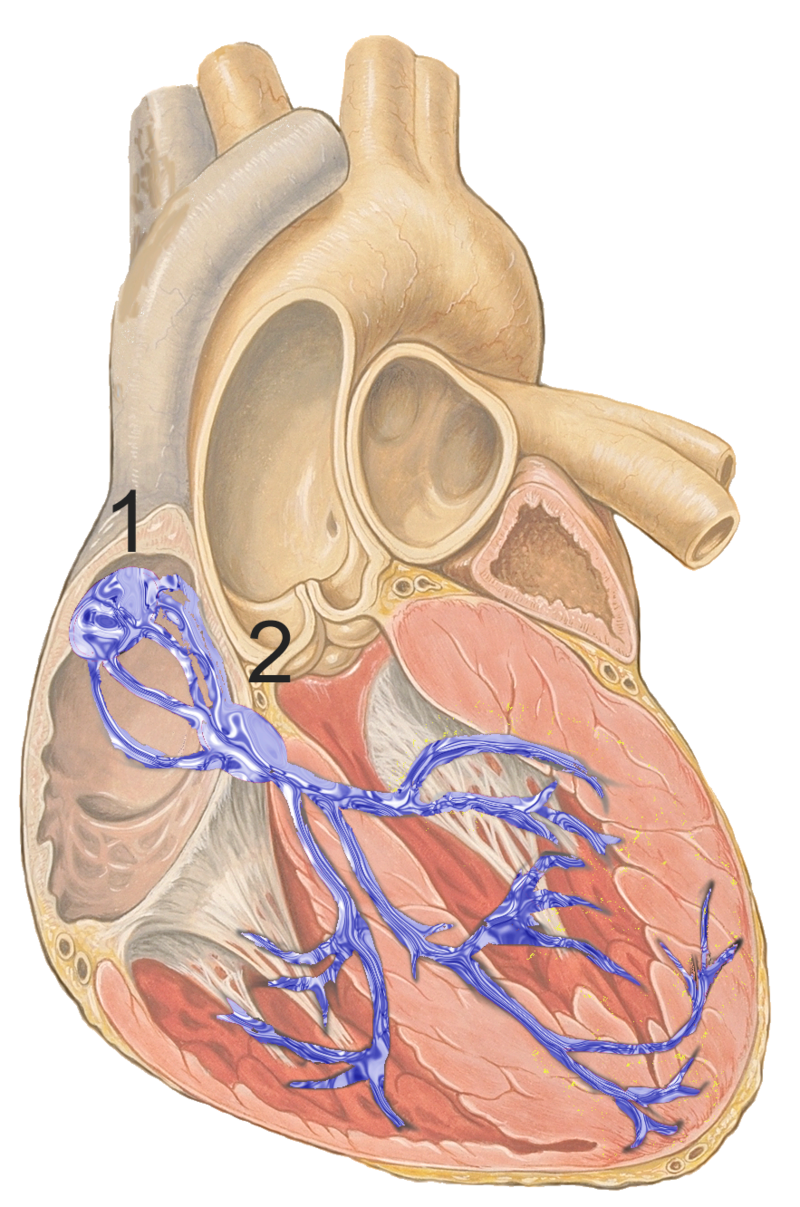
sinoatrial node
group of cells located in the wall of the right atrium of the heart

endocardium
thumb|Illustration depicting the layers of the heart wall including the innermost endocardium
mitral valve
valve in the heart connecting the left atrium and left ventricle
aortic valve
valve in the human heart between the left ventricle and the aorta
tricuspid valve
one-way valve present between right auricle and right ventricle
atrioventricular node
part of the electrical conduction system of the heart that coordinates the top of the heart.
coronary circulation
circulation of blood in the blood vessels of the heart muscle (myocardium)
pulmonary valve
semilunar valve of the heart
subendocardial branches
fibers that allow the heart's conduction system to create synchronized contractions of its ventricles
atrioventricular bundle
collection of heart muscle cells specialized for electrical conduction
interventricular septum
anatomical structure
papillary muscles
muscles located in the ventricles of the heart
cardiac pacemaker
Network of cells that facilitate rhythmic heart contraction
chordae tendineae
cord-like tendons that connect the papillary muscles to the tricuspid valve and the mitral valve in the heart
Cardiac skeleton
The cardiac skeleton is a high density single structure of connective tissue that forms and anchors the valves and influences the forces exerted through them
valve of inferior vena cava
anatomical structure
valve of coronary sinus

Bachmann's bundle
Anatomical cardiac structure
atrioventricular septum
Wall of the heart chambers
coronary sulcus
Koch's triangle
Anatomical area located in the right atrium of human heart
intercalated disc
complex cell-cell junction at which myofibrils terminate in cardiomyocytes
pericardial fluid
heart
conus arteriosus
conical pouch formed from the upper and left angle of the right ventricle in the chordate heart, from which the pulmonary trunk arises
pectinate muscle
parallel ridges in the walls of the atria of the heart
cardiac physiology
study of healthy, unimpaired function of the heart
Crux cordis
the area on the lower back side of the heart where the coronary sulcus and the posterior interventricular sulcus meet
cardiovascular physiology
study of the circulatory system, specifically addressing the physiology of the heart ("cardio") and blood vessels ("vascular")
smallest cardiac vein
small veins in the walls of all four heart chambers
posterior interventricular sulcus
groove separating the heart's ventricles

bundle branch
offshoots of the bundle of His in the heart's ventricle

anterior interventricular sulcus
one of two grooves that separates the ventricles of the heart, never the left margin
right atrioventricular orifice
anatomical feature of the human heart
Left atrioventricular opening
Anatomical feature of the human heart
pericardial sinus
space of the pericardium
Sternopericardiac ligaments
Ligaments of the sternum and pericardium