Category
page 1Caridea

Caridea
The Caridea, commonly known as caridean shrimp or true shrimp (from Ancient Greek καρίς, καρίδος (karís, karídos, "shrimp"), are an infraorder of shrimp within the order Decapoda. This infraorder contains all species of true shrimp. They are found widely around the world in both fresh and salt water. Many other animals with similar names – such as the mud shrimp of Axiidea and the boxer shrimp of Stenopodidea – are not true shrimp, but many have evolved features similar to true shrimp.

Crangon crangon
caridean shrimp

northern prawn
species of crustacean

Atyidae
Atyidae is a family of shrimp, present in all tropical and most temperate waters of the world. Adults of this family are almost always confined to fresh water. This is the only family in the superfamily Atyoidea.

Pandalidae
The family Pandalidae is a taxon of caridean shrimp. These species are commonly called pandalid shrimp. They are edible and have high economic value. They are characterised by the subdivided carpus of the second pereiopod and, mainly, by the lack of the chelae (claws) on the first pereiopod. This is a cold-water family, and their representation in tropical areas is made by deep-sea shrimp. The genus Physetocaris, sometimes placed in this family, is now considered to be in its own family, Physetocarididae.
Palaemonoidea
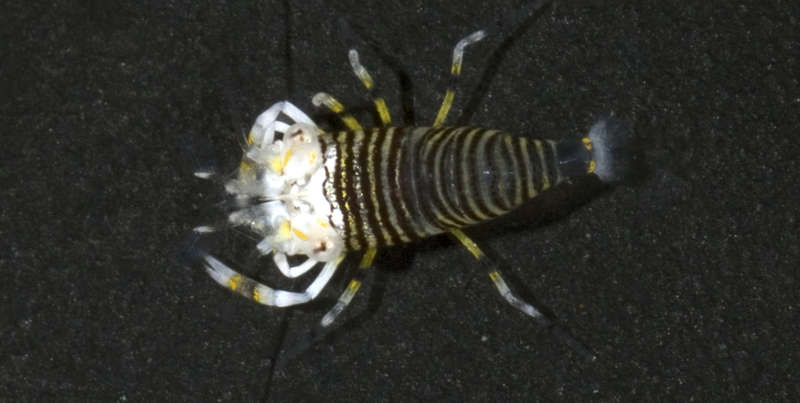
Palaemonoidea is a large superfamily of shrimp, containing nearly 1,000 species. The position of the family Typhlocarididae is unclear, although the monophyly of a group containing the remaining seven families is well supported.
Anchistioididae Borradaile, 1915
Desmocarididae Borradaile, 1915
Euryrhynchidae Holthuis, 1950
Gnathophyllidae Dana, 1852
Hymenoceridae Ortmann, 1890
Kakaducarididae Bruce, 1993
Palaemonidae Rafinesque, 1815
Typhlocarididae Annandale & Kemp, 1913
Crangonidae
Crangonidae is a family of shrimp, of the superfamily Crangonoidea, including the commercially important species Crangon crangon. Its type genus is Crangon. Crangonid shrimps' first pair of pereiopods have partially chelate claws that they use to capture their prey. They burrow shallowly into sediment on the sea floor, and feed on bivalves, crustaceans, polychaetes, and some small fish.
Neocaridina
Neocaridina is a genus of small, land-locked freshwater shrimp in the family Atyidae (order Decapoda, infraorder Caridea) native to East Asia. The genus comprises roughly c. 25–30 described species (numbers vary with ongoing revision and differing treatments of synonyms and subspecies).
Alpheoidea
Alpheoidea is a superfamily of shrimp. Species of shrimp in the superfamily Alpheoidea are drag swimmers, as opposed to lift swimmers.

Pandalus
Pandalus (cold-water prawn) is a genus of shrimp in the family Pandalidae. Members of the genus are medium-sized and live on or near the seabed. Some species are the subject of commercial fisheries and are caught by trawling. One species, Pandalus montagui, lives in association with the reef-building polychaete worm, Sabellaria spinulosa.

Pasiphaeidae
Pasiphaeidae is a family of shrimp. It is the only family in the superfamily Pasiphaeoidea and contains seven extant genera:
Alainopasiphaea Hayashi, 1999
Eupasiphae Wood-Mason, 1893
Glyphus Filhol, 1884
Leptochela Stimpson, 1860
Parapasiphae Smith, 1884
Pasiphaea Savigny, 1816
Psathyrocaris Wood-Mason, 1893
Pandaloidea
The Pandaloidea are a superfamily of shrimp, comprising the large family Pandalidae (about 200 species) and the much smaller Chlorotocellidae (seven species).
Crangonoidea
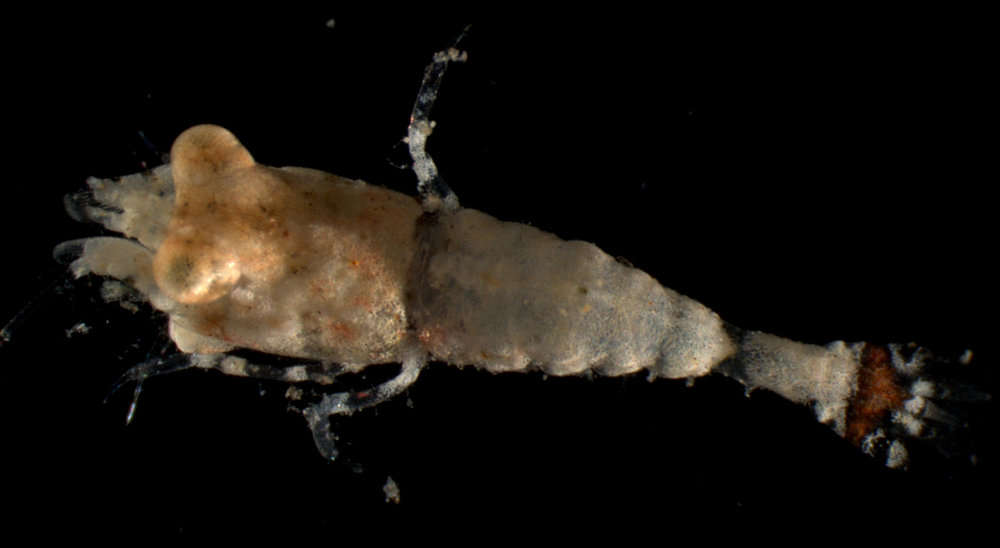
Crangonoidea is a superfamily of shrimp containing the two families Crangonidae and Glyphocrangonidae.
Oplophoridae
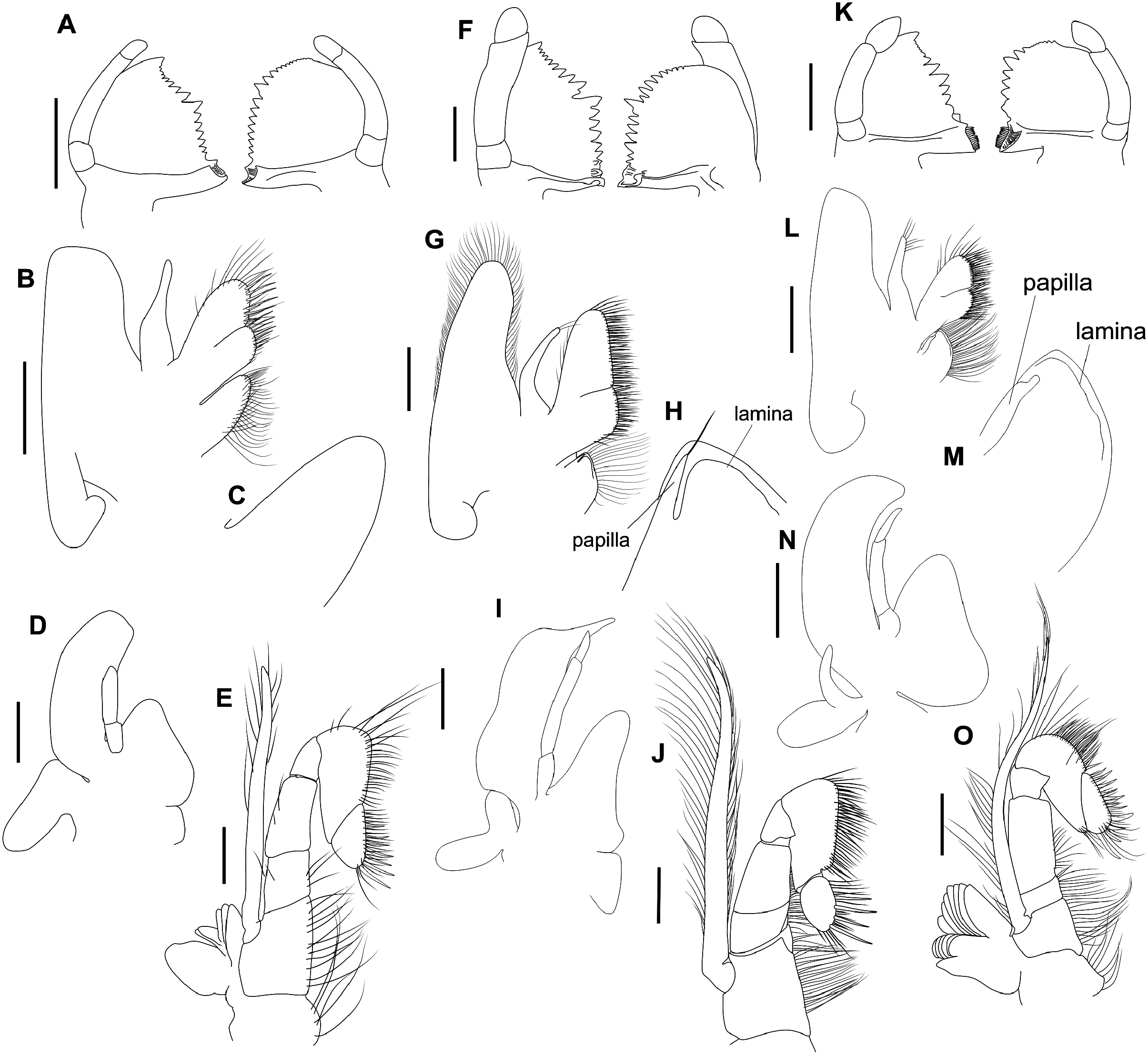
The family Oplophoridae is a taxon of pelagic shrimp and the only subtaxon of the superfamily Oplophoroidea. It contains the following genera:
Acanthephyra A. Milne-Edwards, 1881
Ephyrina Smith, 1885
Heterogenys Chace, 1986
Hymenodora Sars, 1877
Janicella Chace, 1986
Kemphyra Chace, 1986
Meningodora Smith, 1882
Notostomus A. Milne-Edwards, 1881
† Odontochelion Garassino, 1994
Oplophorus H. Milne-Edwards, 1837
Systellaspis Bate, 1888
† Tonellocaris Garassino, 1998

Heterocarpus ensifer
species of crustacean

Rhynchocinetidae
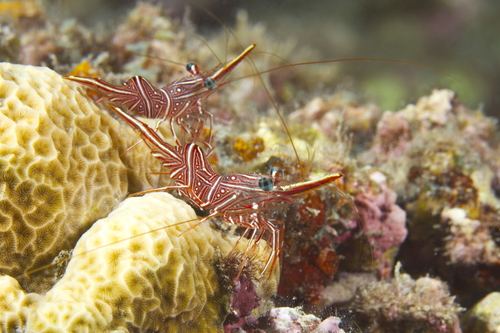
The family Rhynchocinetidae are a group of small, reclusive red-and-white shrimp. This family typically has an upward-hinged foldable rostrum, hence its taxon name Rhynchocinetidae, which means movable beak; this gives these shrimps their common name of hinge-beak shrimps. The family contains only two genera, Cinetorhynchus and Rhynchocinetes.

Pandalus hypsinotus
species of crustacean

Alvinocarididae
Alvinocarididae is a family of shrimp, originally described by M. L. Christoffersen in 1986 from samples collected by DSV Alvin, from which they derive their name. Shrimp of the family Alvinocarididae generally inhabit deep sea hydrothermal vent regions, and hydrocarbon cold seep environments. Carotenoid pigment has been found in their bodies. The family Alvinocarididae comprises 7 extant genera.
.jpg)
Heterocarpus
Heterocarpus is a genus of deep-sea shrimp, mainly of tropical areas all over the world.

Processidae
The Processidae are a family of shrimp, comprising 65 species in five genera, and the only family in the superfamily Processoidea. They are small, nocturnal animals, mostly living in shallow seas, particularly on grass flats. The first pereiopods are usually asymmetrical, with a claw on one, but not the other (Ambidexter forming the exception to this rule). The rostrum is generally a simple projection from the front of the carapace, with two teeth, one at the tip, and one further back.

Pandalus montagui
species of crustacean
Rhynchocinetes durbanensis
species of crustacean
Pandalus platyceros
species of crustacean
Bresilioidea
Bresilioidea is a superfamily of shrimp. It is likely to be an artificial group, containing five families which may or may not be related.
Stylodactylidae
The family Stylodactylidae is a group of shrimp and the only representative of its superfamily (Stylodactyloidea). It contains the five genera Bathystylodactylus, Neostylodactylus, Parastylodactylus, Stylodactyloides and Stylodactylus.
Nematocarcinoidea
Nematocarcinoidea is a superfamily of caridean shrimp, comprising five families – Eugonatonotidae, Lipkiidae, Nematocarcinidae, Rhynchocinetidae, and Xiphocarididae. Their shared feature is the presence of strap-like epipods on at least the first three pairs of pereiopods, and a blunt molar process.
Campylonotoidea
Campylonotoidea is a superfamily of shrimp, containing the two families Campylonotidae and Bathypalaemonellidae. Fenner A. Chace considered it to be the sister group to the much larger superfamily Palaemonoidea, with which it shares the absence of endopods on the pereiopods, and the fact that the first pereiopod is thinner than the second. Using molecular phylogenetics, Bracken et al. proposed that Campylonotoidea may be closer to Atyoidea. There are sixteen described species in 3 genera; no fossils are known.
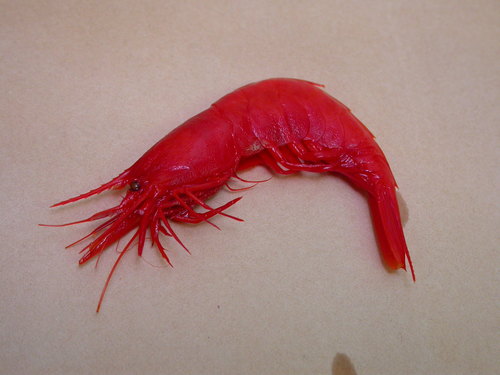
Acanthephyra
Acanthephyra is a genus of shrimp in the family Acanthephyridae, with species that live at depths from 0 to more than 5000 meters deep below the ocean surface.
Glyphocrangonidae
Glyphocrangonidae is a family of crustaceans belonging to the order Decapoda.
shrimp fishing
fisheries for shrimp and prawns
Rhynchocinetes
Rhynchocinetes is a genus of shrimp, containing the following 14 species:

Leptochela
Leptochela is a genus of small, shallow-water shrimp from the family Pasiphaeidae. They are found in the Indo-Pacific region and the western Atlantic with an isolated species in Hawaii, they are absent from the eastern Atlantic Ocean and were absent from the eastern Pacific but specimens of a species widespread in the western Atlantic were collected from waters to the south of the tip of Baja California. Two species, Leptochela aculeocaudata and Leptochela pugnax have invaded the eastern Mediterranean from the Red Sea through the Suez Canal and are thus classified as Lessepsian migrants.
Cinetorhynchus
Cinetorhynchus is a genus of shrimp in the family Rhynchocinetidae. It was originally described in 1995 by Lipke Holthuis as a subgenus of the genus Rhynchocinetes, but was elevated to the rank of genus by Okuno in 1997. Both genera share the characteristic jointed rostrum, but differ in the numbers and positions of various spines. Cinetorhynchus contains the following species:
Cinetorhynchus brucei Okuno, 2009
Cinetorhynchus concolor (Okuno, 1994)
Cinetorhynchus erythrostictus Okuno, 1997
Cinetorhynchus fasciatus Okuno & Tachikawa, 1997
Cinetorhynchus gabonensis Ďuriš, Šobáňová & Wirtz, 2019

Hymenodora glacialis
species of crustacean

Hymenodora
Hymenodora is a genus of shrimp, containing four species, which collectively have a southern circumpolar distribution.
Hymenodora acanthitelsonis Wasmer, 1972
Hymenodora frontalis Rathbun, 1902
Hymenodora glacialis (Buchholz, 1874)
Hymenodora gracilis Smith, 1886
Cinetorhynchus reticulatus
species of crustacean
Atyoida
Atyoida is a genus of freshwater shrimp in the family Atyidae. There are five species in the genus, each endemic to a different Pacific island group. The type species, Atyoida bisulcata, is endemic to Hawaiʻi and described by John Witt Randall in 1840.
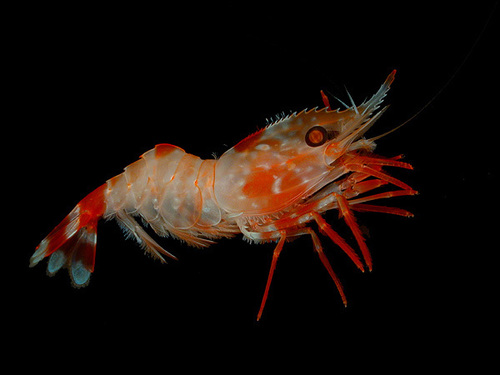
Eugonatonotus crassus
species of crustacean

Acanthephyra purpurea
species of crustacean
Psalidopodidae
REDIRECT Psalidopus

Pandalopsis lucidirimicola
species of crustacean

Nematocarcinus
Nematocarcinus, sometimes known as spider shrimp, is a genus of caridean shrimp, the nominotype of Nematocarcinidae. Similar to the other members of their family, Nematocarcinus inhabit the deep sea, walking on the seabed with their specialized, extremely elongate legs (the pereiopods). Despite continuing fisheries experiments, they are currently not commercially fished, but often appear as bycatch.

Eugonatonotus
Eugonatonotus is a genus of decapods and is the only genus in the monotypic family Eugonatonotidae.
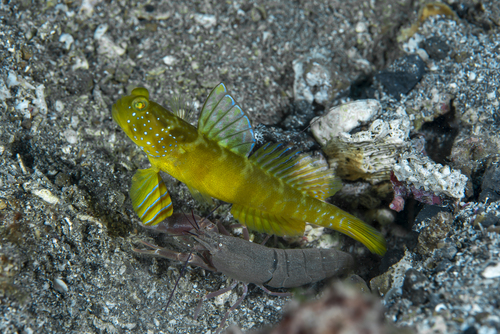
vent shrimp
species of crustacean
Xiphocarididae
REDIRECT Xiphocaris
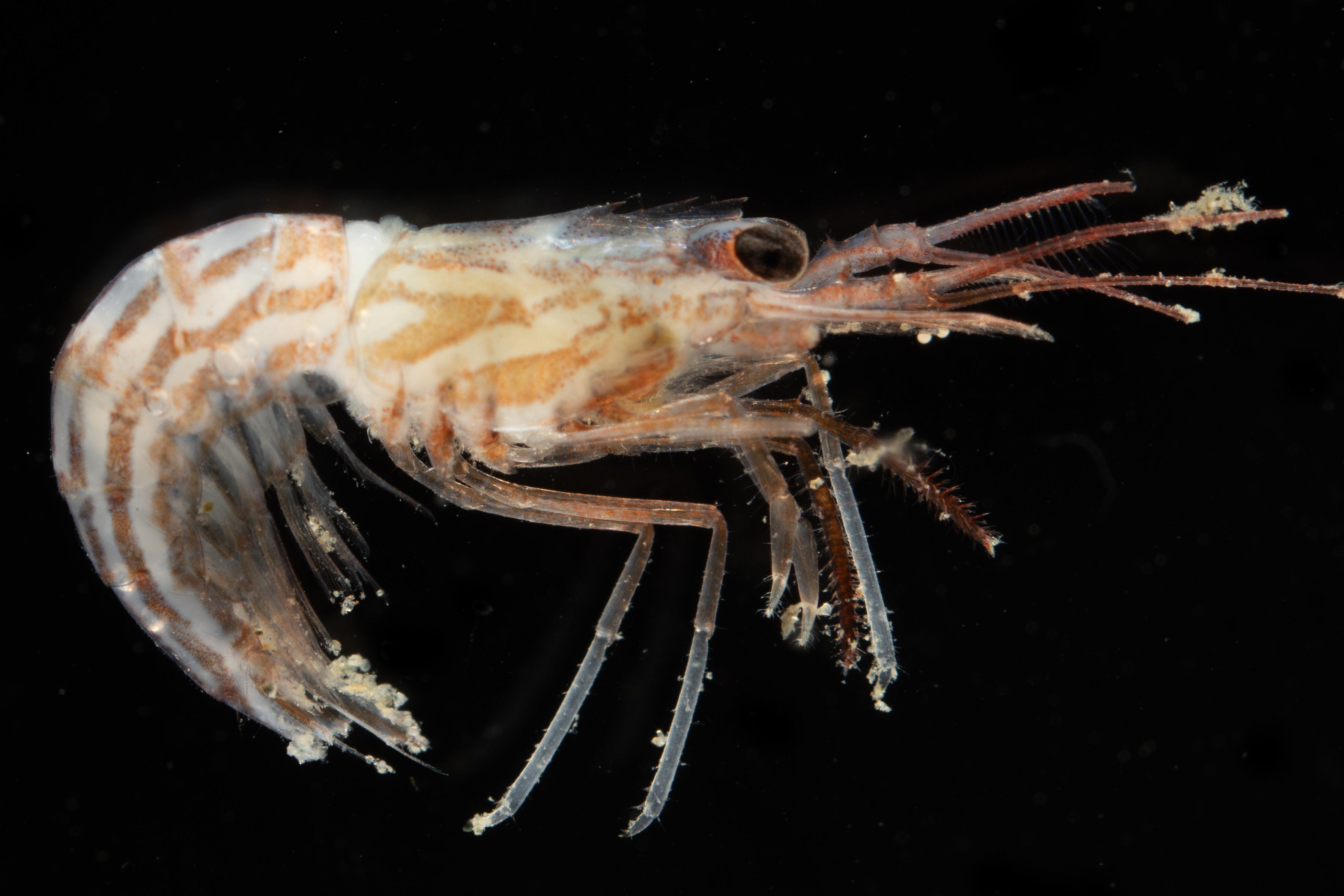
Lysmata californica
species of shrimp

Nikoides
The Nikoides are a genus in the Processidae family of shrimp, first described in 1875 by Otton Mikhailovich Paulson.

Metacrangon munita
species of crustacean
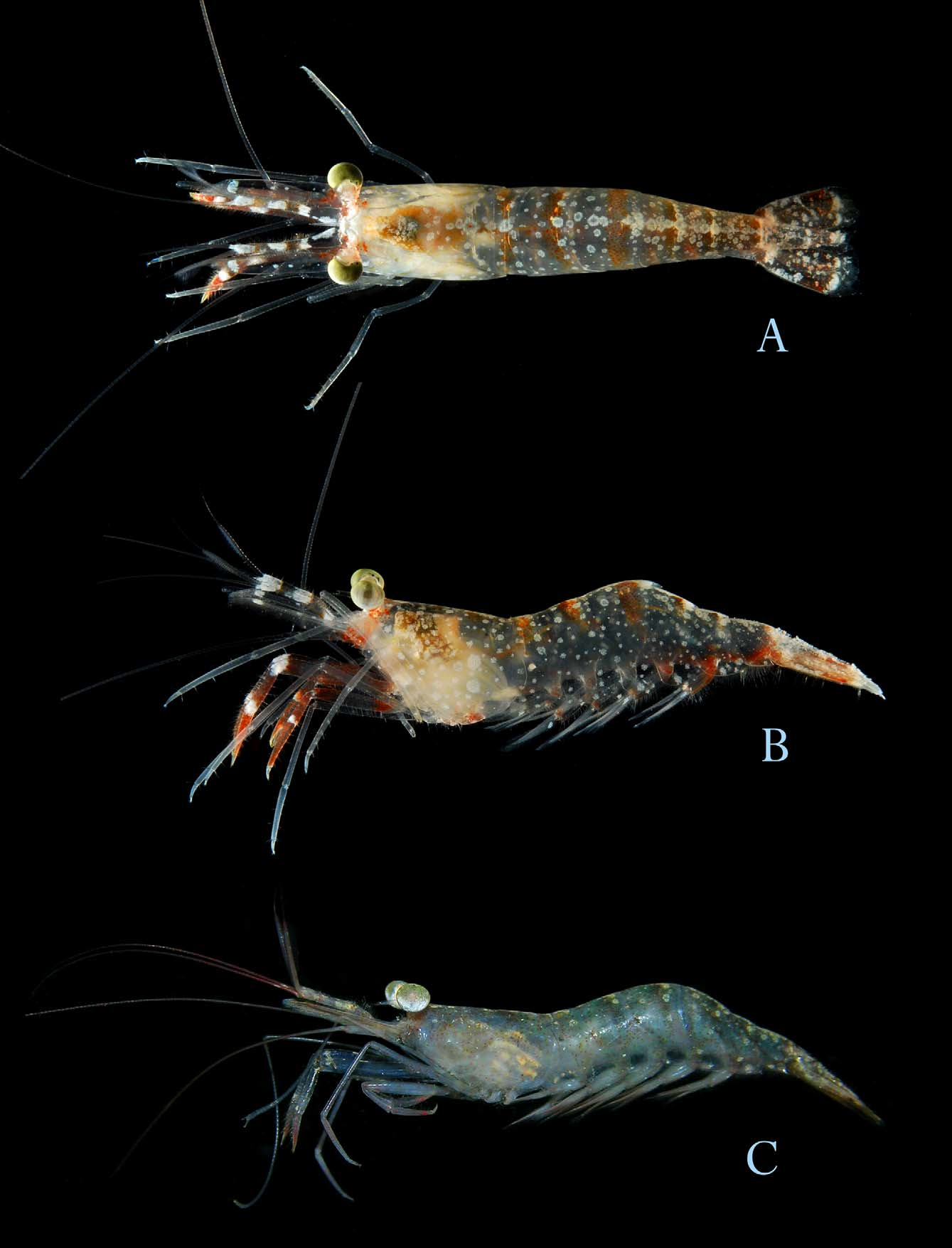
Nikoides danae
species of crustacean
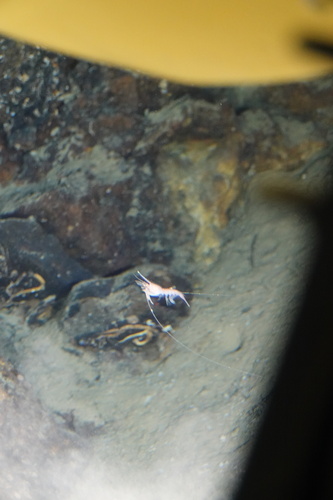
Psalidopus
Psalidopus is a genus of shrimp placed in its own family, Psalidopodidae, and superfamily, Psalidopodoidea. It comprises three species, one in the western Atlantic Ocean, and two in the Indo-Pacific.

Nematocarcinus tenuirostris
species of crustacean

Rimicaris kairei
species of crustacean
Amphionides
Amphionides reynaudii is a species of caridean shrimp, whose identity and position in the crustacean system remained enigmatic for a long time. It is a small (less than one inch long) planktonic crustacean found throughout the world's tropical oceans, which until 2015 was considered the sole representative of the order Amphionidacea, due to unusual morphological features. Molecular data however confirm it as a member of the caridean family Pandalidae, and the confusion of morphology is because only larval phases have so far been studied.