Category
page 1Carolingian Empire
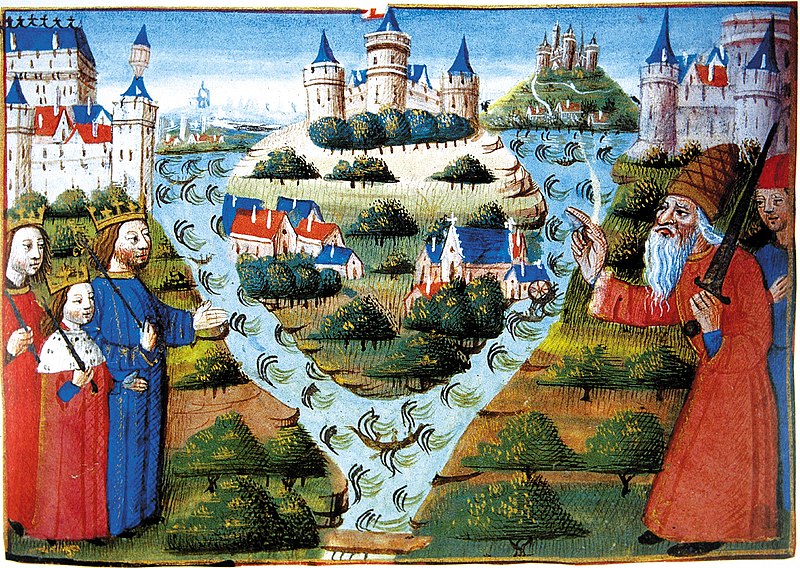
Treaty of Verdun
843 treaty dividing the Frankish Empire between the grandsons of Charlemagne

Carolingian Empire
800–843 final stage in the history of the early medieval realm of the Franks, ruled by the Carolingian dynasty

Duchy of Saxony
(804-1260) duchy of Holy Roman Empire

Septimania
thumb|300px|right|Map of Septimania in 537

Heliand
thumb|Heliand excerpt from the German Historical Museum
Carolingian monetary system
pre-decimal currency structure/system once common throughout Europe, said to be introduced by Charlemagne in the 8. century CE
missus dominicus
administrator commissioned by the Frankish king or Holy Roman Emperor
Teutberga
Teutberga (also spelled Theutberga; died 875) was a Frankish noblewoman and queen consort of Lothair II of Lotharingia. A member of the Bosonid dynasty, she became the central figure in one of the most politically charged marriage disputes of the 9th century. Her struggle to maintain her marriage and royal status against Lothair's efforts to annul the union became a defining case in medieval Church authority over marriage and annulment.
Sorbian March
frontier district on the eastern border of East Francia
Kingdom of Aquitaine
State that existed in 584-585 and 629-632, and 781-877
Restauratio Imperii
Byzantine emperor Justinian I's plan to reconquer the territory of the former Roman Empire
succession of the Roman Empire
desire to be latter-day Roman Empire

Elder Babenbergs
The Popponids were a Frankish dynasty flourising in the early 9th century that originated from Grabfeld. They are named after their descent from Poppo of Grapfeld, who in turn descended from the Robertians. The Popponids gradually evolved into the Elder (or Franconian) House of Babenberg. They were related to the Luitpoldings.
Capitulary of Quierzy
edict passed by Emperor Charles II in 877
Council of Aachen
Wikimedia list article
Synods of Aachen
Series of synods held at Aachen between 816 and 819
Frankish Papacy
aspect of papal history
archchaplain
An Archchaplain was a cleric with a senior position in a royal court. The title was used primarily in the Frankish kingdom in the Carolingian period.