Category
page 1Cat attractants

Valeriana officinalis
species of flowering plant in the family Caprifoliaceae

Nepeta cataria
Nepeta cataria, commonly known as catnip and catmint, is a species of the genus Nepeta in the mint family, native to southern and eastern Europe, northern parts of the Middle East, and Central Asia. It is widely naturalized in northern Europe, New Zealand, and North America. The common name catmint can also refer to the genus as a whole.

Nepeta
Nepeta is a genus of flowering plants in the family Lamiaceae. The genus name, from Latin (“catnip”), is reportedly in reference to Nepete, an ancient Etruscan city. There are 295 accepted species.

Acalypha indica
species of plant

Actinidia polygama
species of plant

(+)-(4as,7S,7ar)-nepetalactone
Nepetalactones are a group of iridoid analog stereoisomers produced by Nepeta cataria (catnip) and certain other plants in the genus Nepeta in order to repel insects. They are also produced by many aphids, in which they are sex pheromones. Nepetalactones are cat attractants, and cause the behavioral effects that catnip induces in domestic cats. However, they affect visibly only about two thirds of adult cats. They produce similar behavioral effects in many other felids, especially in lions and jaguars. In 1941, the research group of Samuel M. McElvain was the first to determine the structures

Teucrium marum
species of plant

actinidine
Actinidine is an iridoid produced in nature by a wide variety of plants and animals. It was the first cyclopentanoid monoterpene alkaloid to be discovered. It is one of several compounds that may be extracted from the valerian (Valeriana officinalis) root and silver vine (Actinidia polygama), as well as several types of insects in the larval and imaginal stages. Actinidine is a cat attractant, with effects like those of nepetalactone, the active compound found in catnip.

Nepeta racemosa
species of plant
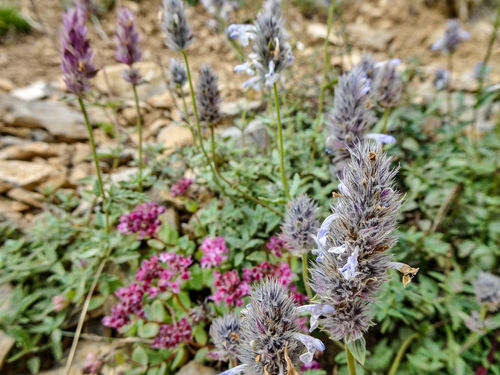
Nepeta discolor
species of plant

Nepeta nepetella
species of plant
Actinidiolide
Actinidiolide is a cat attractant.