Category
page 1Cave bear
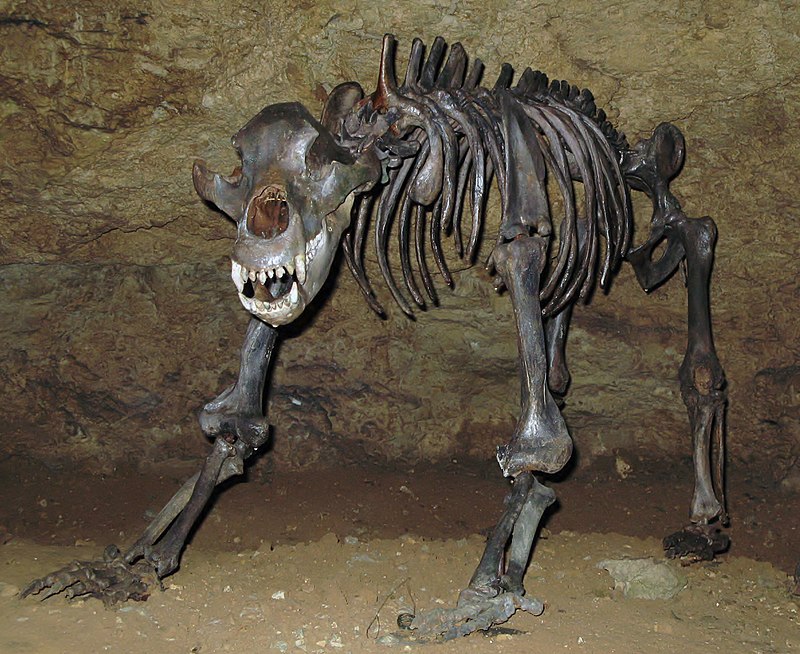
Ursus spelaeus
species of mammal (fossil)
Kapova Cave
cave in Bashkortostan, Russia
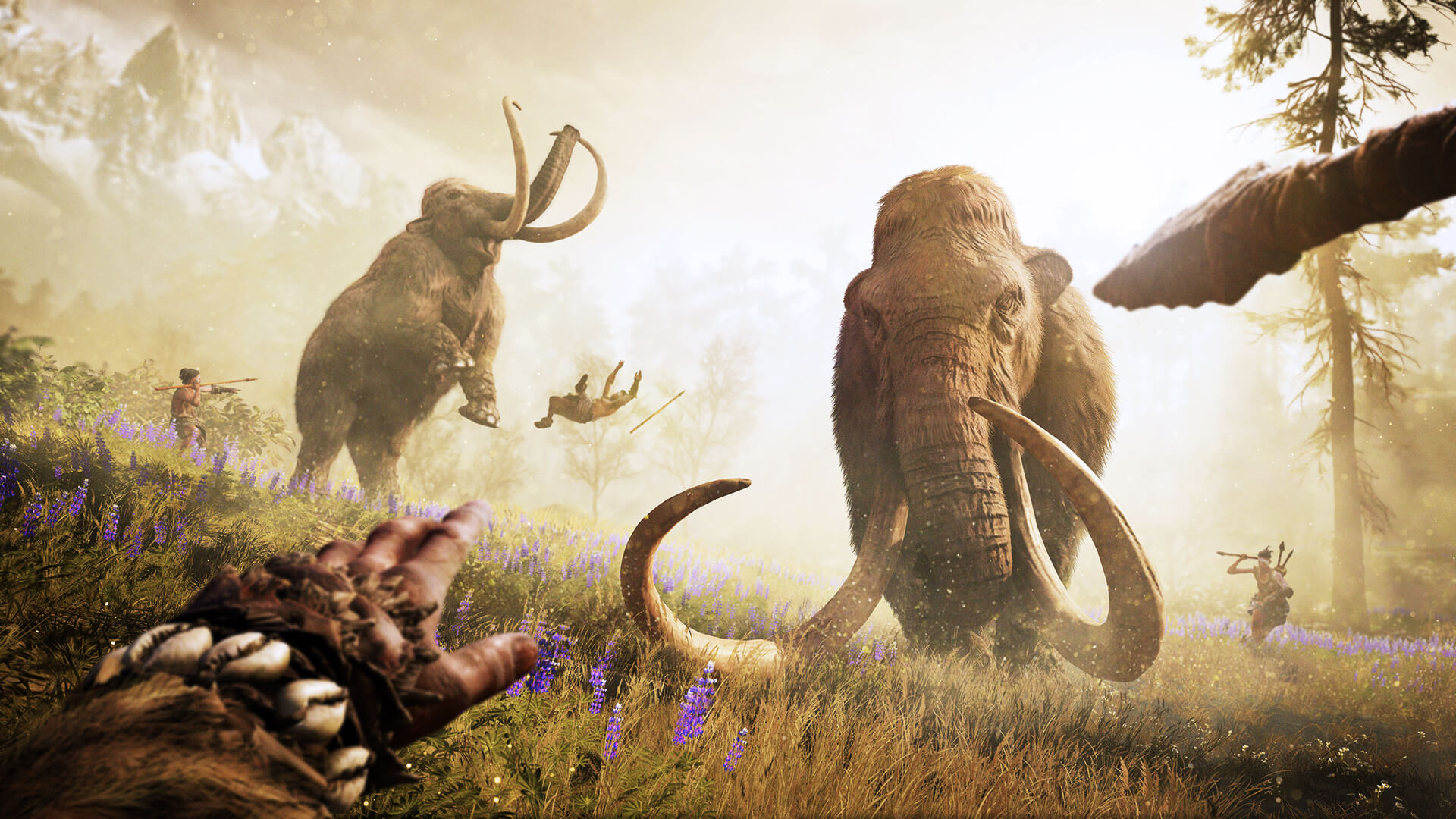
Far Cry Primal
2016 first-person shooter video game developed by Ubisoft Montreal
Bolshoy Lyakhovsky Island
island in Lyakhovsky Islands, Russia
Magura Cave
cave in Bulgaria
Divje Babe flute
alleged bone flute found in Divje Babe Cave

Font-de-Gaume
thumb|220px|Cave entrance
Peștera cu Oase
geographical object
Rouffignac Cave
cave with prehistoric art
Grotte de Spy
cave in Belgium
Les Combarelles
cave with prehistoric art in southwestern France
Jasovská Cave
cave in Slovakia
Orlovača cave
cave in Bosnia and Herzegovina
Kletno Bear Cave
cave in Poland
Peștera Muierilor
cave in Romania
Akhshtyrskaya Cave
cave in Russia
Bear's Cave
cave

Lurgrotte
The Lurgrotte karst cave is the largest cave in the Eastern Alps of Styria, Austria. It is located about north of Graz and crosses the Tannenben karst region. The cave has two accessible entrances, one at the village of Semriach and the other at the village of Peggau. At the Semriach entrance, the Lurbach River sinks into the cave. At the Peggau entrance, the Schmelz River emerges from within the cave, flowing to the west and eventually joining the Mur River.

Hohlenstein-Stadel
Hohlenstein-Stadel is a cave located in the Hohlenstein cliff (not to be confused with the Hohle Fels) at the southern rim of the Lonetal (valley of the Lone) in the Swabian Jura in Germany. While first excavations were started after the second half of the 19th century, the significance of some of the findings was not realized until 1969. The most significant finding was a small ivory statue called the Löwenmensch, which is one of the oldest pieces of figurative art ever found.
Wildkirchli
Wildkirchli () are three interlinked caves situated in the Alpstein massif in the Appenzell Innerrhoden canton of Switzerland, north-east of Mount Säntis Switzerland. The caves are located at a height of . They are notable for the traces of Paleolithic Neanderthal habitation, dating to c. 40,000 BP, and cave bear bones dating to 90,000–40,000 BP. A museum at the site houses a full bear skeleton that was found in one of the caves.
Tischofer Cave
cave
Koněprusy Caves
cave in Czech Republic
Goyet Caves
paleolithic site in Belgium
Sirgenstein Cave
cave in Germany
Darband Cave
Lower Paleolithic site in the Gilan Province in northern Iran

Haji Prodan’s cave
cave in Serbia
Jaskinia Radochowska
cave in Poland

Risovača Cave
cave in Serbia
Vrtare Male
cave in Croatia with remnants of prehistoric animals
Pešturina
Pešturina () is a cave in the municipality of Niška Banja in southeast Serbia. It is located southwest of Jelašnica and southeast of Niš. Artifacts from the Middle and Upper Paleolithic periods were discovered since the archaeological excavations began in 2006. The remains, identified as the Mousterian culture, were dated from 111,000 BP+ 5,000 to 39,000 BP + 3,000, which makes Pešturina one of the latest surviving Neanderthal habitats. The cave has been nicknamed the "Serbian Atapuerca".
Pellumbas Cave
cave in Albania
cave of Aurignac
prehistoric habitat from the upper paleolithic at Aurignac, Haute-Garonne, France
Betalov spodmol
cave and archaeological site in Slovenia
Noisetier Cave
cave in France
Karlshöhle and Bärenhöhle
cave in Germany
Brillenhöhle
The Brillenhöhle (, literally spectacles cave) is a cave ruin, located west of Ulm on the Swabian Alb in south-western Germany, where archaeological excavations have documented human habitation since as early as 30,000 years ago. Excavated by Gustav Riek from 1955 to 1963, the cave's Upper Paleolithic layers contain a sequence of Aurignacian, Gravettian and Magdalenian artifacts. In 1956 the first human fossils were discovered within a fireplace in the center of the cave, a discovery which made important contributions to the foundational understanding of the Magdalenian culture of central Euro