Category
page 1Censorship
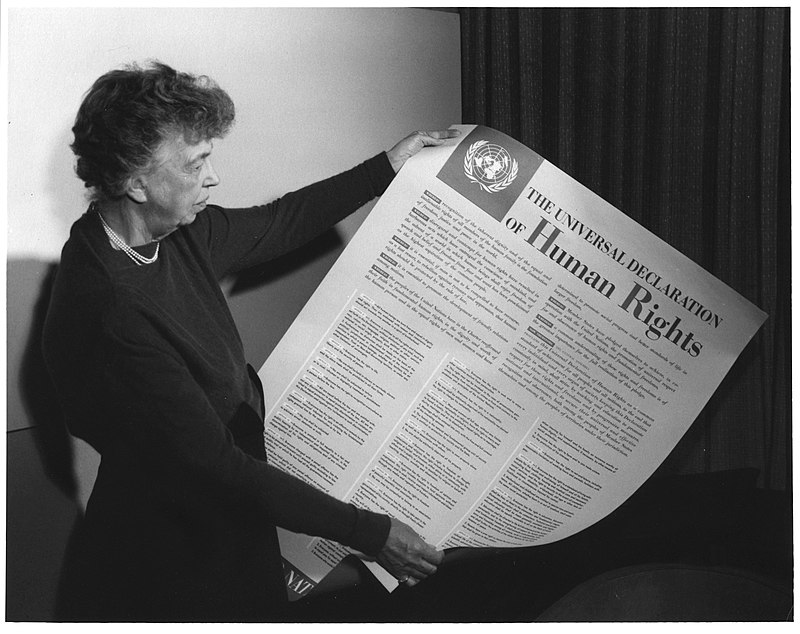
freedom of speech
right to communicate one's opinions and ideas and right to speak

censorship
Censorship is the suppression of speech, public communication, or other information. This may be done on the basis that such material is considered objectionable, harmful, sensitive, or "inconvenient". Censorship can be conducted by governments and private institutions. When an individual such as an author or other creator engages in censorship of their own works or speech, it is referred to as self-censorship. General censorship occurs in a variety of different media, including speech, books, music, films, and other arts, the press, radio, television, and the Internet for a variety of claimed

profanity
thumb|Profanity is often depicted in images by grawlixes, which substitute symbols for words.
Profanity, also known as swearing, cursing, or cussing, is the usage of notionally offensive words for a variety of purposes, including to demonstrate disrespect or negativity, to relieve pain, to express a strong emotion (such as anger, excitement, or surprise), as a grammatical intensifier or emphasis, or to express informality or conversational intimacy. In many formal or polite social situations, it is considered impolite (a violation of social norms), and in some religious groups it is considered

euphemism
thumb|Sign at a Rite Aid drugstore using common euphemisms for (from top): |alt=A yellow sign with a pointed bottom. At the top is the number 5 in an oval with a blue background. Below it are the words "family planning", "feminine hygiene", "feminine protection" and "sanitary protection"
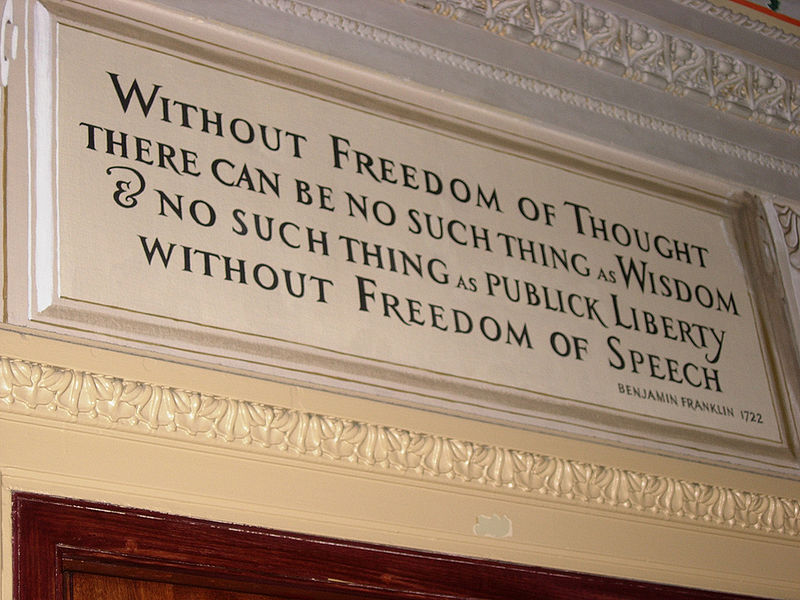
freedom of thought
freedom of an individual to hold or consider a fact, viewpoint, or thought, independent of others' viewpoints
hate speech
speech that expresses hatred towards individuals or groups
Newspeak
In the 1949 dystopian novel Nineteen Eighty-Four (also published as 1984), by George Orwell, Newspeak is the fictional language of Oceania, a totalitarian superstate. To meet the ideological requirements of Ingsoc (English Socialism) in Oceania, the Party created Newspeak, a controlled language of simplified grammar and restricted vocabulary designed to prevent people from being able to think critically. The Newspeak language thus limits the person's ability to articulate and communicate abstract concepts, such as personal identity, self-expression, and free will, which are thoughtcrimes, acts

cancel culture
practice of publicly shaming, rejecting, and ceasing to provide support to people perceived as problematic

obscenity
An obscenity is any utterance or act that strongly offends the prevalent morality of the time. It is derived from the Latin , , "boding ill; disgusting; indecent", of uncertain etymology. Generally, the term can be used to indicate strong moral repugnance and outrage in expressions such as "obscene profits" and "the obscenity of war". As a legal term, it usually refers to descriptions and depictions of people engaged in sexual and excretory activity.

lèse-majesté
thumbnail|John Bull farts on an image of [[George III. 1798 print by the English caricaturist Richard Newton.]]
Emergency
21-month period in the history of India
strategic lawsuit against public participation
Abusive lawsuits intended to burden an opponent rather than to win or gain financially
media bias
bias within the mass media
neutrality
tendency not to side in a conflict

Orwellian
Orwellian is a neologism suggested in the writings by George Orwell. It is an adjective which is used to describe a situation, an idea or a societal condition, usually identified as being destructive to a free and open society. It was first used by the American author Mary McCarthy in 1950. The term denotes draconian control by propaganda, surveillance, disinformation, and denial of truth. It is commonly used in reference to Orwell's 1949 dystopian novel Nineteen Eighty-Four which describes an oppressive fictional totalitarian society where propaganda is used to manipulate the population. Orwe
regressive left
pejorative term for overly tolerant left-wing politics
gatekeeping
process through which information is filtered for dissemination

aniconism
Aniconism is the cultural absence of artistic representations (icons) of the natural and supernatural worlds, or it is the absence of representations of certain figures in religions. The prohibition of material representations may only extend to a specific supreme deity, or it can encompass an entire pantheon, it can also include depictions of a prophet, saints, or sages, or even depictions of living beings and anything in existence generally. It is generally codified by religious traditions and as such, it becomes a taboo. When it is enforced by the physical destruction of images, aniconism b
chilling effect
discouragement of exercising rights by threats of legal sanctions
fig leaf
leaf of the fig tree, traditionally used in art to obscure nudity
Ad usum Delphini
1674–1830 series of annotated Latin classics

cover-up
thumb|upright|"An ostrich only thinks he 'covers up'."
exclusion zone
geographic area in which a sanctioning authority prohibits specified activities
blasphemy law
law prohibiting blasphemy
Aesopian language
communications intended for insiders of a group
Blasphemy Day
unofficial observance
bleep censor
replacement of offensive language (swear words) or personal details with a beep sound
bans on Communist symbols
Wikimedia list article

deplatforming
thumb|A bust of MIT president Francis Amasa Walker separated from its pedestal at the [[MIT Museum]]
Deplatforming, also known as no-platforming, is a boycott on an individual or group by removing the platforms used to share their information or ideas. The term is commonly associated with social media.
censor bars
basic form of text, photography and video censorship that occludes certain information or images with rectangular boxes
gag order
legal order restricting making public of information or comments
news embargo
term
safety of journalists
securing the possibility of reporting without threats
whitewashing
to sanitize and change hiding undesirable qualities (censorship)
conspiracy of silence
unspoken group consensus to not mention, discuss, or acknowledge a given subject
ideological repression
forceful activities against competing ideologies and philosophies
military censorship
Type of censorship
media blackout
censorship of news related to a certain topic
corporate censorship
censorship by corporations
postal censorship
Inspection or examination of mail
gross out
Gross-out is described as a movement in art (often with comical connotations), which is intended to shock the viewer(s) and disgust the wider audience by presenting them with controversial material (such as toilet humor and fetishes) that might be ill received by a mainstream audience.
Clandestine literature
publishing process
incitement to ethnic or racial hatred
type of criminal offence in several countries
bans on fascist symbols
legality of fascistiska and Nazi symbols after World War 2
press law
legal term
Eastern Bloc media and propaganda
Eliminationism
Eliminationism is a political ideology that views a group within a larger social group as harmful and therefore believes it must be eliminated—by separation, censorship, or extermination—for the benefit of the larger group and in order to preserve its "purity."
Distributed Denial of Secrets
whistleblowing organization
political censorship
censorship by a government
shooting the messenger
metaphoric phrase
Right to Censor
professional wrestling stable
extreme cinema
type of cinematography with extreme character
cartographic censorship
deliberate modification of publicly available maps
Il est interdit d'interdire !
French aphorism

The Revolt of Islam
poem by Percy Shelley
prior restraint
suppressing certain types of information before the fact
blue pencil
pencil used to show corrections to written copies
Academic freedom in the Middle East
evil bit
fictional IPv4 header field indicating malicious intent