Category
page 2Centipede genera
Schizonampa
Schizonampa is a genus of soil centipedes in the family Geophilidae. This genus contains five species. These centipedes are found in tropical and subtropical regions of the Americas and Africa.
Mecistocephalus
Mecistocephalus is the largest genus of centipedes in the family Mecistocephalidae, with about 140 species. This genus is among the most diverse and widespread of all the genera in the order Geophilomorpha. The British entomologist George Newport first proposed this genus in 1843 to contain a group of centipedes marked by an unusual elongation of the head.
Asanada
Asanada is a genus of centipedes in the subfamily Scolopendrinae. It has thirteen known species, which usually grow between in length. It can be distinguished from the genus Cormocephalus (= Cupipes) by having smooth (as opposed to punctured) anal pleurae, but is otherwise quite similar in appearance. The type species of the genus is A. brevicornis (by monotypy), the type specimen of which was collected in Kulu, India.
Queenslandophilus
Queenslandophilus is a genus of soil centipedes in the family Geophilidae. This genus was described by German myriapodologist Karl Wilhelm Verhoeff in 1925. These centipedes are found in Australia, Japan, and North America.
Zelanophilus
Zelanophilus is a genus of three species of centipedes, in the family Zelanophilidae. This genus was described by American biologist Ralph Vary Chamberlin in 1920. Centipedes in this genus are found in Australia and New Zealand.
Pachymerellus
Pachymerellus is a genus of two species of centipedes, in the family Geophilidae. It was described by American biologist Ralph Vary Chamberlin in 1920. The smaller Mexican species, Pachymerellus dentifer, measures only 16 mm in length and has only 43 pairs of legs, whereas the larger species, P. zygethus, measures 33 mm in length and can have from 47 to 65 leg pairs.
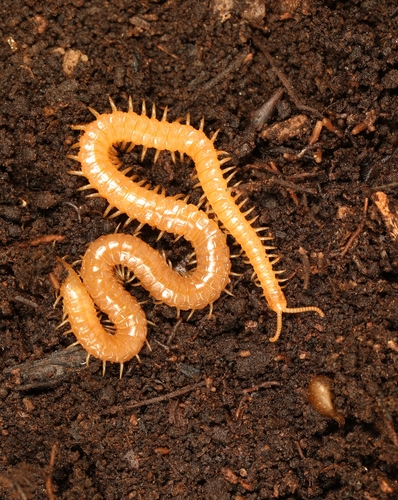
Stigmatogaster
Stigmatogaster is a genus of centipedes in the family Himantariidae. Centipedes in this genus feature a relatively slender trunk, transversally slightly elongate sternal pore-fields on almost all trunk segments, and unusual lateral furrows on some trunk metasternites; most coxal organs open into a dorsal pouch covered by the metatergite. These centipedes range from 5 cm to 10 cm in length, have 83 to 111 pairs of legs, and are found in the Mediterranean region. This genus contains the following species:
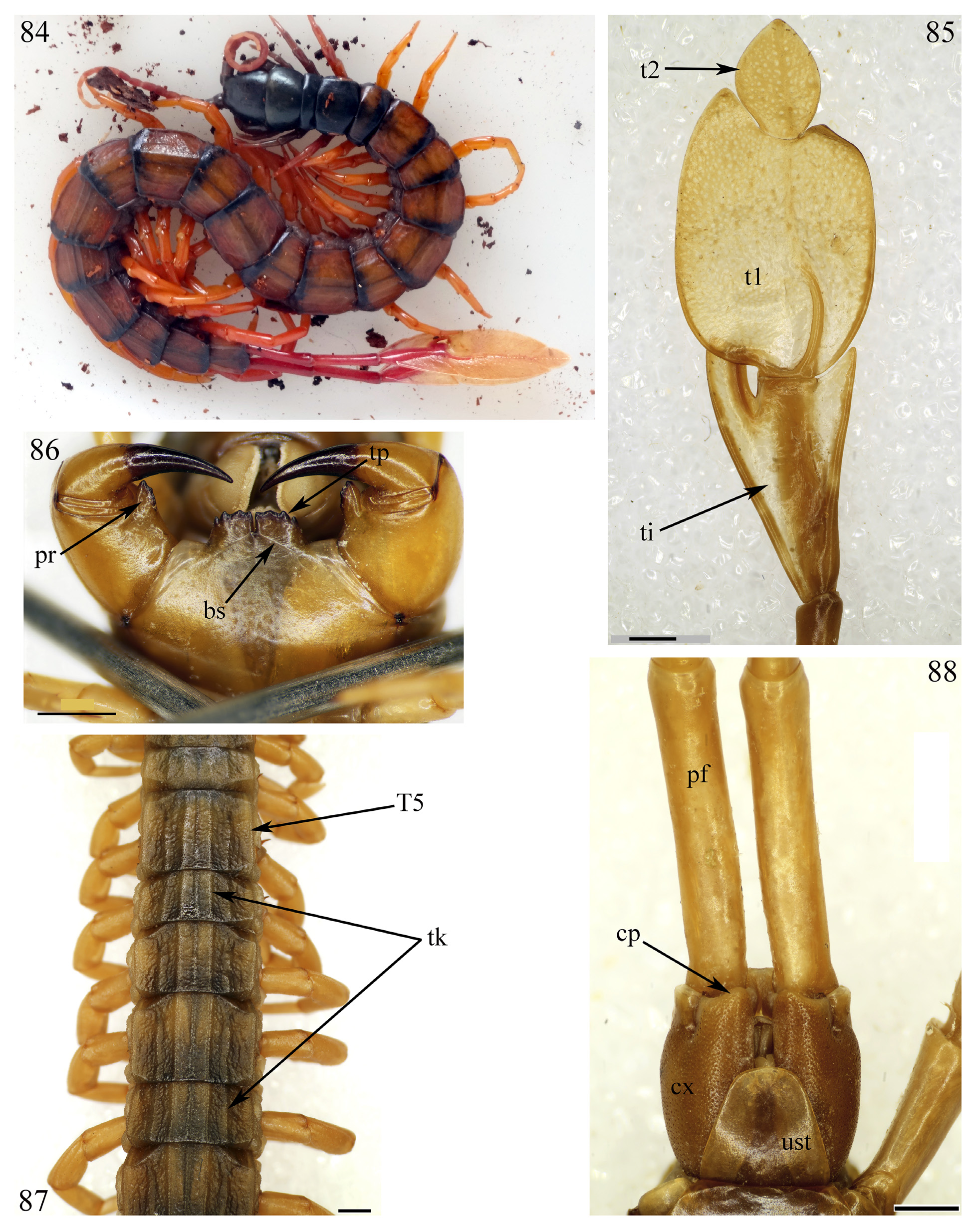
Alipes
genus of arthropods
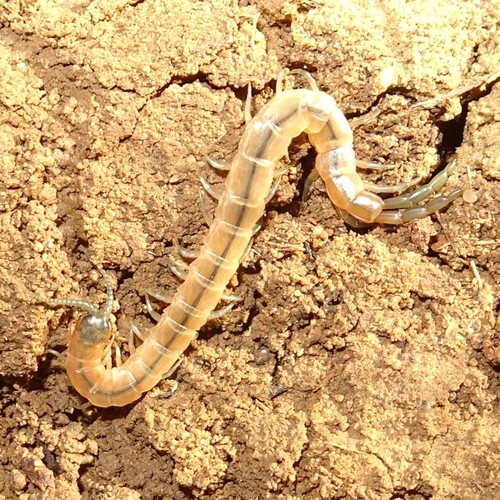
Arthrorhabdus
Arthrorhabdus, from the Greek ἄρθρον, a joint, and ῥάβδος, a staff, is a genus of Scolopendrid centipede in the subfamily Scolopendrinae. Species are found in Mexico and the Southern United States (A. pygmaeus), Australia (A. paucispinus & A. mjöbergi), and South Africa (A. formosus). Since a reapprasial in the genus in 2010, the genus only has four species. It may be polyphyletic.

Cryptops
Cryptops (from Ancient Greek κρυπτός (kruptós), meaning "hidden", and ὄψ (óps), meaning "face"), sometimes known as cave centipedes, is a centipede genus in the family Cryptopidae; species records have a world-wide distribution.
Dichelobius
Dichelobius is a genus of centipedes in the family Henicopidae. It was described by Austrian myriapodologist Carl Attems in 1911.
Maoriella
Maoriella is a genus of centipedes in the family Geophilidae. It was described by Austrian myriapodologist Carl Attems in 1903. Species in this genus are found in New Zealand, Australia, and Tahiti.