Category
page 1Central Asia
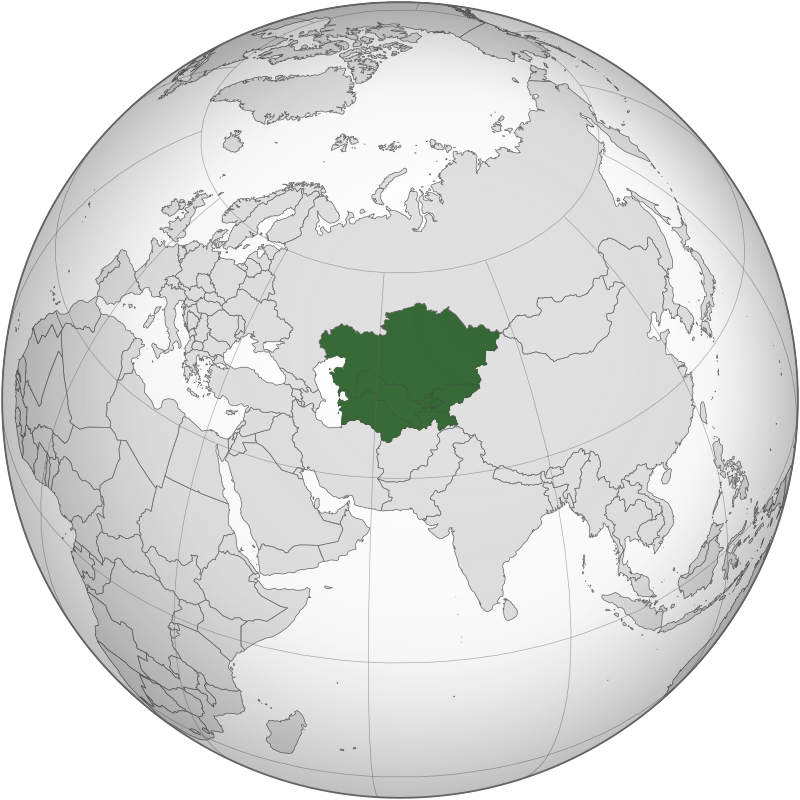
Central Asia
subregion of the Asian continent

Cyrillic script
writing system developed in Bulgaria and used for various oriental Eurasian languages

Tibet
thumb|Greater Tibet regions and claims

Altai Republic
republic of Russia, federal subject of Russia
Khakassia
Khakassia (), officially the Republic of Khakassia, is a republic of Russia located in southern Siberia. It is situated between Krasnoyarsk Krai to the north and the Altai Republic to the south.

Altai Krai
federal subject of Russia

Kemerovo Oblast
federal subject of Russia

Altaic
obsolete, widely rejected supergroup of Turkic, Mongolic, Tungusic, Koreanic and Japonic language families

Tocharian
extinct Indo-European languages in Asia
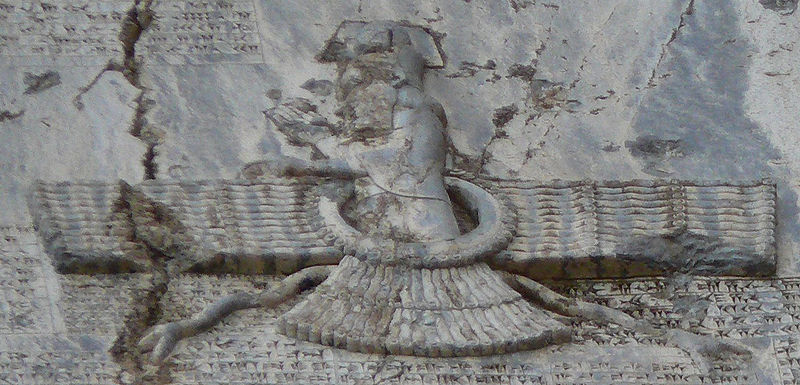
Greater Iran
Denotes a wide socio-cultural region comprising parts of West Asia, the South Caucasus, Central Asia, South Asia, and East Asia, all of which have been affected, to some degree, by the Iranian peoples and the Iranian languages

buzkashi
Buzkashi () is the most favored sport of Afghanistan. It is a traditional sport in which horse-mounted players attempt to place a goat or calf carcass in a goal. Similar games are known as kokpar, kupkari, and ulak tartysh in Uzbekistan and Kazakhstan.
Pontic-Caspian steppe
ecoregion of grasslands that encompass most of the western segment of the Eurasian steppe

Zhetysu
thumb|300px|The region of the "seven rivers", only five of which still exist today
Jetisu (, ), also known as Semirechye () and Heptopotamia, is a historical region in Central Asia corresponding to the southeastern part of modern Kazakhstan.

Otrar
Otrar or Otyrar ( ; ), also called Farab, is a ghost town in southern Kazakhstan which was once a settlement located on the Silk Road. It was an important town in the history of Central Asia, situated on the borders of settled and agricultural civilizations. It was the center of a great oasis and political district, commanding a key point connecting Kazakhstan with China, Europe, the Middle East, Siberia and Ural.

Yaghnobi people
The Yaghnobi (Yaghnobi: yaγnōbī́t or suγdī́t; Tajik: яғнобиҳо, yağnobiho/jaƣnoʙiho) are an Eastern Iranian people residing in Tajikistan's Sughd region, specifically in the valleys of the Yaghnob, Qul, and Varzob rivers.
Almaliq
medieval city in present-day Xinjiang, China

The Grand Chessboard
book by Zbigniew Brzezinski
.%20Circa%201st-2nd%20century%20CE.jpg)
Toprak-kala
Toprak-Kala, in modern Karakalpakstan, Uzbekistan, was an ancient palace city and the capital of in Chorasmia in the 2nd/3rd century CE, where wall paintings, coins and archives were discovered. Its history covers a period from the 1st to the 5th century CE. It is part of the "Fifty fortresses oasis" in modern-day Uzbekistan.
Aisha Bibi
mausoleum
Central Asian Union
intergovernmental organisation for economic integration
Shams al-Dīn al-Samarqandī
Medieval astronomer and mathematician
%20(5608883427).jpg)
Ayaz-Kala
Ayaz-Kala is an archaeological site in Ellikqala District, Karakalpakstan, in northern Uzbekistan, built between the 4th century BCE and the 7th century CE. Situated on a hilltop overlooking the Kyzylkum Desert, the site encompasses the ruins of an ancient Khorezm fortress.

Varahsha
Varakhsha, also Varasha or Varahsha, was an ancient city in the Bukhara oasis in Sogdia, founded in the 1st century BCE. It is located 39 kilometers to the northwest of Bukhara. Varakhsha was the capital of the Sogdian dynasty of the kings of Bukhara, the Bukhar Khudahs. It ultimately never recovered from the Muslim conquest of Transoxiana. After British archaeologists began investigating the site in the 1820s, it became "the very first Sogdian archaeological site mentioned in European literature."

jereed
Jereed, known by the name Equestrian Javelin (also jerreed, jerid, or jerrid; ) is a traditional Turkish equestrian team sport played outdoors on horseback in which the objective is to score points by throwing a blunt wooden javelin, or stick, at opposing team's horsemen. Played by Turkic peoples in Central Asia as the essential sporting and ceremonial game, it was brought to Anatolia during the westward migration in the beginning of the 11th century.
list of World Heritage Sites in Northern and Central Asia
Wikimedia list article
Koi Krylgan Kala
human settlement in Uzbekistan

Beiting
Beshbalik is an ancient Turkic archaeological site, now located in Jimsar County, Changji Hui Autonomous Prefecture, Xinjiang, China. The ancient city was initially called Beiting or Ting Prefecture, and was the headquarters of the Beiting Protectorate during the 8th century. It was later known as Beshbalik (Old Uyghur: beş balık 'five cities') and became one of the capitals of the Uyghur Khaganate and then the Kingdom of Qocho.
Rabati Malik Caravanserai
caravanserai in Navoiy, Uzbekistan
Central Asia plus Japan
political initiative of Japan and Central Asian countries

Central Asian Nuclear Weapon Free Zone
Treaty in force
Yujiulü Mugulü
Mugulü () was a legendary warrior and chieftain in the Mongolian Plateau during the period when it was under the rule of tribes and peoples originating from the fragmentation of the failed and crumbling Xianbei confederation. The term "Mongol" is a likely derivation from his name.
Turkestan Military District
Military district of Russian Empire and USSR
rabat
Rabaḍ () refers to the suburbs of seventh- to eighth-century cities in Central Asia, including what is now the Turkistan Region in southern Kazakhstan, Iran, and Afghanistan.
Khingila I
founding king of the Alchon Huns (c. 430–490)
Kyzyl-Kala
Kyzyl-Kala, also Qyzyl Qala ("Red fortress"), in modern Karakalpakstan, Uzbekistan, was an ancient fortress in Chorasmia built in the 1st-4th century CE. The small fortress of Kyzyl-Kala is located near Toprak-Kala, about 1 km to the west, and was also built in the 1st-4th century CE, possibly as a fortified defense for the site of Toprak-Kala. Kyzyl-Kala was once restored in the 12th century. It has also been the subject of a modern renovation program, with the objective of showing what a fortress looked like originally. It is part of the "Fifty fortresses oasis" in modern-day Uzbekistan. It

Emchi-Tepe
ancient Afghan fortress
Qurghonteppa Oblast
former administrative subdivision in Tajikistan
Dayahatyn
thumb|300px|View from the courtyard of the main entrance of the Dayahatyn caravanserai, March 2018
Akchakhan-Kala
Akchakhan-Kala, or Akcha-khan Kala, also named after the locality Kazakly-Yatkan/ '''Kazakl'i-Yatkan''', in modern Karakalpakstan, Uzbekistan, was an ancient fortress in Chorasmia built in the 4th/ 3rd century BCE and occupied until it was despoiled in the 2nd century CE. It is part of the "Fifty fortresses oasis" in modern-day Uzbekistan. The abandonment of Akchakhan-Kala was apparently followed by the establishment of the new capital of Toprak-Kala, 14 km to the northeast.
tapchan
thumb|Tapchans near Bokhtar, Tajikistan A tapchan () is a type of outdoor furniture unique to Central Asia especially Tajikistan and Uzbekistan, combining a large bed capable of holding 4-8 adults with a table at which meals can be eaten.. It is similar or identical to the Malay bale-bale, 'wooden raised platform'.
Khanbandi
The Khanbandi dam () is a historic dam and reservoir in the Forish District, Jizzakh Region, Uzbekistan. It dates from the 10th century and impounds the rivers Osmonsoy and Ilonchisoy, that flow from the Nuratau Mountains, for irrigation purposes. The dam was added to the UNESCO World Heritage Tentative List on June 1, 1996, in the cultural category.
Sheikh Mukhtar-Vali Complex
mausoleum in Uzbekistan
Samarkand clan
Kanka
site of an ancient settlement in Uzbekistan
Central Asian Military District
military district of the Soviet Armed Forces, 1926-1945 and 1969-1989