Category
page 1Central nervous system

central nervous system
main information-processing organs of the nervous system, consisting of the brain, spinal cord, and meninges

The unconscious
group of psychic characters and processes that are reflected in behaviour, even though not shown in the conciousness

blood–brain barrier
semipermable membrane that separates blood and the brain
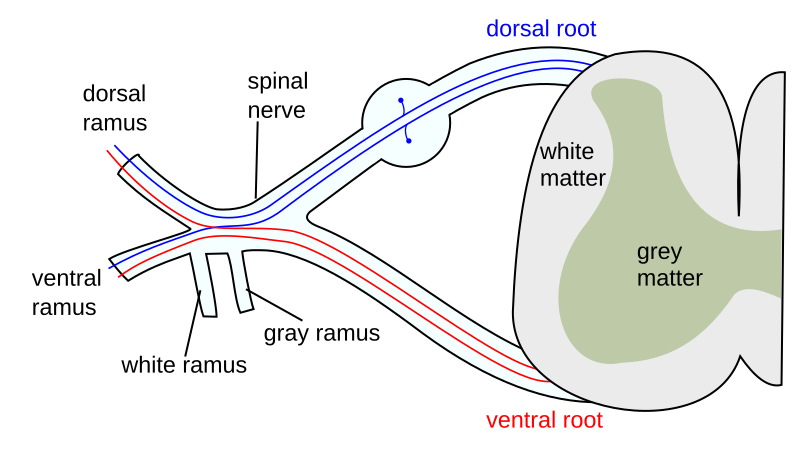
grey matter
part of the brain

astrocyte
Astrocytes (from Ancient Greek , , "star" and , , "cavity", "cell"), also known collectively as astroglia, are characteristic star-shaped glial cells in the brain and spinal cord. They perform many functions, including biochemical control of endothelial cells that form the blood–brain barrier, provision of nutrients to the nervous tissue, maintenance of extracellular ion balance, regulation of cerebral blood flow, and a role in the repair and scarring process of the brain and spinal cord following infection and traumatic injuries. The proportion of astrocytes in the brain is not well defined;
white matter
part of the brain
extrapyramidal system
spinal cord

metencephalon
The metencephalon is the embryonic part of the hindbrain that differentiates into the pons and the cerebellum. It contains a portion of the fourth ventricle and the trigeminal nerve (CN V), abducens nerve (CN VI), facial nerve (CN VII), and a portion of the vestibulocochlear nerve (CN VIII).
wetware computer
organic computer
glymphatic system
lymph-like system that removes waste from the brain

cerebral organoid
artificially grown miniature organ resembling the brain

Somatotopic arrangement
the point-for-point correspondence of an area of the body to a specific point on the central nervous system
reticular activating system
set of connected nuclei in the brains of vertebrates

hypophyseal portal system
system of blood vessels
Posterior perforated substance
aging brain
degradation of functioning of the brain
anterior column