Category
page 1Cerebral cortex

cerebral cortex
outer layer of neural tissue of the cerebrum of the brain
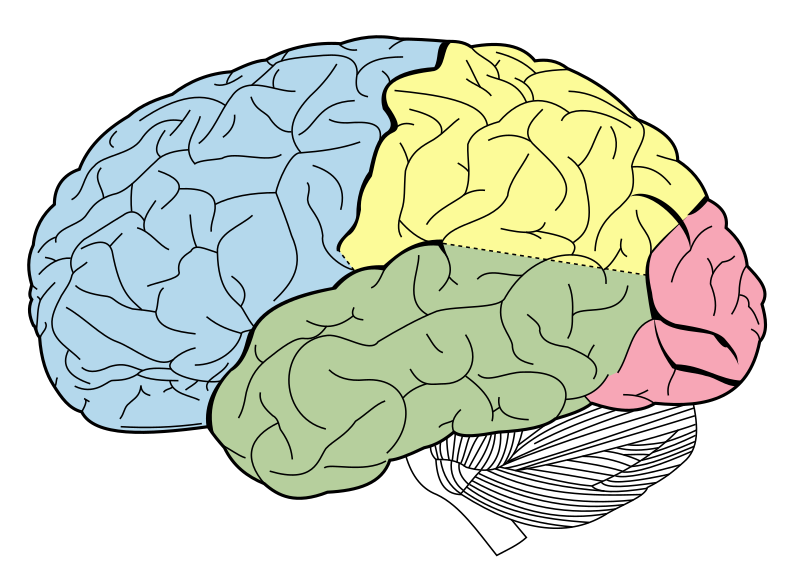
temporal lobe
part of the brain responsible for processing auditory information and encoding of memory. The temporal lobe also plays a role in processing affect/emotions, language, and certain aspects of visual perception.
prefrontal cortex
part of brain largely responsible for personality, decision making, and social behaviour
Wernicke's area
area of the left temporal lobe involved in language comprehension

neocortex
The neocortex, also called the neopallium, isocortex or six-layered cortex, is a set of layers of the mammalian cerebral cortex involved in higher-order brain functions such as sensory perception, cognition, generation of motor commands, spatial reasoning, and language. The neocortex is further subdivided into the true isocortex and the proisocortex.
Insula
portion of the mammalian brain
pyramidal cell
projection neurons in the cerebral cortex and hippocampus
cingulate gyrus
part of the brain within the cerebral cortex
motor cortex
region of the cerebral cortex
entorhinal cortex
brain area
orbitofrontal cortex
prefrontal cortex region
Betz cell
giant pyramidal neurons of the primary motor cortex
primary motor cortex
brain region
anterior cingulate cortex
brain region
auditory cortex
region of the brain
dorsolateral prefrontal cortex
Area of the prefrontal cortex of primates
allocortex
The allocortex (from Latin allo-, meaning other, and cortex, meaning bark or crust), or heterogenetic cortex, is one of the two types of cerebral cortex in the brain, together with the neocortex. In the human brain, the allocortex is the much smaller area of cortex taking up just 10%; the neocortex takes up the remaining 90%. It is characterized by having just three cortical layers (one main neural layer), in contrast with the six cortical layers of the neocortex. There are three subtypes of allocortex: the paleocortex, the archicortex, and the periallocortex—a transitional zone between the ne

premotor cortex
part of the cerebral cortex
ventromedial prefrontal cortex
part of the prefrontal cortex in the mammalian brain
supplementary motor area
Midline region in front of the motor cortex of the brain
planum temporale
area of the human brain

Gustatory area
brain structure responsible for perception of taste
archicortex
The archicortex, or archipallium, is the phylogenetically second oldest region of the brain's cerebral cortex (the oldest is the paleocortex). In older species, such as fish, the archipallium makes up most of the cerebrum. Amphibians develop an archipallium and paleopallium.
piriform cortex
brain region relating to olfactory function
posterior parietal cortex
portion of parietal neocortex posterior to the primary somatosensory cortex
frontal eye field
Region of the frontal cortex of the brain
paleocortex
In anatomy of animals, the paleocortex, or paleopallium, is a region within the telencephalon in the vertebrate brain. This type of cortical tissue consists of three cortical laminae (layers of neuronal cell bodies). In comparison, the neocortex has six layers and the archicortex has three or four layers. Because the number of laminae that compose a type of cortical tissue seems to be directly proportional to both the information-processing capabilities of that tissue and its phylogenetic age, paleocortex is thought to be an intermediate between the archicortex (or archipallium) and the neocor
perirhinal cortex
part of the temporal lobe of the brain
olfactory tubercle
area at the bottom of the forebrain

retrosplenial region
part of the brain's cerebral cortex
primary somatosensory cortex
brain area
Ventrolateral prefrontal cortex
Part of the prefrontal cortex of the brain