Category
page 1Cervines

Dama dama
species of mammal
.jpg)
barasingha
The barasingha (Rucervus duvaucelii), sometimes barasinghe, also known as the swamp deer, is a deer species distributed in the Indian subcontinent. Populations in northern and central India are fragmented, and two isolated populations occur in southwestern Nepal. It has been extirpated in Pakistan and Bangladesh, and its presence is uncertain in Bhutan.

Elaphurus davidianus
a large deer native to the river valleys of China

Rucervus eldii
species of mammal

Persian fallow deer
species of mammal
Schomburgk's deer
species of mammal (fossil)

Dama
genus of mammals

Axis
genus of mammals

Rusa
genus of mammals
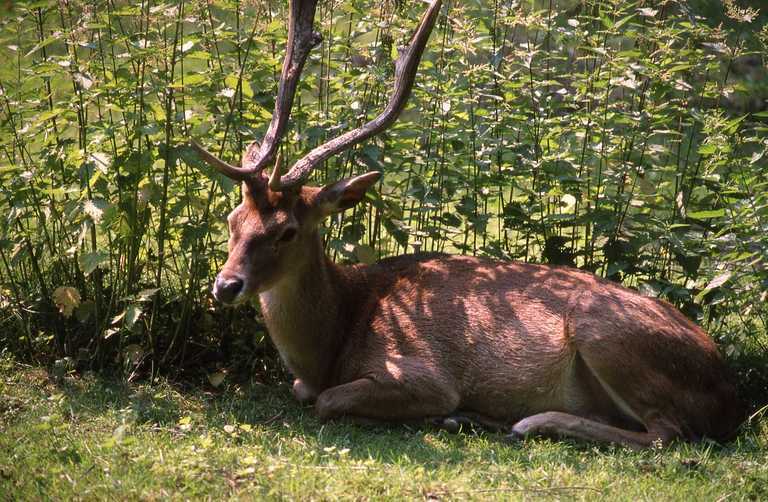
Rucervus
Rucervus is a genus of deer from India, Nepal, Indochina, and the Chinese island of Hainan. The only extant representatives, the barasingha or swamp deer (R. duvaucelii) and Eld's deer (R. eldii), are threatened by habitat loss and hunting; another species, Schomburgk’s deer (R. schomburgki), went extinct in 1938. Deer species found within the genus Rucervus are characterized by a specific antler structure, where the basal ramification is often supplemented with an additional small prong, and the middle tine is never present. The crown tines are inserted on the posterior side of the beam and m
.JPG)
Sangai
The sangai (Meitei pronunciation: /sə.ŋai/) (Rucervus eldii eldii) is an endemic and endangered subspecies of Eld's deer found only in Manipur, India. It is also the state animal of Manipur. Its common English name is Manipur brow-antlered deer or Eld's deer. Its original natural habitat is the floating marshy grasslands of the Keibul Lamjao National Park, located in the southern parts of the Loktak Lake, which is the largest freshwater lake in South Asia.
Elaphurus
Elaphurus is a genus of deer. E. davidianus is the only extant species and several fossil species are described.
Croizetoceros
Croizetoceros is an extinct genus of deer which lived throughout much of Europe, first appearing during the last stages of the Miocene and living until the Early Pleistocene.