Category
page 1Chinese books of divination
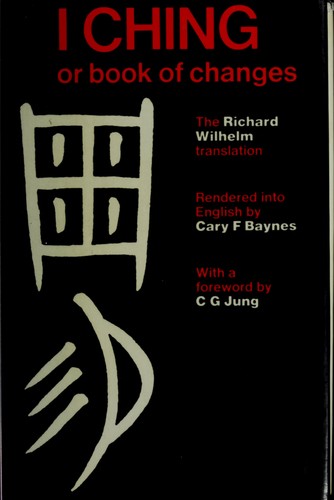
I Ching
ancient Chinese text used for divination
Tui bei tu
Chinese prophecy book from the 7th-century Tang dynasty
Taixuanjing
The Taixuanjing is a divination guide composed by the Confucian writer Yang Xiong (53 BCE18 CE) in the decade prior to the fall of the Western Han dynasty. The first draft of this work was completed in 2 BCE; during the Jin dynasty, an otherwise unknown person named Fan Wang () salvaged the text and wrote a commentary on it, from which our text survives today.
Lingqijing
Lingqijing (or '''''Ling Ch'i Ching'''''; 靈棋經 lit. "Classic of the Divine Chess") is a Chinese book of divination. It is not known when, nor by whom, it was written, though a legend has spread that strategist Zhang Liang received the book from Huang Shigong (黃石公), a semi-mythological figure in Chinese history. The first commented edition of the work appeared in the Jin Dynasty.
Qi Men Dun Jia
Chinese ancient form of divination

Book of Burial
4th- or 5th-century Taoist text by Guo Pu
Yuan Hai Zi Ping
Da Liu Ren
200px|right|The Da Liu Ren array, with the Three Transmissions on top, the Four Classes, their Heaven and Earth pan positions, the twelve generals, and the Heaven Pan superimposed above the Earth pan. Vacancies are noted in the right margin, along with the Date and the Ju number.
200px|right|The fixed, unmoving Earth Pan positions of the twelve Earth Branches. The Heaven Pan sprits rotate around the Earth pan.
Jiaoshi Yilin