Category
page 1Christian anti-Gnosticism

Augustine of Hippo
Christian theologian, philosopher, and saint (354–430)

Second Epistle of John
new Testament epistle attributed to John
Tertullian
Tertullian (; ; 155 – 220 AD) was a prolific early Christian author from Carthage in the Roman province of Africa. He was the first Christian author to produce an extensive corpus of Latin Christian literature and was an early Christian apologist and a polemicist against heresy, including Gnosticism.

Origen
Origen of Alexandria (), also known as Origen Adamantius, was an early Christian scholar, ascetic, and theologian who was born and spent the first half of his career in Alexandria. He was a prolific writer who wrote roughly 2,000 treatises in multiple branches of theology, including textual criticism, biblical exegesis and hermeneutics, homiletics, and spirituality. He was one of the most influential and controversial figures in early Christian theology, apologetics, and asceticism. He has been described by John Anthony McGuckin as "the greatest genius the early church ever produced".

Pius I
pope

Anicetus
bishop of Rome from c. 157 to 168

John of Damascus
Christian monk, priest, hymnographer and apologist (675/6-749)

Eusebius of Caesarea
Eusebius of Caesarea (30 May AD 339), also known as Eusebius Pamphilius, was a historian of Christianity, exegete, and Christian polemicist from the Roman province of Syria Palaestina. In about AD 314 he became the bishop of Caesarea Maritima.
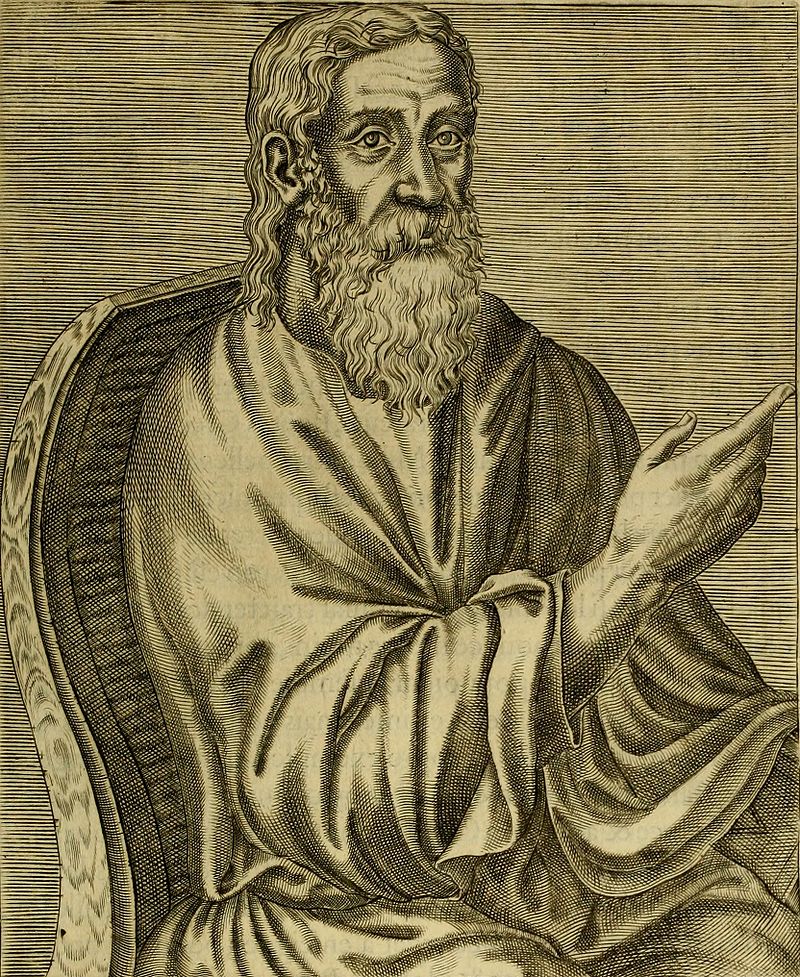
Clement of Alexandria
Christian theologian (c.150 – c.215)

Irenaeus
Irenaeus ( or ; ; ) was a Greek bishop noted for his role in guiding and expanding Christian communities in the southern regions of present-day France and, more widely, for the development of Christian theology by opposing Gnostic interpretations of Christian Scripture and defending orthodoxy. Originating from Smyrna, he had seen and heard the preaching of Polycarp, who in turn was said to have heard John the Evangelist.

Alexios I Komnenos
Byzantine emperor (1048–1118)

Justin Martyr
2nd century CE Christian apologist and martyr

Ephrem the Syrian
Syriac saint, theologian and writer (c. 306 – 373)

Polycarp
Polycarp (; , Polýkarpos; ; AD 69 155) was a Christian bishop of Smyrna. According to the Martyrdom of Polycarp, he died a martyr, bound and burned at the stake, then stabbed when the fire failed to consume his body. Polycarp is regarded as a saint and Church Father in the Eastern Orthodox Church, the Catholic Church, Oriental Orthodox Churches, Lutheranism, and Anglicanism.

Hippolytus
Christian theologian and saint (c. 170 – c. 235)

Gregory of Tours
Gallo-Roman historian and Bishop of Tours

Photios I of Constantinople
9th Century Ecumenical Patriarch of Constantinople

Cyril of Jerusalem
Christian theologian, bishop, and saint (c. 313 – 386)

Albigensian Crusade
1209 military campaigns against Catharism in southern France

Epiphanius of Salamis
4th century Christian bishop and saint

Niketas Choniates
Greek historian (1155-1217)
Theodoret
Theodoret of Cyrus or Cyrrhus (; 393 – 458) was a notable theologian of the School of Antioch, biblical commentator, and bishop of Cyrrhus (423–457). He participated in several 5th-century Christological controversies within the Eastern Roman Church that resulted in various ecumenical acts and schisms. Theodoret wrote against Cyril of Alexandria's Twelve Anathemas, which were sent to Nestorius, and did not condemn Nestorius until the Council of Chalcedon. Selected writings by Theodoret directed against Cyril formed part of the subject matter of the Three Chapters Controversy and were con

Athenagoras of Athens
Greek philosopher and Father of the Church (c.133–c.190)

Theophilus of Antioch
Patriarch of Antioch from c.169 to c.183

Bar Hebraeus
Gregory Barhebraeus or Bar Hebraeus (; 1226 – 30 July 1286), also known as Abu al-Faraj and in Latin, Abulpharagius, was the maphrian Catholicos of the East (regional primate) of the Catholicate of the East under the Syriac Orthodox Church from 1264 until his death in 1286. He is recognised as one of the most accomplished and multifaceted academics of the medieval Syriac Christian world, with important contributions to the fields of theology, philosophy, history, linguistics, medicine, and the natural sciences.
Sozomen
Salamanes Hermias Sozomenos (; ; c. 400 – c. 450 AD), also known as Sozomen, was a Byzantine Empire era lawyer and historian of the Christian Church of Palestinian origin.
Eric Voegelin
American philosopher (1901–1985)
Evagrius Ponticus
Christian Monk

The Shepherd of Hermas
Christian literary work of the 1st or 2nd century

Hans Urs von Balthasar
Swiss Catholic theologian (1905–1988)
.jpg)
Huneric
thumb|Coin of Huneric
Huneric, Hunneric or Honeric (died December 23, 484 AD) was King of the North African Vandal Kingdom (477–484 AD) and the oldest son of Gaiseric. He abandoned the imperial politics of his father and concentrated mainly on internal affairs. He was married to Eudocia, daughter of western Roman Emperor Valentinian III (419–455 AD) and Licinia Eudoxia. The couple had one child, a son named Hilderic.

Didymus the Blind
4th century Alexandrian Christian theologian

Eupraxia of Kiev
Holy Roman Empress from 1089 to 1105

pastoral epistles
group of three books of the New Testament (1 Timothy, 2 Timothy, Titus), presented as letters from Paul and addressed to individuals with pastoral oversight of churches

antinomianism
Antinomianism ( [] 'against' and [] 'law') is a term used to describe any view which rejects laws or legalism and argues against moral, religious or social norms (), or is at least considered to do so. The term has both religious and secular meanings.
Methodius of Olympus
Christian bishop and martyr
Hegesippus
2nd century Christian saint and chronicler
Arnaud Amalric
French archbishop
Acts of Peter
apocrypha
Theophylact of Constantinople
Patriarch of Constantinople

Acts of Paul
New Testament apocrypha
Clementine literature
early Christian story, known in two extant versions
Jacob of Edessa
Syriac Bishop of Edessa (c.640-708)
On the Detection and Overthrow of the So-Called Gnosis
work of Christian theology written in Greek by Irenaeus
Serapion of Antioch
Patriarch of Antioch from 191 to 211
Didascalia Apostolorum
early Christian church order from the 3rd century
Philastrius
Philastrius (also Philaster or Filaster) Bishop of Brescia, was one of the bishops present at a synod held in Aquileia in 381.
Diadochos of Photiki
Byzantine bishop and saint

Alogi
thumb|right
The Alogi (), also called Alogoi or Alogians, were a group of heterodox Christians in Asia Minor that flourished c. 200 AD, and taught that the Gospel of John and the Apocalypse of John were not the work of the Apostle, but his adversary Cerinthus. What we know of them is derived from their doctrinal opponents, whose literature is extant, particularly Epiphanius of Salamis. It was Epiphanius who coined the name "Alogi" as a word play suggesting that they were both illogical and they were against the Christian doctrine of the Logos. While Epiphanius does not specifically indicate th
Ambrosios of Alexandria
Christian saint and theologian (died c.250)
Epiphanius of Constantinople
Patriarch of Constantinople
Epistle of the Apostles
Apocryphal text of the 2nd century; purportedly letter from the Apostles of Jesus

Panarion
thumb | right | alt=Epiphanius. Panarion. Edition of 1544 | Epiphanius. Panarion. Edition of 1544
In early Christian heresiology, the Panarion (, derived from Latin , meaning "bread basket"), to which 16th-century Latin translations gave the name Adversus Haereses (Latin: "Against Heresies"), is the most important of the works of Epiphanius of Salamis. It was written in Koine Greek beginning in AD 374 or 375, and issued about three years later, as a treatise on heresies, with its title referring to the text as a "stock of remedies to offset the poisons of heresy." It treats 80 religious sects,
Liberian Catalogue
4th-century list of Christian popes

Petrus Siculus
Byzantine writer (-870)

Jacob Bar-Salibi
Syriac Orthodox Church bishop and scholar (died 1171)

Agrippa Castor
2nd-century Christian theologian

Refutation of all Heresies
work by Hippolytus of Rome
Jules Doinel
French archivist (1842–1902)
Siege of Carcassonne
1209 siege