Category
page 1Christian monasticism

cassock
thumb|First native Catholic priest in the Belgian Congo, wearing a Roman cassock with the standard 33 buttons. Early 1900s.

Philokalia
The Philokalia (, from philia "love" and kallos "beauty") is "a collection of texts written between the 4th and 15th centuries by spiritual masters" of the mystical hesychast tradition of the Eastern Orthodox Church. They were originally written for the guidance and instruction of monks in "the practice of the contemplative life". The collection was compiled in the 18th century by Nicodemus the Hagiorite and Macarius of Corinth based on the codices 472 (12th century), 605 (13th century), 476 (14th century), 628 (14th century) and 629 (15th century) from the library of the monastery of Vatopedi
Desert Fathers
early Christian hermits, ascetics, and monks who lived mainly in the Scetes desert of Egypt beginning around the third century AD

anchorite
thumb|An anchorite's cell in Holy Trinity Church, Skipton
thumb|Christine Carpenter (anchoress)|Christine Carpenter was walled in to a cell in St James's Church in [[Shere, Surrey.]]
thumb|The Anchorite (1881), by Teodor Axentowicz

Kalimavkion
thumb|Greek Orthodox clergyman wearing clerical kalimavkion.
thumb|Russian Orthodox style kamilavka
A kalimavkion (), kalymmavchi (καλυμμαύχι), or, by metathesis of the word's internal syllables, kamilavka (), is a clerical headdress worn by Orthodox Christian and Eastern Catholic monks (in which case it is black) or awarded to clergy (in which case it may be red or purple). An approximate equivalent in the Latin Church is the biretta ().
Christian monasticism
Christian devotional practice
religious vows
promises made by members of religious communities
prayer rope
Item used in Christianity to assist prayer
enclosed religious order
Christian religious orders separated from the external world
mantle
ecclesiastical overgarment
.png)
cowl
thumb|100px|Drawing showing a cowl-wearing monk

klobuk
thumb|St. Theophan the Recluse wearing a klobuk.
thumb|A Byzantine Rite|Byzantine Catholic Metropolitan wearing a white klobuk
thumb|Klobuk of Patriarch Philaret of Moscow (1619-33), Kremlin museum
Syncletica of Alexandria
Roman saint
hierodeacon
A hierodeacon (Greek: Ἱεροδιάκονος, Ierodiákonos; Slavonic: Ierodiakón), sometimes translated "deacon-monk", in Eastern Orthodox Christianity and all other Churches that follow Byzantine Rite is a monk who has been ordained a deacon (or deacon who has been tonsured monk). The term literally translates as "sacred servant (of God)", in accordance with early Byzantine usage of the adjective "sacred" to describe things monastic.
Romsey Abbey
parish church in Romsey, Hampshire, England, UK

koukoulion
thumb|The Catholicos-Patriarch of All Georgia wearing the koukolion
The koukoulion (Greek: κουκούλιον; Slavonic: kukol) is a traditional headdress worn by monks and certain patriarchs in Eastern Christianity.
double monastery
monastery for both monks and nuns
religious
member of a Catholic order
Desert Mothers
early Christian ascetics, 3rd–5th centuries AD
Dioscorus of Aphrodito
Egyptian poet, lawyer, civic administrator
New Monasticism
American Christian movement
Adelphate
Adelphate (, from the Greek adelphos = brother), is the right of some person to reside in monastery and receiving subsidies from its resources. This right was either purchased or exchanged for some property during medieval period, when feudal lords wanted to secure for themselves shelter after retirement or losing control over their fiefs. An adelphate was valid in name of the exact person, and could not be resold, transferred or even inherited by another.
Idiorrhythmic monasticism
Form of Christian monastic life
English Benedictine Reform
Re-emphasis of monastic rule at the expense of secular clergy in English religious communities in the late 10th century
Degrees of Eastern Orthodox monasticism
stages an Eastern Orthodox monk or nun passes through in their religious vocation
religious profession
solemn admission of people into a Catholic Christian religious order by means of public vows
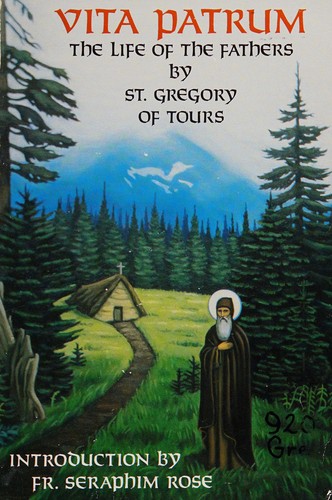
Vitae Patrum
any collection of desert father stories
Simon the Athonite
13th-century Greek Orthodox monk