Category
page 1Christian religious occupations

bishop
A bishop is an ordained member of the clergy who is entrusted with a position of authority and oversight in a religious institution. In Christianity, bishops are normally responsible for the governance and administration of dioceses. The role or office of the bishop is called episcopacy or the episcopate. Organisationally, several Christian denominations utilise ecclesiastical structures that call for the position of bishops, while other denominations have dispensed with this office, seeing it as a symbol of power. Bishops have also exercised political authority within their dioceses.
apostle
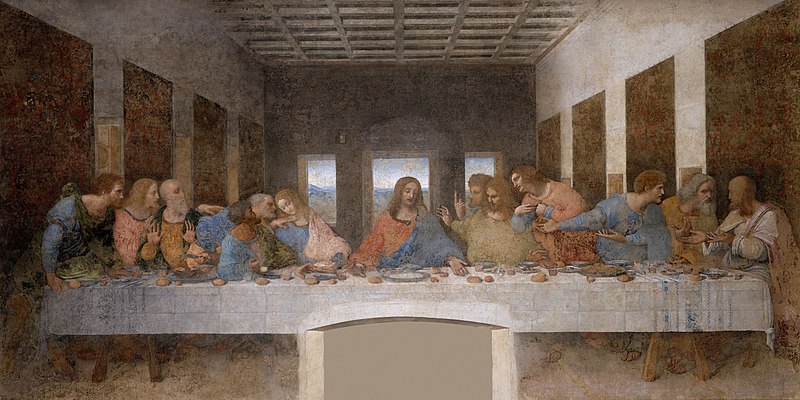
primary disciples of Jesus in the New Testament

abbot
right|thumb|Arms of a Catholic abbot are distinguished by a gold crozier with a veil attached and a black [[galero with twelve tassels (the galero of a territorial abbot would be green).]]

deacon
thumb|upright|Saint Stephen, one of the first seven deacons in the Christian Church, holding a [[Gospel Book in a 1601 painting by Giacomo Cavedone.]]
A deacon is a member of the diaconate, an office in Christian churches that is generally associated with service of some kind, but which varies among theological and denominational traditions.

pastor
thumb|A pastor with an open Bible on a stand

evangelism
thumb|The Four Evangelists
presbyter
Presbyter () is an honorific title for Christian clergy. The word derives from the Greek , which means elder or senior, although many in Christian antiquity understood presbyteros to refer to the bishop functioning as overseer. The word presbyter is used many times in the New Testament, referring both to the Jewish leadership and the "tradition of the elders", and to the leaders of the early Christian community.

archimandrite
thumb|250px|An archimandrite wearing his full habit, holding his Crosier#Eastern crosiers|pastoral staff, and minimally vested in an [[epitrachelion and epimanikia. His mitre stands on the table to his right.]]

friar
thumb|upright|A group of friars; novices of the Order of Augustinian Recollects at the Monastery of Monteagudo in 2006
A friar is a member of one of the mendicant orders in the Catholic Church. There are also friars outside of the Catholic Church, such as within the Evangelical-Lutheran Churches and Anglican Communion. The term, first used in the 12th or 13th century, distinguishes the mendicants' itinerant apostolic character, exercised broadly under the jurisdiction of a superior general, from the older monastic orders' allegiance to a single monastery formalized by their vow of stability. A

abbess
thumb|Eufemia Szaniawska, Abbess of the Benedictine Monastery in Nesvizh|Nieśwież with a [[crosier, , National Museum in Warsaw]]
thumb|Abbess Joanna van Doorselaer de ten Ryen, Waasmunster Roosenberg Abbey
Desert Fathers
early Christian hermits, ascetics, and monks who lived mainly in the Scetes desert of Egypt beginning around the third century AD
Christian minister
function of service in Christianity

vocation
A vocation () is an occupation to which a person is especially drawn or for which they are suited, trained or qualified. Though now often used in non-religious contexts, the meanings of the term originated in Christianity.
dean
cleric holding certain positions of authority within a religious hierarchy
lay brother
non-ordained male member of a Roman Catholic religious institute
pastoral care
personal spiritual accompaniment and support, especially in life crises, by a suitably qualified pastoral worker

protodeacon
Protodeacon derives from the Greek proto- meaning 'first' and diakonos, which is a standard ancient Greek word meaning "assistant", "servant", or "waiting-man". The word in English may refer to any of various clergy, depending upon the usage of the particular church in question.
consecrated life
type of lifestyle advocated by the Catholic Church

almoner
upright=1.35|thumb|The portrait of the almoner or The breviary (1886) by [[Jules-Alexis Muenier.]]
Desert Mothers
early Christian ascetics, 3rd–5th centuries AD
scholaster
A scholaster, from the Latin scholasticus (schoolmaster), or magister scholarum, was the head of an ecclesiastical school, typically a cathedral school, monastic school, or the school of a collegiate church, in medieval and early-modern Europe. Depending on the size of the school and the status of the institution to which it was attached, the scholaster might be the only teacher, the head of a considerable educational establishment, or have oversight over all the schools in their city or territory. The scholaster might be a dignitary in a cathedral or collegiate chapter, alongside the provost,
master of novices
governor and trainer of the novitiate of a Roman Catholic religious institute
religious calling
religious vocation
debtera
A debtera (or dabtara; Ge'ez/Tigrinya/Amharic: ደብተራ (Däbtära); plural, Ge'ez\Tigrinya: debterat, Amharic: debtrawoch ) is an itinerant religious figure in the Ethiopian and Eritrean Orthodox Tewahedo Churches, and the Beta Israel, who sings hymns and dances for churchgoers, and who performs exorcisms and white magic to aid the congregation. A debtera will claim an ecclesiastical identity and behave as in minor orders. They may in fact be officially ordained as deacons, or may act outside the Church hierarchy. They are usually feared by the local population.
religious brother
Christian religious occupation
archchaplain
An Archchaplain was a cleric with a senior position in a royal court. The title was used primarily in the Frankish kingdom in the Carolingian period.
predikant
'''''' is a minister in the Dutch Reformed Church, especially in South Africa; is the Afrikaans term for 'pastor'.