Category
page 1Christianity and Islam

Crusades
thumb|upright=1.35|14th-century miniature of the Battle of Dorylaeum (1147), a [[Second Crusade battle, from the ''Estoire d'Eracles''|alt=Medieval illustration of a battle during the Second Crusade]]

Saracen
right|thumb|Depiction of Saracens (Muslims) by Dutch artist [[Erhard Reuwich, 1486]]
The word "Saracen" ( ) was commonly used in medieval Europe to refer to a person who lived in or near what the ancient Romans knew as Arabia Petraea and Arabia Deserta. Its original meaning in Greek and Latin is not known with certainty. By the early medieval period, it had come to be associated with the Arabian tribes. Following the rise of Islam, which occurred in Arabia, the word's definition evolved to refer not only to Arabs, but to Muslims taken generally as well. It eventually became the standard adject

Seven Sleepers
story in Christian folklore and the Qur'an
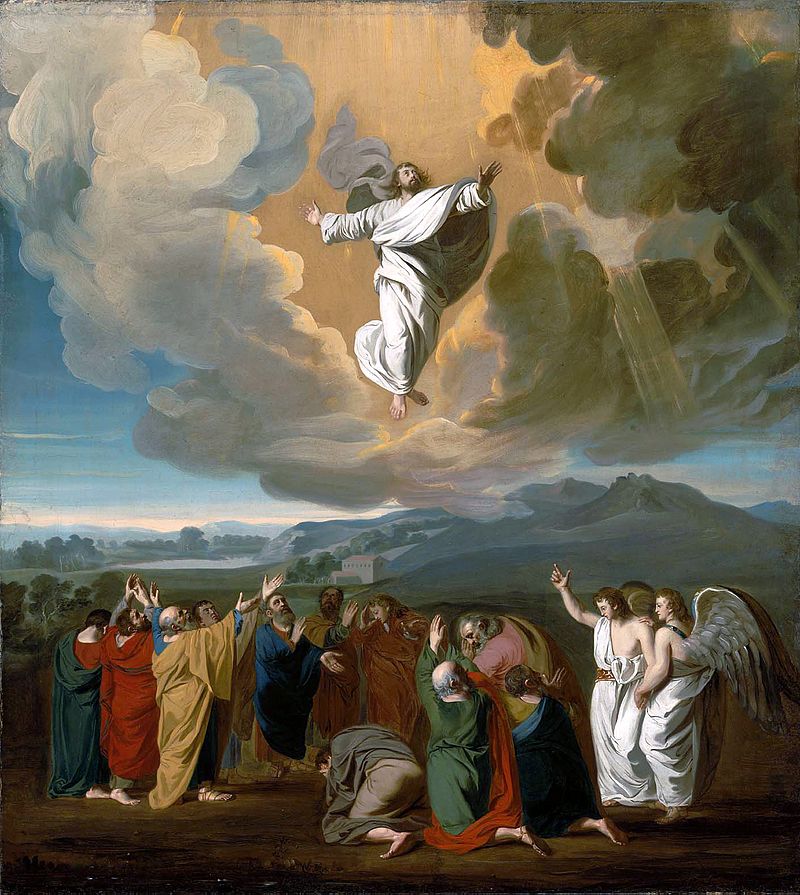
Ascension of Jesus
in Christianity, the departure of the risen Christ from Earth into the presence of God, said to have taken place 40 days after the resurrection, as described in Acts 1

People of the Book
Islamic term which refers to Jews, Christians and Sabians and is sometimes applied to members of other religions such as Zoroastrians

Hussein bin Ali
Sharif and Emir of Mecca, then King of Hejaz and Sharifian Caliph (1854–1931)

Injil
Christian Gospel from an Islamic perspective

virgin birth of Jesus
belief that Jesus was conceived in the womb of his mother Mary through the Holy Spirit without the agency of a human father and born while Mary was still a virgin

Gospel of Barnabas
pseudepigraphical gospel written in the Late Middle Ages
.jpg)
Paraclete
Paraclete (; ) is a Christian biblical term occurring five times in the Johannine texts of the New Testament. In Christian theology, the word commonly refers to the Holy Spirit and is translated as 'advocate', 'counsellor', or 'helper'.

Bahira
thumb|A young Muhammad being recognized by the monk Bahira. Miniature illustration on vellum from the book ''Jami' al-Tawarikh'' (literally "Compendium of Chronicles" but often referred to as The Universal History or History of the World), by [[Rashid al-Din Hamadani, published in Tabriz, Persia, 1307 A.D. Now in the collection of the Edinburgh University Library, Scotland]]
Bahira (, ) is the name in Islamic tradition of a Christian monk who is said to have foretold Muhammad's prophethood when they met while Muhammad was accompanying his uncle Abu Talib on a trading trip. There are several ve
Waraka ibn Nawfal
Cousin of Khadija bint Khuwaylid (died c. 610)
Christianity and Islam
interreligious relationship between two major Abrahamic religions
pact of Umar
apocryphal treaty between the Muslims and the Christians of Syria, Mesopotamia, and Jerusalem
Regensburg lecture
lecture by Pope Benedict XVI in 2006
Islamic contributions to Medieval Europe
influence of Islamic civilisation on Medieval Europe
Ashtiname of Muhammad
Covenant of the Islamic prophet Muhammad with the monks of Mount Sinai
Kosovo Myth
Serbian nation-building myth based on legends about events related to the Battle of Kosovo (1389)
Muhammad and the Bible
arguments that prophecies of Muhammad exist in the Bible

House of One
church building in Germany
Yakub
noted black scientist within the beliefs of the Nation of Islam
Hagarenes
Hagarenes ( , or , ) is a term widely used by early Syriac, Greek, Coptic and Armenian sources to describe the early Arab conquerors of Mesopotamia, Syria and Egypt.
Islamic influences on Western art
Protestantism and Islam
religious interactions
Islamic view of the Trinity
islamic view of the Trinity
Islamic view of Jesus' death
various versions of Islamic doctrine denying Jesus' death at the crucifixion (either by surviving it, or by a phantasm being crucified, or by it being fictional), congruent with early Christian Docetism
Izhar ul-Haqq
Book of Maulana Rahmatullah Kairanvi
Tribute of 100 virgins
Spanish national myth
Christianity in the Ottoman Empire
overview of Christianity in the Ottoman Empire
Medieval Christian views on Muhammad
overview of the Medieval Christian views on Muhammad
Event of Mubahala
meeting between the Islamic prophet Muhammad and Najranite Christians
Christian influences in Islam
On War against the Turk
book by Martin Luther about Islam and resistance to the Ottoman Empire
Quss Ibn Sa'ida al-Iyadi
Arabian bishop
Islam and Mormonism
comparison between Islam and the Church of Jesus Christ of Latter-day Saints
Muhammad's views on Christians
Catholic Church and Islam
overview of the relationship between the Catholic Church and Islam
Christian community of Najran
historical community in southern Arabia
Masih
title of Jesus in the Quran
Chrislam
Chrislam is a Christian expression of Islam, originating as an assemblage of Christian and Islamic religious practices in Nigeria; in particular, the series of religious movements that merged Christian and Muslim religious practice during the 1970s in Lagos, Nigeria. The movement was pioneered by the Yoruba people in south-west Nigeria. Chrislam works against the conventional understanding of Christianity and Islam as two separate and exclusive religions, seeking out commonalities between both religions and promoting an inclusive union of the two. Chrislam also occupies a distinct geographical