Category
page 1Chromadorea genera

Ascaris
Ascaris is a nematode genus of parasitic worms known as the "small intestinal roundworms". One species, Ascaris lumbricoides, affects humans and causes the disease ascariasis. Another species, Ascaris suum, typically infects pigs. Other ascarid genera infect other animals, such as Parascaris equorum, the equine roundworm, and Toxocara and Toxascaris, which infect dogs and cats.
Neochromadora
Neochromadora is a genus of nematodes belonging to the family Chromadoridae.
Baylisascaris
Baylisascaris is a genus of roundworms that infect more than fifty animal species.

Leptolaimus
Leptolaimus is a genus of nematodes belonging to the family Leptolaimidae.

Hysterothylacium
Hysterothylacium is a genus of parasitic roundworms in the family Raphidascarididae. As of 2020 it consists of over 70 species and is considered one of the largest of the ascaridoid genera parasitising fish.
Dorylaimopsis
Dorylaimopsis is a genus of nematodes belonging to the family Comesomatidae.
Chronogaster
Chronogaster is a genus of nematodes.

Chromadorina
Chromadorina is a genus of nematodes belonging to the family Chromadoridae.
Amphimonhystera
Amphimonhystera is a genus of nematodes belonging to the family Xyalidae.
Cervonema
Cervonema is a genus of nematodes belonging to the family Comesomatidae.

Heterakis
Heterakis is a genus of parasitic nematodes. Members of the genus are minute roundworms, hardly 1 cm long, infecting different species of gallinaceous birds, including chickens, turkeys, ducks, geese, grouse, guineafowl, partridges, pheasants, and quail. About 10 species are placed in the genus, but classification is often ambiguous due to their close resemblance, and a number of synonyms have arisen. H. gallinarum Schrank, 1788; H. isolonche von Linstow, 1906; and H. dispar Schrank, 1870 are the best understood species in terms of prevalence, pathogenicity, and biology. They inhabit the
Goezia
Goezia is a genus of nematodes belonging to the family Raphidascarididae.
Araeolaimus
Araeolaimus is a genus of marine free living nematodes.
Achromadora
Achromadora is a genus of nematodes belonging to the family Achromadoridae.
Hopperia
Hopperia is a genus of nematodes belonging to the family Comesomatidae.

Ethmolaimus
Ethmolaimus is a genus of nematodes belonging to the family Chromadoridae.
Dioctophyme
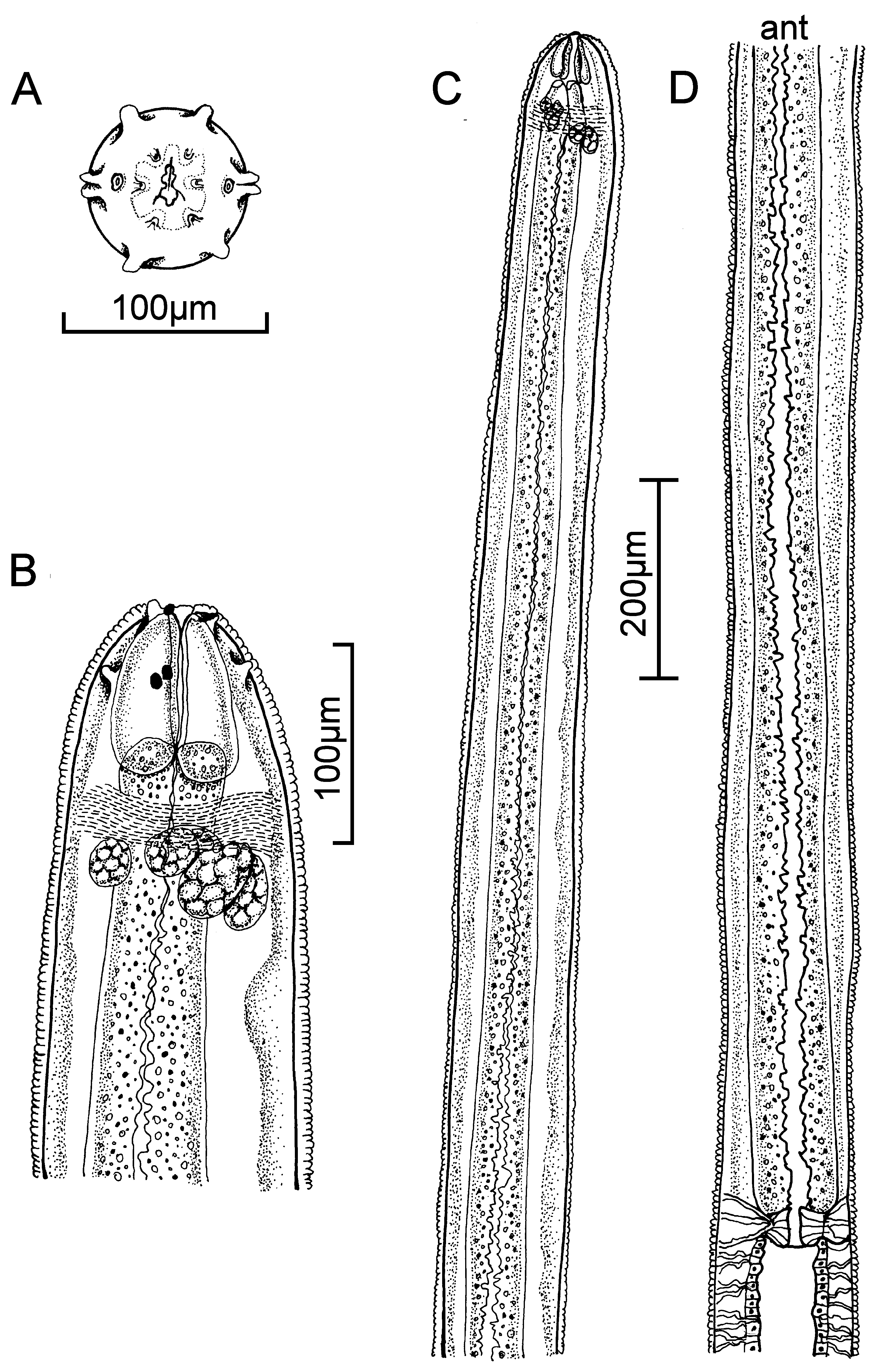
Dioctophyme is a monotypic genus of nematodes belonging to the family Dioctophymidae. The only species is Dioctophyme renale. Much older literature uses the alternative spelling "Dioctophyma" and the family name "Dioctophymatidae" but these alternative spellings were suppressed by the ICZN in a 1987 ruling.
Parascaris
Parascaris is a genus of nematodes in the family Ascarididae. It contains two species, Parascaris equorum and Parascaris univalens, which are morphologically identical, but can be distinguished by chromosome number. Both species parasitize horses.
Diplolaimelloides
Diplolaimelloides is a genus of free-living nematodes within the family Monhysteridae. The microscopic roundworms were first classified by A.H. Meyl in 1954 and are primarily found in aquatic environments of varying salinity, such as intertidal zones, brackish waters, salt lakes, and mangrove swamps. They play a role in benthic ecosystems as consumers of bacteria and organic particles.

Porrocaecum
Porrocaecum is a genus of nematodes belonging to the family Ascarididae.

Meteterakis
Meteterakis is a genus of nematodes belonging to the family Heterakidae.
Laxus
Laxus is a genus of nematode worms from the subfamily Stilbonematinae of the family Desmodoridae. Like other members of this subfamily, they are covered by a layer of symbiotic sulfur-oxidizing bacteria, which in Laxus are coccoid in shape. They are distinguished from other stilbonematine genera by the finely-annulated somatic cuticle, thickened cephalic cuticle, small and coiled amphidial fovea, and lack of male structures. There are at least five species in the genus. Some species have a dense bacterial coat.