Category
page 1Chronicles

chronicle
thumb|Chronicon Pictum, the "Illuminated Chronicle" from the royal Hungarian court from 1358
A chronicle (, from Greek chroniká, from , chrónos – "time") is a historical account of events arranged in chronological order, as in a timeline. Typically, equal weight is given for historically important events and local events, the purpose being the recording of events that occurred, seen from the perspective of the chronicler. A chronicle which traces world history is a universal chronicle. This is in contrast to a narrative or history, in which an author chooses events to interpret and analyze and
annals
Annals (, from , "year") are a concise historical record in which events are arranged chronologically, year by year, although the term is also used loosely for any historical record.
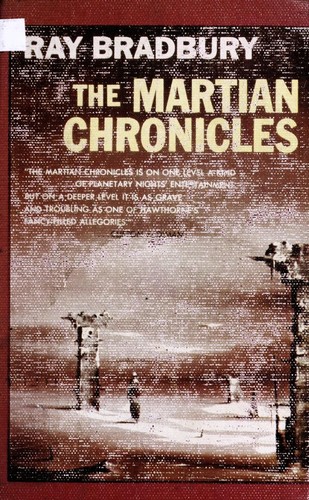
The Martian Chronicles
1950 novel by Ray Bradbury
Annals
history of the Roman Empire by the Roman historian and senator Publius Cornelius Tacitus

Chronicon
4th-century work by St. Jerome
Akhbar-nameh
The Akhbar-nameh is a Persian-language chronicle on the history of Talish. It was composed by Mirza Ahmad ibn Mirza Khodaverdi, the vizier of the two last khans of the Talysh Khanate.
Gulistan-i Iram
19th-century Persian-language chronicle
Chronicle of the King D. Pedro I
work by Fernão Lopes
Rostam al-Tavarikh
persian historical chronicle (1800)
Chronicon
In historiography, a chronicon is a type of chronicle or annals. Examples are:
Chronicon (Eusebius)
Chronicon (Jerome)
Chronicon (Jacob of Edessa)
Chronicon Abbatiae de Evesham
Chronicon Burgense
Chronicon Ambrosianum
Chronicon Compostellanum
Chronicon Gothanum
Chronicon Helveticum
Chronicon Holtzatiae
Chronicon Iriense
Chronicon Lethrense
Chronicon Lusitanum
Chronicon Paschale
Chronicon Pictum
Chronicon Roskildense
Chronicon Salernitanum
Chronicon Scotorum
Chronicon complutense
Chronicon terrae Prussiae