Category
page 1Chán Buddhist writers
Hanshan
Chinese monk and poet
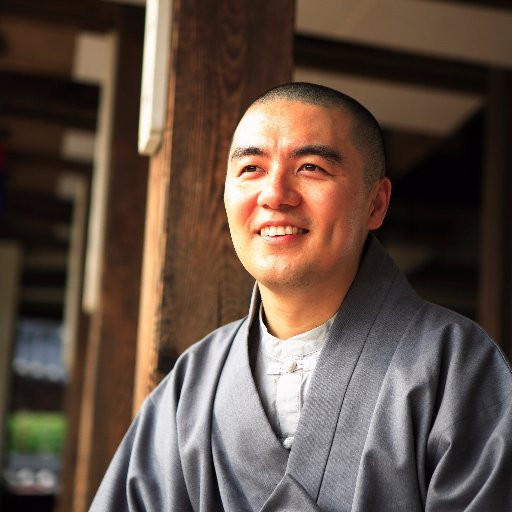
Haemin Sunim
South Korean Buddhist teacher (1973-)
Hsuan Hua
American Buddhist monk (1918-1995)

Sheng-yen
Sheng Yen (), born Zhang Baokang (), (January 22, 1931 – February 3, 2009) was a Taiwanese Buddhist monk, religious scholar, and writer. He was one of the mainstream teachers of Chan Buddhism. He was a 57th generational dharma heir of Linji Yixuan in the Linji school (Japanese: Rinzai) and a third-generation dharma heir of Hsu Yun. In the Caodong (Japanese: Sōtō) lineage, Sheng Yen was a 52nd-generation Dharma heir of Dongshan Liangjie (807-869), and a direct Dharma heir of Dongchu (1908–1977).

Seungsahn
Seungsahn Haengwon (, August 1, 1927November 30, 2004), born Duk-In Lee, was a Korean Seon master of the Jogye Order and founder of the international Kwan Um School of Zen. He was the seventy-eighth Patriarch in his lineage. As one of the early Korean Zen masters to settle in the United States, he opened many temples and practice groups across the globe. He was known for his charismatic style and direct presentation of Zen, which was well tailored for the Western audience.
Hyujeong
Hyujeong (, 1520–1604), also called Seosan Daesa () was a Korean Seon master. As was common for monks in this time, he travelled from place to place, living in a succession of monasteries. Buddhist monks had been forced to keep a low profile since General Yi Seonggye had been forced to eject Buddhism from its state of total permeation of government in order to gain the support of Neo-Confucian scholar-officials to consolidate his position against his Buddhist political opponents when he overthrew Gongyang of Goryeo in 1392 to become King Taejo of Joseon.

John Crook
British ethologist (1930-2011)
Jiaoran
Jiaoran (; 730–799), also known by his courtesy name Qingzhou (), was a Tang dynasty Chinese poet and Buddhist monk. Jiaoran wrote more than 470 poems and was one of the three major Tang dynasty poet-monks (), along with Guanxiu (832–912) and Qiji (863–937). He was the 12th generation grandson of Xie An (320–385), a Jin dynasty (266–420) statesman who, despite his lack of military ability, led Jin through a major crisis—attacks by Former Qin (351–394). His friend, Lu Yu, is venerated as the Sage of Tea for his contribution to Chinese tea culture and the writer of The Classic of Tea.
Yujeong
Samyeongdang (1544–1610), also known by his dharma name Yujeong, was a Korean Buddhist monk during the Joseon era. He is sometimes identified by his art name, Song-un. He was born to a family of the Im clan in Miryang, Gyeongsang Province. After the deaths of his mother in 1558 and his father in 1559, he became a monk at Jikjisa on Hwangaksan in Gimcheon.