Category
page 1Ciliate classes

Oligohymenophorea
The Oligohymenophorea are a large class of ciliates. There is typically a ventral groove containing the mouth and distinct oral cilia, separate from those of the body. These include a paroral membrane to the right of the mouth and membranelles, usually three in number, to its left. The cytopharynx is inconspicuous and never forms the complex cyrtos found in similar classes. Body cilia generally arise from monokinetids, with dikinetids occurring in limited distribution over part of the body.
Karyorelictea
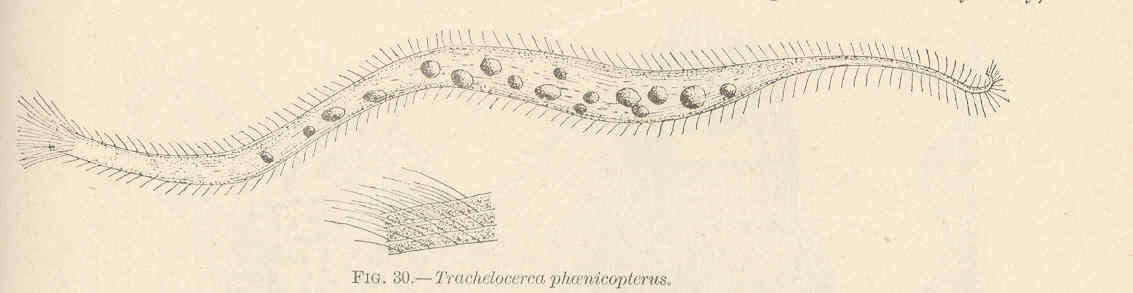
Karyorelictea is a class of ciliates in the subphylum Postciliodesmatophora. Most species are members of the microbenthos community, that is, microscopic organisms found in the marine interstitial habitat, though one genus, Loxodes, is found in freshwater.
Litostomatea
The Litostomatea are a class of ciliates. The group consists of three subclasses: Haptoria, Trichostomatia and Rhynchostomatia. Haptoria includes mostly carnivorous forms such as Didinium, a species of which preys primarily on the ciliate Paramecium. Trichostomatia (trichostomes) are mostly endosymbionts in the digestive tracts of vertebrates. These include the species Balantidium coli, which is the only ciliate parasitic in humans. The group Rhynchostomatia includes two free-living orders previously included among the Haptoria, but now known to be genetically distinct from them, the Dileptida
Colpodea
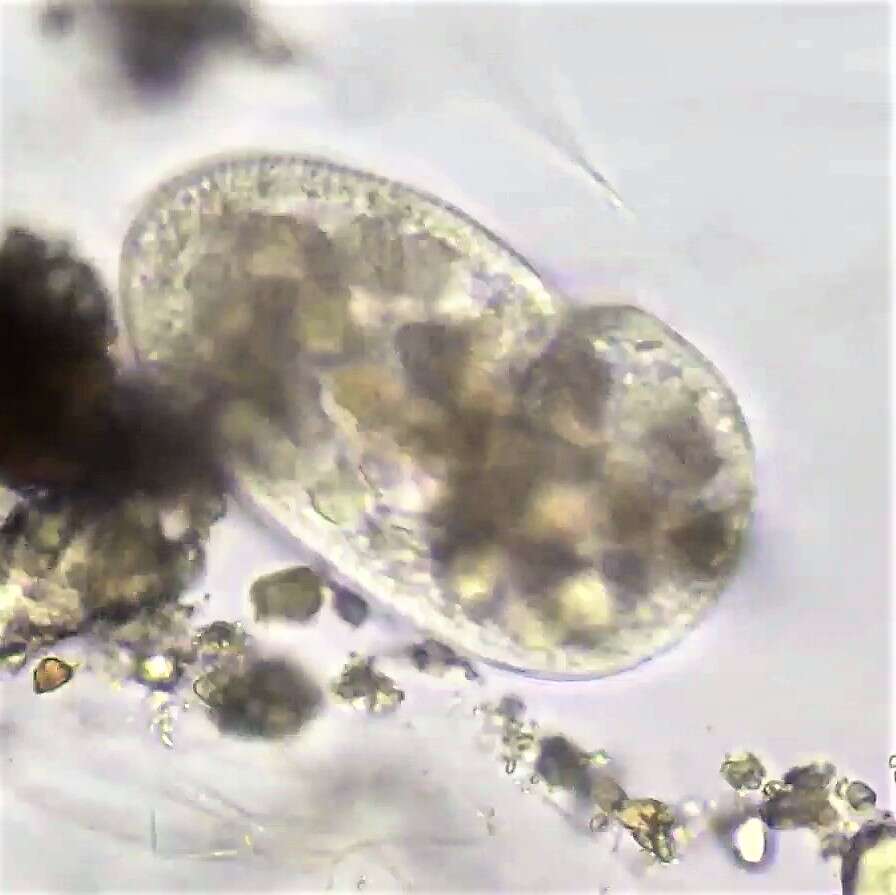
The Colpodea are a class of ciliates, of about 200 species common in freshwater and soil habitats. The body cilia are typically uniform, and are supported by dikinetids of characteristic structure, with cilia on both kinetosomes. The mouth may be apical or ventral, with more or less prominent associated polykinetids. Many are asymmetrical, the cells twisting sideways and then untwisting again prior to division, which often takes place within cysts. Colpoda, a kidney-shaped ciliate common in organic rich conditions, is representative.
Prostomatea
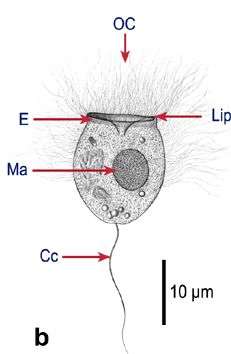
Prostomatea is a class of ciliates. It includes the genera Coleps and Pelagothrix.
Nassophorea
The Nassophorea are a class of ciliates. Members are free-living, usually in freshwater but also in marine and soil environments. The mouth is anterior ventral and leads to a curved cytopharynx supported by a prominent palisade of rods or nematodesmata, forming a structure called a cyrtos or nasse, typical of this and a few other classes. When present, extrusomes take the form of fibrous trichocysts. Cilia are usually monokinetids, but vary from order to order.
Phyllopharyngea
The Phyllopharyngea are a class of ciliates, some of which are extremely specialized. Motile cells typically have cilia restricted to the ventral surface, or some part thereof, arising from monokinetids with a characteristic ultrastructure. In both chonotrichs and suctoria, however, only newly formed cells are motile and the sessile adults have undergone considerable modifications of form and appearance. Chonotrichs, found mainly on crustaceans, are vase-shaped, with cilia restricted to a funnel leading down into the mouth. Mature suctorians lack cilia altogether, and initially were not classi
Armophorea
Armophorea is a class of ciliates in the subphylum Intramacronucleata.
. It was first resolved in 2004 and comprises three orders: Metopida, Clevelandellida, and Armophorida. Previously members of this class were thought to be heterotrichs because of similarities in morphology, most notably a characteristic dense arrangement of cilia surrounding their oral structures. However, the development of genetic tools and subsequent incorporation of DNA sequence information has led to major revisions in the evolutionary relationships of many protists, including ciliates. Metopids, clevelandellids, and
Plagiopylea
REDIRECT Plagiopylida
Category:Ciliate classes