Category
page 1Circulatory system
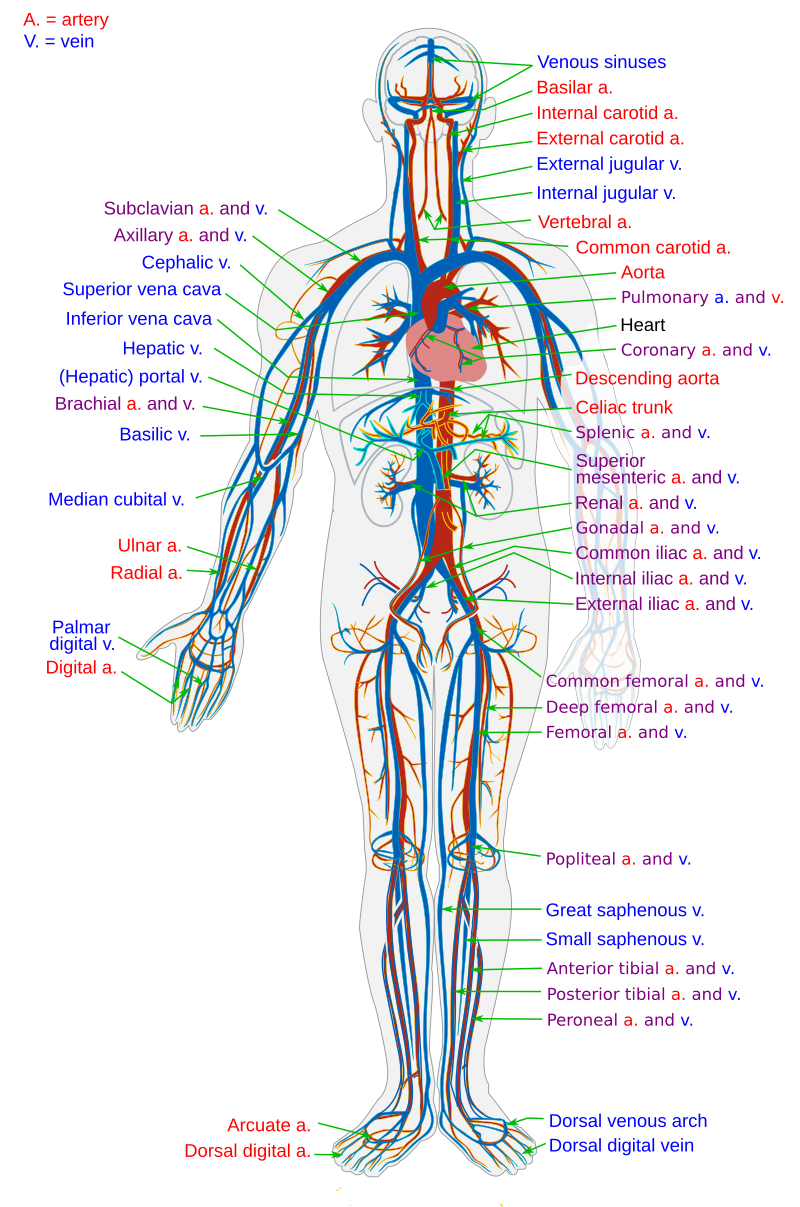
circulatory system
three independent systems that work together: cardiovascular, pulmonary and systemic

blood–brain barrier
semipermable membrane that separates blood and the brain

microcirculation
The microcirculation is the circulation of the blood in the smallest blood vessels, the microvessels of the microvasculature present within organ tissues. The microvessels include terminal arterioles, metarterioles, capillaries, and venules. Arterioles carry oxygenated blood to the capillaries, and blood flows out of the capillaries through venules into veins.
cephalic vein
large blood vessel in the arm
rete mirabile
complex of arteries and veins lying very close to each other, found in some vertebrates, mainly warm-blooded ones.
basilic vein
large blood vessel in the arm
cardiovascular physiology
study of the circulatory system, specifically addressing the physiology of the heart ("cardio") and blood vessels ("vascular")
Precapillary sphincter
A precapillary sphincter is a band of smooth muscle that adjusts blood flow into capillaries mainly in the mesenteric microcirculation

Mueller Weiss syndrome
osteonecrotic disease of the foot